
What is the 1.8976 special steel for automobiles flaw detection process
Explore the comprehensive flaw detection process for 1.8976 (S700MC) high-strength automotive steel, covering NDT methods, material properties, and quality control standards.
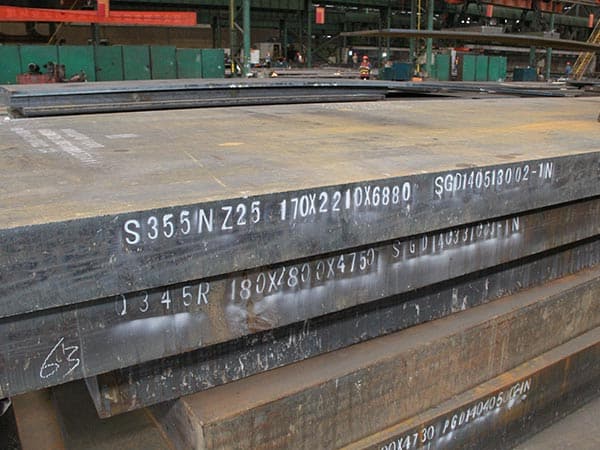
The Critical Role of 1.8976 Special Steel in Modern Automotive Engineering
In the pursuit of vehicle lightweighting and enhanced safety, 1.8976 special steel, commonly known in the industry as S700MC, has emerged as a cornerstone material. This thermomechanically rolled high-strength low-alloy (HSLA) steel is engineered to provide an exceptional yield strength of at least 700 MPa. Its primary application lies in structural components that demand high load-bearing capacity without the weight penalty of traditional carbon steels. However, the very characteristics that make 1.8976 desirable—its fine-grained microstructure and high strength—also necessitate a rigorous flaw detection process to ensure structural integrity during high-stress automotive operations.
The flaw detection process for 1.8976 is not merely a quality check; it is a multi-stage diagnostic protocol designed to identify microscopic discontinuities that could lead to catastrophic fatigue failure. Automotive manufacturers utilize this steel for truck frames, crane booms, and chassis components where the margin for error is non-existent. Understanding the nuances of how this material is inspected requires a deep dive into its metallurgical properties and the specialized Non-Destructive Testing (NDT) techniques employed on the production line.
Material Composition and Its Influence on Inspection Sensitivity
1.8976 steel achieves its high strength through a precise micro-alloying process involving elements like Niobium (Nb), Titanium (Ti), and Vanadium (V). These elements refine the grain size and create carbonitride precipitates. While this enhances mechanical performance, it also affects the propagation of ultrasonic waves and magnetic flux during testing. The chemical composition of 1.8976 must be strictly controlled to ensure that the material remains isotropic, which is vital for accurate flaw detection.
| Element | Max Content (%) | Role in Material Performance |
|---|---|---|
| Carbon (C) | 0.12 | Ensures weldability while maintaining strength. |
| Manganese (Mn) | 2.10 | Improves hardenability and tensile strength. |
| Silicon (Si) | 0.60 | Deoxidizer and solid solution strengthener. |
| Niobium (Nb) | 0.09 | Grain refinement and precipitation hardening. |
| Aluminum (Al) | 0.015 | Nitrogen binding and grain size control. |
The low carbon equivalent of 1.8976 ensures excellent weldability, but the heat-affected zone (HAZ) remains a focal point for flaw detection. During the inspection process, technicians look for hydrogen-induced cracking or lamellar tearing, which can occur if the cooling rates are not managed or if the base metal contains non-metallic inclusions.
Primary Flaw Detection Methods for 1.8976 Steel
The inspection of 1.8976 special steel involves several layers of NDT, each targeting different types of potential defects. Because this steel is often used in thin-walled yet high-load structures, the sensitivity of the equipment must be calibrated to detect even sub-millimeter flaws.
1. Ultrasonic Testing (UT): Internal Integrity Verification
Ultrasonic Testing is the primary method for detecting internal flaws such as voids, inclusions, or delamination within the steel plate. For 1.8976, high-frequency sound waves (typically 2MHz to 5MHz) are pulsed into the material. Any internal discontinuity reflects the sound energy back to a transducer. Due to the fine-grained nature of S700MC, the signal-to-noise ratio is generally high, allowing for very precise defect characterization. Pulse-echo techniques are standard for checking the parent metal, while phased array ultrasonic testing (PAUT) is increasingly used for complex automotive weldments to provide a visual cross-section of the joint.
2. Magnetic Particle Testing (MT): Surface and Near-Surface Inspection
Since 1.8976 is a ferromagnetic material, Magnetic Particle Testing is highly effective for identifying surface-breaking cracks that might be invisible to the naked eye. This is particularly critical after the cold-forming or bending processes. The component is magnetized, and fine iron particles (often fluorescent) are applied. Any surface crack creates a leakage field that attracts the particles, creating a visible indication. This process is essential for ensuring that the high-stress areas of an automobile chassis are free from micro-fissures induced during stamping.
3. Eddy Current Testing (ET): Automated Inline Quality Control
In high-volume automotive production, Eddy Current Testing offers a high-speed, non-contact solution. It is particularly adept at detecting surface cracks and assessing the heat treatment consistency of 1.8976 components. By inducing electromagnetic fields, the system can detect changes in electrical conductivity and magnetic permeability caused by defects. This is often integrated directly into the rolling mills or automated welding lines to provide real-time feedback on material quality.
The Importance of Surface Preparation and Environmental Adaptability
The accuracy of the flaw detection process for 1.8976 is heavily dependent on the surface condition of the steel. As a thermomechanically rolled product, it may have a thin layer of scale. For effective dye penetrant testing (PT) or MT, the surface must be cleaned of oils, rust, and loose scale. Furthermore, 1.8976 is designed to perform in harsh environments, from sub-zero arctic temperatures to high-humidity coastal regions. The flaw detection process must account for the material's impact toughness at low temperatures (often tested at -20°C or -40°C). If a flaw is detected, it is evaluated against the Charpy V-notch impact values to determine if the defect is critical enough to cause brittle fracture in cold climates.
Advanced Process Performance and Application Expansion
Beyond standard chassis components, 1.8976 is finding its way into electric vehicle (EV) battery enclosures and specialized heavy-duty transport systems. The flaw detection process for these applications often involves Digital Radiography (DR). DR allows for the inspection of internal structures in a digital format, facilitating easier data storage and AI-driven defect recognition. This technological shift ensures that every 1.8976 component meets the stringent ISO 9001 and IATF 16949 automotive quality standards.
- Cold Forming: Inspection ensures no micro-cracking occurs at tight bend radii.
- Weldability: Detection of porosity or lack of fusion in high-strength joints.
- Fatigue Resistance: Identifying surface irregularities that could act as stress concentrators.
- Weight Reduction: Enabling thinner gauges through guaranteed material homogeneity.
Standardization and Quality Assurance Protocols
The flaw detection process for 1.8976 must adhere to international standards such as EN 10149-2. This standard specifies the technical delivery conditions for thermomechanically rolled steels. Quality assurance teams use these standards to define the "Acceptance Criteria." For instance, in ultrasonic testing, the size and density of allowable inclusions are strictly governed. Any deviation from these parameters results in the immediate rejection of the batch, ensuring that only the highest quality 1.8976 steel enters the automotive supply chain.
The integration of automated NDT systems with Industry 4.0 data analytics allows manufacturers to track the "birth certificate" of each 1.8976 part. By correlating flaw detection data with the original melt shop chemistry and rolling parameters, engineers can continuously optimize the production process, reducing scrap rates and enhancing the overall safety of the vehicles on the road. This holistic approach to flaw detection is what enables 1.8976 to remain a premium choice for the most demanding automotive applications.
Leave a message