
What is the BBNSteel company QStE340TM, S500MC alloy steel sheet stock list
Explore the technical specifications, mechanical properties, and industrial applications of QStE340TM and S500MC alloy steel sheets from BBNSteel's extensive stock list.
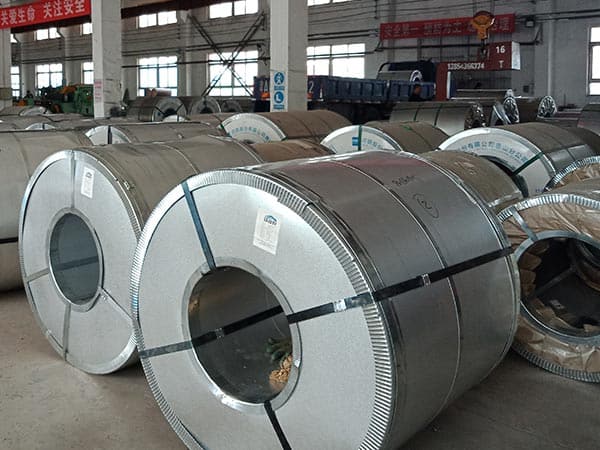
The Evolution of High-Strength Low-Alloy Steels in Modern Engineering
In the contemporary landscape of industrial manufacturing, the pursuit of materials that offer both reduced weight and enhanced structural integrity has become a primary objective. High-strength low-alloy (HSLA) steels, specifically grades like QStE340TM and S500MC, represent the pinnacle of this evolution. These materials are engineered through thermomechanical rolling processes (TMCP), which refine the grain structure to achieve a balance of high yield strength, excellent ductility, and superior weldability. BBNSteel, as a prominent stockist and service provider, maintains a comprehensive inventory of these grades to meet the rigorous demands of the automotive, heavy machinery, and construction sectors. Understanding the nuances between these standards—one rooted in the German DIN system and the other in the European EN framework—is essential for engineers seeking to optimize their designs for performance and cost-efficiency.
Defining QStE340TM: The German Standard for Cold Forming
QStE340TM is a micro-alloyed, thermomechanically rolled steel grade governed by the DIN 17102 or SEW 092 standards. The designation itself provides a wealth of information: 'Q' stands for fine-grained structural steel, 'St' for steel, 'E' for high yield strength, '340' represents the minimum yield strength in MPa, and 'TM' indicates the thermomechanical rolling process. This grade is specifically designed for cold-forming applications where weight saving is critical. By utilizing micro-alloying elements such as niobium (Nb), vanadium (V), and titanium (Ti), the steel achieves a fine ferritic-pearlitic microstructure. This refinement allows for a significant reduction in plate thickness compared to traditional carbon steels without sacrificing load-bearing capacity.
S500MC: The High-Performance European Alternative
S500MC is standardized under EN 10149-2, representing a higher tier of yield strength within the thermomechanically rolled steel family. The 'S' denotes structural steel, '500' specifies a minimum yield strength of 500 MPa, 'M' refers to the thermomechanically rolled delivery condition, and 'C' indicates its suitability for cold forming. S500MC is widely utilized in applications requiring extreme toughness and fatigue resistance, such as truck chassis, crane booms, and cross members. The processing of S500MC involves precise temperature control during rolling, which prevents grain growth and ensures that the material remains ductile even at high strength levels. This makes it an ideal candidate for complex geometries that require extensive bending or flanging during fabrication.
Chemical Composition and Micro-Alloying Strategy
The performance of QStE340TM and S500MC is fundamentally rooted in their chemical makeup. Unlike traditional structural steels that rely on high carbon content for strength, these HSLA grades maintain a low carbon equivalent (CEV) to ensure exceptional weldability. The inclusion of micro-alloying elements is the key to their strength. These elements form fine carbides and nitrides that pin grain boundaries during the rolling process, preventing recrystallization and resulting in an ultra-fine grain size.
| Grade | C (max) | Si (max) | Mn (max) | P (max) | S (max) | Al (min) | Nb/V/Ti (max) |
|---|---|---|---|---|---|---|---|
| QStE340TM | 0.12% | 0.50% | 1.30% | 0.025% | 0.020% | 0.015% | 0.22% |
| S500MC | 0.12% | 0.50% | 1.70% | 0.025% | 0.015% | 0.015% | 0.22% |
The low sulfur content in these grades is particularly noteworthy. It improves the material's cleanliness and isotropy, meaning the mechanical properties are consistent regardless of the rolling direction. This is vital for complex cold-forming operations where the steel may be stressed in multiple axes.
Mechanical Properties and Performance Benchmarks
The mechanical profile of these steels is characterized by a high yield-to-tensile ratio and impressive elongation values. This combination allows for significant deformation during manufacturing while maintaining a high safety margin in the final product. BBNSteel ensures that every sheet in their stock list undergoes rigorous testing to verify these parameters.
| Grade | Yield Strength (MPa) | Tensile Strength (MPa) | Elongation A80mm (%) | Bending Radius (180°) |
|---|---|---|---|---|
| QStE340TM | ≥ 340 | 420 - 540 | ≥ 20 | 0.5t |
| S500MC | ≥ 500 | 550 - 700 | ≥ 12 | 1.0t |
It is important to note that the elongation values for S500MC are slightly lower than those of QStE340TM due to the increased strength. However, for most industrial cold-forming processes, S500MC remains highly workable. The 't' in the bending radius refers to the thickness of the sheet, indicating that these materials can be bent over very tight radii without cracking.
Processing Advantages: Welding, Cutting, and Forming
One of the primary reasons engineers specify QStE340TM and S500MC from BBNSteel is their superior processing characteristics. Because these steels are low in carbon and alloying elements like chromium or nickel, they do not require preheating before welding in most thickness ranges. They are compatible with all standard welding methods, including MIG/MAG, TIG, and submerged arc welding. The heat-affected zone (HAZ) remains stable, maintaining much of the base metal's strength and toughness.
- Laser and Plasma Cutting: The low impurity levels and consistent thickness of BBNSteel's stock allow for high-precision thermal cutting with minimal edge hardening.
- Cold Bending: These grades are optimized for press brake forming. Their consistent springback characteristics allow for repeatable accuracy in mass production.
- Surface Quality: Typically supplied in a pickled and oiled (P&O) or black condition, the surface is ideal for subsequent coating, painting, or galvanizing processes.
Environmental Adaptability and Durability
While HSLA steels are not inherently corrosion-resistant like stainless steel, their fine-grained structure provides better resistance to atmospheric corrosion than standard carbon steels. In harsh environments, these materials are often used in conjunction with advanced coating systems. Their ability to maintain toughness at low temperatures is a critical advantage for machinery operating in arctic or high-altitude conditions. S500MC, in particular, can be ordered with guaranteed impact energy values at temperatures as low as -40°C or -60°C, ensuring structural integrity against brittle fracture.
Strategic Industry Applications
The application of QStE340TM and S500MC spans across various high-stakes industries. In the automotive sector, these steels are used for chassis components, suspension systems, and reinforcement beams. By switching from traditional S235 or S355 grades to S500MC, manufacturers can reduce component weight by up to 30%, directly contributing to fuel efficiency and reduced emissions. In the lifting and transport industry, the high strength of S500MC allows for longer crane reaches and higher payload capacities for trailers. Agricultural machinery manufacturers also utilize these grades for plow frames and harvester components that must withstand high stress and abrasive wear.
BBNSteel Company Stock List and Supply Capabilities
BBNSteel maintains a robust stock list of QStE340TM and S500MC to serve global markets. The inventory includes a wide range of thicknesses, typically from 2.0mm to 20mm, and widths up to 2000mm. Beyond simple material supply, BBNSteel provides value-added services such as decoiling, slitting to specific widths, and custom blanking. Their logistics network ensures that these high-performance alloy sheets can be delivered to production lines just-in-time, reducing inventory costs for the end-user. Every shipment is accompanied by Mill Test Certificates (MTC) according to EN 10204 3.1, ensuring full traceability and compliance with international quality standards.
Selecting the Right Grade for Your Project
Choosing between QStE340TM and S500MC depends on the specific requirements of the application. If maximum formability and moderate strength are required at a lower cost point, QStE340TM is often the preferred choice. However, if the design demands extreme weight reduction or must withstand higher structural loads, the superior yield strength of S500MC provides the necessary performance headroom. BBNSteel's technical team assists customers in navigating these choices, providing data-driven recommendations based on mechanical requirements, fabrication constraints, and budget considerations. By leveraging the advanced properties of these thermomechanically rolled steels, engineers can push the boundaries of what is possible in modern structural design.
Leave a message