
What is 1.8969 high yield strength alloy quality steel used for?
A comprehensive guide to 1.8969 (S355J2W) high yield strength weathering steel, exploring its chemical properties, mechanical performance, and diverse industrial applications.
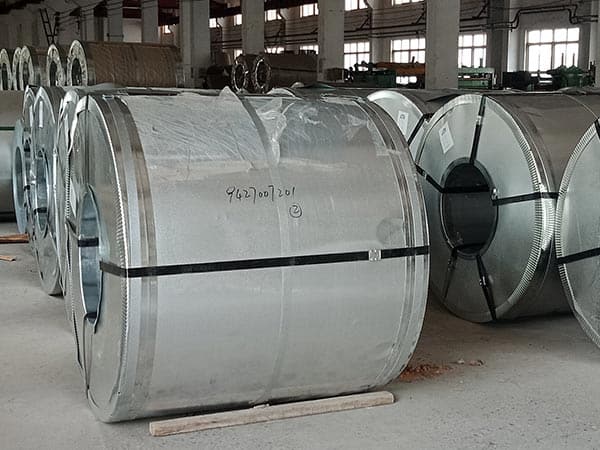
Defining 1.8969 High Yield Strength Weathering Steel
The material designated as 1.8969 is a high-strength, low-alloy (HSLA) structural steel specifically engineered for atmospheric corrosion resistance. Under the European standard EN 10025-5, it is more commonly known by its alphanumeric grade, S355J2W. This steel is part of the "weathering steel" family, often referred to by the trademarked name Corten B. The unique characteristic of 1.8969 lies in its ability to form a protective oxide layer, or patina, when exposed to the environment, which significantly slows down the rate of further corrosion compared to standard carbon steels.
Engineers and architects specify 1.8969 because it combines a minimum yield strength of 355 MPa with exceptional durability in outdoor settings. The "J2" designation indicates that the steel has undergone Charpy V-notch impact testing at -20°C, ensuring it retains toughness in cold climates. The "W" suffix explicitly denotes its weathering properties, making it a primary choice for structures where maintenance is difficult or where a natural, rustic aesthetic is desired.
Chemical Composition and the Science of the Patina
The superior performance of 1.8969 is rooted in its precise chemical balance. Unlike ordinary structural steel, 1.8969 contains specific alloying elements such as copper (Cu), chromium (Cr), nickel (Ni), and phosphorus (P). These elements are not added merely for strength but to catalyze the formation of a dense, adherent layer of rust on the surface.
| Element | Content (%) Max/Range |
|---|---|
| Carbon (C) | ≤ 0.16 |
| Silicon (Si) | ≤ 0.50 |
| Manganese (Mn) | 0.50 - 1.50 |
| Phosphorus (P) | ≤ 0.030 |
| Sulfur (S) | ≤ 0.030 |
| Chromium (Cr) | 0.40 - 0.80 |
| Copper (Cu) | 0.25 - 0.55 |
| Nickel (Ni) | ≤ 0.65 |
When 1.8969 is exposed to alternating wet and dry cycles, the copper and chromium promote the development of an amorphous layer of iron hydroxides. This layer acts as a barrier, preventing oxygen and moisture from penetrating deeper into the steel substrate. In standard carbon steel, the rust layer is porous and eventually flakes off, leading to continuous metal loss. In contrast, the patina on 1.8969 becomes more stable over time, typically maturing within 2 to 8 years depending on the local climate.
Mechanical Properties and Structural Integrity
Beyond its corrosion resistance, 1.8969 is a high-performance structural material. Its mechanical properties allow for the design of lighter, more efficient structures without sacrificing safety. The high yield strength means that thinner sections can support the same loads as thicker sections of standard S235 or S275 grades.
| Property | Value (for thickness ≤ 16mm) |
|---|---|
| Yield Strength (ReH) | ≥ 355 MPa |
| Tensile Strength (Rm) | 470 - 630 MPa |
| Elongation (A%) | ≥ 20% |
| Impact Energy (J2) | Min 27J at -20°C |
The combination of high tensile strength and ductility makes 1.8969 suitable for dynamic loading environments. The impact toughness at -20°C is particularly critical for infrastructure projects in northern latitudes, where brittle fracture is a significant risk during winter months. This ensures that the steel remains reliable even under sudden stress in freezing conditions.
Bridge Engineering and Infrastructure
One of the most prominent uses of 1.8969 steel is in the construction of bridges. Traditional bridges require frequent painting and sandblasting to prevent rust, which is both costly and environmentally taxing. By using 1.8969, engineers can design "unpainted" bridges. The elimination of the initial painting process and the subsequent maintenance cycles leads to significant lifecycle cost savings.
- Highway Overpasses: 1.8969 is frequently used for girders and support structures in highway systems.
- Pedestrian Walkways: The aesthetic appeal of the weathered steel blends naturally with parks and urban landscapes.
- Railway Bridges: The high fatigue resistance of S355J2W allows it to withstand the repetitive heavy loads of rail traffic.
In bridge applications, it is vital to ensure proper drainage. If water is allowed to pond on the steel surface, the protective patina cannot form correctly, leading to localized pitting. Therefore, structural details must be carefully designed to allow the steel to dry out after rain.
Architectural Innovation and Facades
Architects favor 1.8969 for its evolving visual character. The steel starts with a standard metallic grey appearance and gradually transforms into a deep orange, then a rich reddish-brown, and finally a dark chocolate color. This organic process allows buildings to "age" gracefully and integrate with their surroundings.
Modern building facades often utilize 1.8969 panels for their industrial and earthy texture. It is used in everything from high-rise commercial buildings to private residences and public museums. Because the steel does not require painting, it is considered a sustainable building material, reducing the VOC (Volatile Organic Compound) emissions associated with industrial coatings. Additionally, 1.8969 is 100% recyclable, fitting perfectly into the circular economy of modern construction.
Transportation and Heavy Equipment
The transport sector utilizes 1.8969 for its combination of strength and environmental resilience. Freight wagons and shipping containers are often constructed from this grade to withstand the harsh conditions of international transit. Containers made from weathering steel can endure salt spray and high humidity during sea voyages with minimal degradation.
In the heavy machinery industry, 1.8969 is used for components exposed to the elements, such as cranes, excavators, and agricultural equipment. The high yield strength allows for the reduction of dead weight in mobile machinery, improving fuel efficiency and payload capacity while ensuring the equipment remains rust-free during outdoor storage.
Energy and Industrial Applications
The industrial sector employs 1.8969 in environments where high temperatures and corrosive gases are present. It is a preferred material for chimneys, flue gas ducts, and heat exchangers. The alloying elements that provide atmospheric corrosion resistance also offer a degree of resistance to the acidic condensates found in exhaust systems.
In the renewable energy sector, 1.8969 is increasingly used for solar panel mounting structures and wind turbine components located in coastal or rural areas. The ability to install these structures without the need for galvanizing or painting reduces the environmental footprint of the energy project and simplifies the installation process in remote locations.
Fabrication, Welding, and Processing
Working with 1.8969 requires specific technical knowledge to ensure the final product maintains its weathering properties. The steel can be cut using standard methods such as plasma, laser, or oxy-fuel cutting. However, due to its higher alloy content, it is slightly harder than standard s355jr steel, which should be accounted for during machining and drilling.
Welding Considerations: When welding 1.8969, the choice of filler metal is crucial. If the weld is expected to be as corrosion-resistant as the base metal, specialized electrodes containing copper and chromium must be used. If standard carbon steel electrodes are used, the weld bead will not form the protective patina and will eventually rust at a different rate, creating both aesthetic and structural inconsistencies. Common welding processes like MIG/MAG, TIG, and submerged arc welding are all compatible with 1.8969, provided the correct consumables are selected.
Forming and Bending: 1.8969 exhibits good cold-forming properties. However, because of its high yield strength, greater force is required for bending, and there is a higher degree of spring-back compared to lower-strength steels. Proper radius selection is essential to prevent cracking during the forming process.
Environmental Suitability and Limitations
While 1.8969 is highly versatile, it is not suitable for every environment. Its performance is dependent on the ability to undergo wet/dry cycles. In marine environments where there is high salt spray, the salt can prevent the formation of the protective patina, leading to accelerated corrosion. Similarly, in tropical rainforests with constant high humidity and no dry periods, the steel may remain perpetually wet, hindering the oxidation process.
Another consideration is "rust runoff." During the early stages of patina formation, rainwater can wash off loose rust particles, which may stain surrounding concrete, stone, or wood. Designers must incorporate catchments or drainage systems to manage this runoff during the first few years of the structure's life.
Long-term Economic and Aesthetic Value
The decision to use 1.8969 steel is often driven by a long-term perspective. While the initial cost of the material may be slightly higher than standard structural steel, the elimination of painting and maintenance costs over a 50-year or 100-year lifespan makes it an economically superior choice. In many infrastructure projects, the maintenance savings alone can pay for the material cost multiple times over.
From an aesthetic standpoint, 1.8969 offers a unique, living finish that cannot be replicated by paints or coatings. It provides a sense of permanence and strength, making it a favorite for public sculptures and monuments. As the steel matures, it deepens in color, reflecting the passage of time and the resilience of the structure against the forces of nature.
Leave a message