
The trading of 1.8974 steel for large truss truck boom in peak season is lower than expected
Explore the technical attributes and market dynamics of 1.8974 steel for large truss truck booms. This analysis covers mechanical properties, welding, and current market trends.
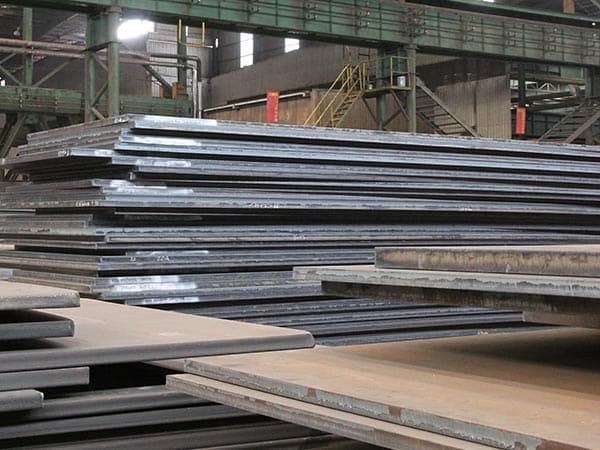
Technical Superiority of 1.8974 Steel in Heavy-Duty Engineering
The 1.8974 steel grade, commonly recognized under the EN 10149-2 standard as S700MC, represents the pinnacle of high-yield strength cold-forming steels. In the manufacturing of large truss truck booms, this material is selected not merely for its name but for its exceptional strength-to-weight ratio. The current market anomaly, where trading volumes have dipped during a traditionally high-demand season, warrants a deep dive into the material's properties to understand if technical shifts or economic factors are driving this change. 1.8974 is produced through a thermomechanical rolling process, which refines the grain structure far beyond what traditional normalized rolling can achieve. This microscopic refinement translates into a macroscopic advantage: the ability to support massive loads while keeping the boom's self-weight to a minimum.
For large truss structures, every kilogram saved in the boom's weight is an additional kilogram of lifting capacity or a reduction in the counterweight required for the vehicle. 1.8974 steel provides a minimum yield strength of 700 MPa, which allows engineers to design thinner sections without compromising structural integrity. This efficiency is why it remains the primary choice for mobile cranes, concrete pump trucks, and specialized transport equipment, even when market fluctuations create temporary procurement lulls.
Mechanical Properties and Material Composition
The performance of 1.8974 steel is rooted in its precise chemical balance. Unlike lower-grade structural steels, 1.8974 utilizes micro-alloying elements such as Niobium (Nb), Vanadium (V), and Titanium (Ti). These elements act as grain refiners and precipitation hardeners. The low carbon content (typically below 0.12%) is critical for ensuring that the steel remains weldable and ductile despite its high strength. The following table outlines the typical mechanical and chemical requirements that define this grade:
| Property/Element | Requirement (Typical) |
|---|---|
| Yield Strength (ReH) | Min. 700 MPa |
| Tensile Strength (Rm) | 750 - 950 MPa |
| Elongation (A5) | Min. 12% |
| Carbon (C) | Max. 0.12% |
| Manganese (Mn) | Max. 2.10% |
| Silicon (Si) | Max. 0.60% |
The impact toughness of 1.8974 is another critical factor. Large truss booms often operate in diverse climates, from scorching deserts to arctic environments. This steel maintains its structural stability and resistance to brittle fracture at low temperatures, a non-negotiable requirement for safety-critical components in the lifting industry.
Processing and Fabrication Excellence
One reason 1.8974 steel has dominated the truss boom market is its excellent processing characteristics. Cold forming is a standard requirement for boom sections, which are often bent into complex U-shapes or hexagonal profiles to maximize rigidity. Despite its 700 MPa yield strength, 1.8974 exhibits a surprisingly small minimum bending radius, reducing the risk of cracking during the fabrication process. This ductility is a direct result of the thermomechanical rolling process which ensures a very clean steel with minimal inclusions.
Welding is the most critical phase in truss boom assembly. 1.8974 steel is designed with a low carbon equivalent (CEV), which significantly enhances its weldability. It can be welded using standard processes such as MAG (Metal Active Gas) or submerged arc welding. However, because the strength of 1.8974 is derived from its specific thermomechanical history, excessive heat input during welding can lead to softening in the Heat Affected Zone (HAZ). Experienced manufacturers manage this by strictly controlling cooling rates and using high-quality filler metals that match the strength of the base material. The ability of 1.8974 to maintain its properties after welding is a key reason why it is preferred over alternative high-strength alloys that might require complex post-weld heat treatments.
Environmental Adaptability and Fatigue Resistance
Large truss truck booms are subject to cyclic loading, which makes fatigue resistance a primary design concern. 1.8974 steel possesses a high fatigue limit, allowing it to withstand millions of stress cycles without developing micro-cracks. This longevity is essential for the total cost of ownership of the machinery. Furthermore, the surface quality of 1.8974, often supplied in a pickled and oiled condition, provides an excellent substrate for modern anti-corrosion coatings. This ensures that the truss structure remains protected against the elements, preventing the localized pitting that can lead to catastrophic structural failure.
In the current market, where the trading of 1.8974 is lower than expected, some manufacturers are looking at even higher grades like S900 or S960. However, the balance of toughness, weldability, and cost-effectiveness offered by 1.8974 remains the benchmark for the majority of standard and heavy-lift truss applications. The environmental adaptability of this grade ensures it remains viable for global export markets where varied environmental regulations and operating conditions exist.
Market Dynamics: Why the Peak Season is Underperforming
The unexpected slowdown in 1.8974 steel trading for truss booms can be attributed to several converging factors. First, the global construction sector has seen a shift toward refurbishing existing fleets rather than investing in new, high-capacity machinery. This has led to a decrease in the immediate demand for new steel plates. Second, inventory management strategies have evolved. Many large-scale OEMs (Original Equipment Manufacturers) are operating on a "just-in-case" rather than "just-in-time" basis, having over-purchased during the supply chain disruptions of previous years, leading to a temporary digestion period for existing stocks.
Additionally, the price volatility of alloying elements like Manganese and Niobium has made buyers cautious. Even in a peak season, procurement managers are opting for smaller, frequent orders rather than bulk purchases to mitigate the risk of price drops. This behavior creates the illusion of a stagnant market, even though the underlying technical demand for 1.8974 remains robust. The industry is also seeing a move toward more optimized truss designs that use less material more effectively, slightly reducing the tonnage required per unit even as the number of units produced remains stable.
Future Outlook for 1.8974 in Heavy Lifting
Looking ahead, the demand for 1.8974 steel is expected to stabilize as the next generation of infrastructure projects gains momentum. The move toward green energy, specifically the installation of larger wind turbines, requires cranes with longer and stronger truss booms. This will inevitably drive the demand for 1.8974 and higher grades. Manufacturers who specialize in the precision processing of 1.8974—such as laser cutting and high-accuracy bending—will find themselves at a competitive advantage when the market rebounds.
The current lower-than-expected trading volume should be viewed as a market correction rather than a decline in the material's relevance. The technical attributes of 1.8974—its high yield strength, superior weldability, and exceptional fatigue life—ensure that it will remain the backbone of the truss truck boom industry for the foreseeable future. Strategic buyers are currently using this period of lower demand to secure supply chains and audit their fabrication processes to ensure they are maximizing the potential of this advanced steel grade.
- High yield strength allows for significant weight reduction in boom structures.
- Excellent cold forming properties enable complex geometric designs.
- Superior weldability reduces fabrication time and increases safety.
- Exceptional fatigue resistance extends the operational life of heavy machinery.
- Thermomechanical rolling ensures consistent quality across large production batches.
Leave a message