
automobile structure steel S355MC for engineering and machine structural use
Explore the technical specifications, mechanical properties, and industrial applications of S355MC steel. Learn why this thermomechanically rolled steel is essential for automotive and heavy machinery engineering.
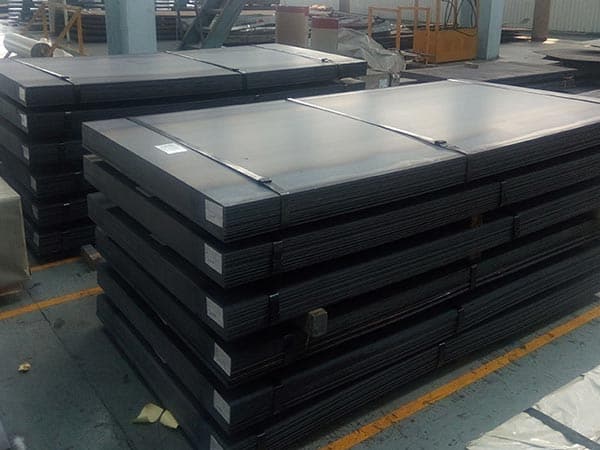
Defining S355MC: The Pinnacle of Thermomechanically Rolled Steel
S355MC is a high-strength, cold-forming steel grade governed by the European standard EN 10149-2. The "S" denotes structural steel, "355" represents the minimum yield strength in Megapascals (MPa), and "MC" indicates that the material is thermomechanically rolled (M) and specifically designed for cold forming (C). Unlike traditional hot-rolled structural steels, S355MC undergoes a specialized rolling process where temperature and deformation are precisely controlled to refine the grain structure. This results in a material that balances high load-bearing capacity with exceptional ductility, making it a cornerstone for modern automotive chassis and complex engineering frameworks.
Chemical Composition and Micro-Alloying Precision
The superior performance of S355MC is not accidental; it is the result of a meticulously balanced chemical composition. Manufacturers utilize micro-alloying elements such as Niobium (Nb), Vanadium (V), and Titanium (Ti) to achieve grain refinement. These elements form fine carbides and nitrides that pin grain boundaries during the rolling process, preventing grain growth and enhancing strength without the need for excessive carbon content.
| Element | Maximum Content (%) | Functional Role |
|---|---|---|
| Carbon (C) | 0.12 | Ensures excellent weldability and prevents brittleness. |
| Manganese (Mn) | 1.50 | Increases hardness and tensile strength. |
| Silicon (Si) | 0.50 | Acts as a deoxidizer and strengthens the ferrite. |
| Phosphorus (P) | 0.025 | Kept low to maintain toughness and prevent cracking. |
| Niobium (Nb) | 0.09 | Key micro-alloy for grain refinement and precipitation hardening. |
By maintaining a low carbon equivalent (CEV), S355MC avoids the common pitfalls of traditional high-carbon steels, such as poor weldability and susceptibility to cold cracking. This chemical profile is essential for manufacturers who require consistent performance across large production batches.
Mechanical Properties and Structural Integrity
The hallmark of S355MC is its impressive yield-to-tensile ratio. For engineers, the yield strength is the most critical parameter as it defines the limit at which the steel will permanently deform. S355MC provides a minimum yield strength of 355 MPa, which allows for significant weight reduction in structural designs compared to standard S235 or S275 grades.
- Yield Strength: Min 355 MPa (for thicknesses ≤ 16mm).
- Tensile Strength: 430 to 550 MPa.
- Elongation: Min 19% to 23% (depending on thickness), ensuring the material can withstand significant deformation before fracture.
- Impact Toughness: Often tested at -20°C or -40°C to ensure reliability in harsh climates.
These properties enable the design of thinner, lighter components that do not sacrifice safety or durability. In the automotive sector, this translates directly to improved fuel efficiency and higher payload capacities for commercial vehicles.
Advanced Cold Forming and Bending Capabilities
One of the primary reasons S355MC is preferred over s355jr (a common structural grade) is its superior cold-forming behavior. The thermomechanical rolling process produces a very fine and uniform grain structure, which allows the steel to be bent at tight radii without cracking or surface tearing. This is particularly advantageous for complex geometries found in truck longitudinal beams, cross members, and cold-pressed profiles.
Bending Radius Considerations: When working with S355MC, the recommended minimum bending radius is typically much smaller than that of standard structural steels. For a plate thickness (t), a 90-degree bend can often be achieved with a radius of 0.5t to 1.5t, depending on the orientation relative to the rolling direction. This flexibility allows designers to consolidate multiple parts into a single pressed component, reducing assembly time and welding costs.
Weldability and Fabrication Efficiency
In modern engineering, welding is the primary method of joining. S355MC is exceptionally well-suited for all standard welding processes, including MIG/MAG, TIG, submerged arc, and laser welding. Because of its low carbon and alloy content, it does not require preheating in most thickness ranges, which significantly accelerates production cycles.
The Heat Affected Zone (HAZ) in S355MC remains stable, maintaining much of the base metal's toughness and strength. However, it is vital to control heat input to prevent excessive grain growth in the HAZ, which could lead to localized softening. Laser cutting S355MC is also highly efficient, as the material's clean chemical composition results in smooth edges and minimal dross, reducing the need for secondary finishing operations.
Environmental Adaptability and Longevity
S355MC exhibits good atmospheric corrosion resistance compared to plain carbon steels, though it is typically used in conjunction with protective coatings such as galvanizing, cataphoretic painting (KTL), or powder coating. The surface quality of S355MC is generally superior to hot-rolled structural steel, providing an excellent substrate for these coatings to adhere to.
Furthermore, its performance in low-temperature environments makes it a reliable choice for machinery operating in arctic conditions or high-altitude regions. The fine-grain structure provides a natural barrier against brittle fracture, a common failure mode in lower-quality steels when exposed to sub-zero temperatures.
Strategic Applications in Automotive and Heavy Machinery
The versatility of S355MC has led to its widespread adoption across several high-stakes industries. Its primary use case remains the automotive sector, specifically for heavy-duty vehicles where the strength-to-weight ratio is paramount.
- Truck Chassis and Frames: S355MC provides the necessary stiffness to handle heavy loads while remaining light enough to maximize transport efficiency.
- Agricultural Equipment: Used in the construction of plow frames, trailers, and harvester components that require high fatigue resistance.
- Crane Booms and Lifting Gear: The high yield strength allows for longer reach and higher lift capacities in mobile cranes.
- Cold Pressed Parts: Ideal for brackets, supports, and structural reinforcements in both passenger and commercial vehicles.
By utilizing S355MC, manufacturers can achieve a "lightweighting" effect, reducing the overall mass of a vehicle by up to 20% compared to using traditional mild steels. This reduction is critical for meeting stringent carbon emission standards and improving the lifecycle sustainability of industrial machinery.
Optimizing Procurement and Material Selection
When sourcing S355MC, it is essential to verify the material certification against EN 10149-2 standards. Buyers should pay close attention to surface finish requirements and thickness tolerances. Because S355MC is often used in automated robotic welding and high-speed pressing lines, consistency in mechanical properties across the entire coil or plate is non-negotiable. Selecting a supplier that utilizes advanced thermomechanical rolling technology ensures that the internal stress distribution of the steel is minimized, preventing warping during laser cutting or machining.
The transition from standard S355JR to S355MC represents a shift toward precision engineering. While the initial material cost may differ, the total cost of ownership—factoring in reduced weight, faster fabrication, and lower scrap rates—makes S355MC the more economical choice for high-performance structural applications.
Leave a message