
How to visually distinguish whether it is hot rolled or cold rolled EN 1.0984 EN 10149-2
Detailed guide on identifying EN 1.0984 (S420MC) steel through visual inspection, mechanical properties, and processing characteristics according to EN 10149-2.
Understanding the Essence of EN 1.0984 (S420MC) Steel
EN 1.0984, commonly referred to as S420MC under the EN 10149-2 standard, represents a high-yield strength steel specifically designed for cold forming. While the standard itself focuses on hot-rolled products, many procurement specialists and engineers often face the challenge of distinguishing between the raw hot-rolled state and materials that have undergone secondary cold-rolling or surface treatments. This distinction is critical because the processing history directly impacts the material's internal stress, grain structure, and subsequent performance in demanding structural applications. Identifying the state of EN 1.0984 requires a keen eye for surface morphology, dimensional nuances, and a deep understanding of the thermomechanical rolling process used to achieve its superior properties.
Surface Morphology: The Primary Visual Indicator
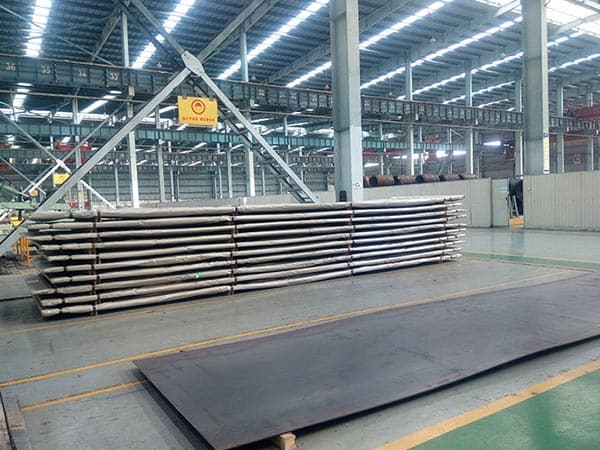
The most immediate way to distinguish hot-rolled EN 1.0984 from a cold-rolled counterpart is the surface texture. Hot-rolled S420MC is produced at temperatures above the recrystallization point, typically followed by controlled cooling. This process leaves a characteristic layer of iron oxide, known as mill scale. This scale is often dark grey or bluish-black and has a slightly rough, matte finish. When you run your hand across a hot-rolled plate, you will feel a distinct graininess. In contrast, cold-rolled steel undergoes further processing at room temperature, which removes the mill scale and compresses the surface. The result is a much smoother, almost reflective surface that feels oily or slick to the touch. If the EN 1.0984 you are inspecting has a mirror-like or satin finish without visible scaling, it has likely undergone cold reduction or intensive skin-passing.
Color Profiles and Oxidation Characteristics
Color serves as a secondary visual cue. Hot-rolled EN 1.0984 plates often exhibit a variegated color palette ranging from deep charcoal to a dusty blue, depending on the cooling rate and the specific thermomechanical treatment applied. You might also see 'heat tints' near the edges. Cold-rolled versions, however, are consistently bright silver or light grey. Because cold-rolled steel lacks the protective (though brittle) mill scale, it is often coated with a thin layer of rust-inhibitive oil, giving it a yellowish or translucent sheen. If the material shows signs of 'red rust' appearing in small pits, it is more likely to be hot-rolled, as the porous nature of mill scale can trap moisture, whereas cold-rolled surfaces tend to oxidize more uniformly if left unprotected.
Dimensional Precision and Edge Morphology
Looking at the edges and the thickness consistency provides further clues. EN 10149-2 hot-rolled sheets often feature 'mill edges,' which are slightly rounded and irregular because they have not been trimmed after the rolling process. The thickness of a hot-rolled EN 1.0984 plate may vary slightly across its width (crown effect). Cold-rolled steel is prized for its dimensional accuracy. The edges are typically slit or sheared, resulting in sharp, 90-degree angles. Furthermore, the thickness tolerance for cold-rolled products is significantly tighter. If you measure the plate with a micrometer and find virtually zero deviation across multiple points, you are likely looking at a cold-processed material. Hot-rolled S420MC, while precisely controlled during thermomechanical rolling, will always have a higher degree of surface topography variation compared to cold-rolled strips.
Chemical Composition and Micro-alloying Strategy
The performance of EN 1.0984 is rooted in its chemistry. As a thermomechanically rolled steel, it utilizes micro-alloying elements like Niobium (Nb), Vanadium (V), and Titanium (Ti) to refine the grain size. This fine-grained structure is what allows S420MC to maintain high yield strength while remaining highly ductile for cold forming. Below is a typical chemical composition breakdown for EN 1.0984:
| Element | Maximum Content (%) |
|---|---|
| Carbon (C) | 0.12 |
| Manganese (Mn) | 1.60 |
| Silicon (Si) | 0.50 |
| Phosphorus (P) | 0.025 |
| Sulfur (S) | 0.015 |
| Aluminium (Al) | 0.015 (min) |
The low carbon content is essential for weldability and prevents the formation of brittle phases during the rapid cooling phases of hot rolling. The addition of Mn and micro-alloys ensures that even in the hot-rolled state, the material achieves a yield strength of at least 420 MPa, which is comparable to many cold-rolled high-strength steels.
Mechanical Performance Benchmarks
While visual inspection is the first step, mechanical testing confirms the identity. EN 1.0984 is defined by its ability to be bent and folded without cracking. In its hot-rolled state, the yield strength is optimized through grain refinement rather than work hardening. Cold-rolled steels, conversely, gain much of their strength from the strain hardening that occurs during the cold reduction process. This difference is visible during a tensile test: hot-rolled S420MC typically shows a more pronounced yield point and higher elongation values compared to a cold-rolled steel of the same strength grade.
| Property | Value (EN 1.0984 / S420MC) |
|---|---|
| Yield Strength (ReH) | Min. 420 MPa |
| Tensile Strength (Rm) | 480 - 620 MPa |
| Elongation (A80mm) | Min. 16% (thickness < 3mm) |
| Bending Radius (180°) | 0.5t to 1.5t (depending on thickness) |
The high elongation and tight bending radius make EN 1.0984 a favorite for complex geometries. If a material snaps or exhibits orange-peel effects during a simple 90-degree bend, it likely lacks the fine-grained structure characteristic of true EN 10149-2 compliant hot-rolled steel.
Cold Forming and Fabrication Excellence
The 'MC' in S420MC stands for 'Thermomechanically rolled' (M) and 'Cold forming' (C). This steel is engineered to behave predictably in press brakes and roll-forming machines. Because the hot-rolling process for EN 1.0984 is so tightly controlled, the material has very low internal residual stresses. Cold-rolled steels, unless properly annealed, often contain significant residual stress that can cause 'springback' or warping after cutting or bending. When laser cutting EN 1.0984, the hot-rolled plate stays remarkably flat. If you observe significant bowing after a long longitudinal cut, the material might have been cold-rolled without subsequent stress-relief annealing.
Environmental Resilience and Durability
Environmental adaptability is another area where the hot-rolled EN 1.0984 excels. The thermomechanical rolling process enhances low-temperature toughness. This means that in cold climates, the steel is less prone to brittle fracture compared to standard cold-rolled carbon steels. For outdoor applications, the mill scale on hot-rolled S420MC provides a temporary barrier against atmospheric corrosion, although for long-term use, it is typically pickled and oiled or galvanized. Cold-rolled surfaces, being more chemically 'active' due to the lack of scale, will flash-rust much faster if exposed to humidity. Therefore, the presence of a light, uniform rust film across a large surface area often points toward a cold-rolled or pickled-and-oiled hot-rolled product.
Strategic Industry Applications
Identifying EN 1.0984 correctly is vital for its primary industries. In the automotive sector, it is used for chassis components, longitudinal beams, and cross-members where weight reduction and high strength are paramount. In these cases, the hot-rolled state is preferred for its cost-effectiveness and excellent weldability. The construction machinery industry uses S420MC for crane booms and excavator frames. In these heavy-duty applications, the thicker gauges provided by hot rolling are necessary. Conversely, if you see EN 1.0984 used in very thin, high-precision electronic brackets or decorative panels, it has almost certainly been cold-rolled to achieve the necessary surface finish and gauge thinness that hot rolling cannot reach.
- Automotive: Truck frames, cold-pressed parts, and suspension systems.
- Lifting Equipment: Mobile cranes, telescopic arms, and forklift masts.
- Infrastructure: Cold-formed sections for steel buildings and bridge components.
- Agriculture: Plow blades and structural frames for tractors.
By integrating visual cues like surface texture and color with technical knowledge of dimensional tolerances and mechanical behavior, professionals can accurately distinguish the state of EN 1.0984 steel. This ensures that the material selected is perfectly suited for the intended fabrication process and environmental conditions, maintaining the structural integrity of the final product.
Leave a message