
B700L steel for construction machinery parts for general intermediate strength applications
Explore the technical properties and industrial applications of B700L steel. This guide covers mechanical performance, weldability, and its role in enhancing construction machinery efficiency.
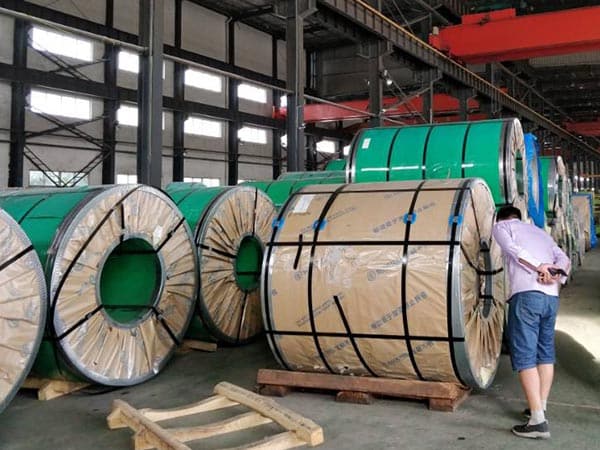
The Technical Evolution of B700L High-Strength Steel
B700L steel represents a significant advancement in the category of high-strength low-alloy (HSLA) materials, specifically engineered for the demanding environments of the construction machinery industry. As global engineering projects require equipment that is both lighter and more durable, the shift toward materials with a minimum yield strength of 700 MPa has become a standard practice. B700L is a cold-rolled or hot-rolled high-strength structural steel that balances extreme load-bearing capacity with the ductility required for complex fabrication. Its designation reflects its core utility: 'B' often associated with structural or automotive-grade high-strength standards, '700' indicating the minimum yield strength in megapascals, and 'L' signifying its suitability for low-temperature toughness or specific cold-forming applications. This material serves as the backbone for critical components such as crane booms, concrete pump trucks, and heavy-duty chassis, where the ratio of strength to weight is the primary metric of performance.
Chemical Composition and Micro-Alloying Synergy
The superior performance of B700L is not accidental but the result of precise metallurgical control. The chemical composition is optimized to ensure high strength without compromising weldability or formability. Unlike traditional carbon steels that rely on high carbon content for strength—which often leads to brittleness—B700L utilizes a micro-alloying strategy. By incorporating small amounts of Niobium (Nb), Vanadium (V), and Titanium (Ti), manufacturers achieve grain refinement at the microscopic level. These elements form stable carbides and nitrides that pin grain boundaries during the cooling process, resulting in a fine-grained ferrite and pearlite (or sometimes bainite) microstructure. This refinement is the key to achieving a 700 MPa yield strength while maintaining excellent impact energy absorption. The low carbon equivalent (Ceq) is a critical factor for maintenance in the field, as it allows for welding without the extensive preheating cycles required by older generations of high-strength steel.
| Element | Carbon (C) | Silicon (Si) | Manganese (Mn) | Phosphorus (P) | Sulfur (S) | Aluminium (Al) | Nb+V+Ti |
|---|---|---|---|---|---|---|---|
| Content (%) | ≤ 0.12 | ≤ 0.50 | ≤ 2.00 | ≤ 0.025 | ≤ 0.015 | ≥ 0.015 | ≤ 0.22 |
Mechanical Properties and Structural Integrity
The mechanical profile of B700L is what makes it an 'intermediate strength' powerhouse. While ultra-high-strength steels (above 960 MPa) offer even higher limits, they often come with challenges in processing and cost. B700L occupies the 'sweet spot' for general intermediate strength applications. It provides enough strength to reduce plate thickness by up to 30% compared to traditional Q355 grade steels, yet it remains forgiving enough for standard workshop machinery. The tensile strength typically ranges between 750 and 950 MPa, providing a robust safety margin against structural failure. Elongation values, usually exceeding 12-14%, ensure that the material can undergo significant deformation before fracture, a vital safety feature for machinery operating under dynamic loads. Furthermore, the low-temperature impact toughness is often tested at -20°C or -40°C, ensuring that machinery can operate in arctic or high-altitude environments without the risk of brittle fracture.
| Property | Yield Strength (MPa) | Tensile Strength (MPa) | Elongation A50mm (%) | Impact Energy (-20°C) |
|---|---|---|---|---|
| B700L Value | ≥ 700 | 750 - 950 | ≥ 12 | ≥ 27 J |
Advanced Processing: Cold Forming and Machinability
One of the primary reasons for the widespread adoption of B700L in construction machinery is its exceptional cold-forming performance. In the manufacturing of telescopic booms for cranes or the U-shaped beams of truck chassis, the steel must be bent into complex shapes without cracking. B700L is designed with high purity and controlled inclusion morphology (often through calcium treatment), which prevents delamination during tight-radius bending. The minimum bending radius for B700L is remarkably low for its strength level, typically around 2.0 to 3.0 times the plate thickness, depending on the bending angle and grain direction. This allows designers to create more aerodynamic and structurally efficient shapes. Additionally, B700L exhibits excellent laser and plasma cutting characteristics. The clean chemical composition ensures that the heat-affected zone (HAZ) during cutting remains narrow, preserving the integrity of the edges for subsequent welding operations.
Weldability and Joint Performance in Heavy Fabrication
For the construction machinery sector, welding is the most critical fabrication step. B700L is formulated to be highly weldable using standard processes such as MAG (Metal Active Gas), MIG (Metal Inert Gas), and Submerged Arc Welding (SAW). Due to its low carbon content and optimized alloy design, the risk of cold cracking is significantly reduced. However, when working with 700 MPa steel, it is essential to manage the heat input. Excessive heat can lead to grain growth in the heat-affected zone, which might locally reduce the yield strength. Engineering teams typically recommend a medium heat input to balance penetration with the preservation of the fine-grained structure. Using high-quality filler metals that match the strength and toughness of the base metal is mandatory. When executed correctly, the welded joints of B700L structures exhibit nearly 100% joint efficiency, ensuring that the weld is as strong as the parent plate, which is crucial for components subjected to high-cycle fatigue.
Environmental Adaptability and Corrosion Resistance
Construction machinery often operates in harsh environments, from coastal areas with high salinity to industrial zones with acidic precipitation. While B700L is not a stainless steel, its micro-alloyed composition provides slightly better atmospheric corrosion resistance than plain carbon steel. The dense surface scale formed during the hot-rolling process acts as a preliminary barrier. For long-term durability, B700L responds exceptionally well to modern coating systems, including powder coating, epoxy painting, and galvanizing. The smooth surface finish of the steel allows for superior paint adhesion, which is critical for preventing under-film corrosion. Moreover, its performance in varying thermal cycles—ranging from the intense heat of desert operations to the freezing temperatures of winter construction—remains stable, making it a globally versatile material for equipment exporters.
Industry Applications: Beyond the Chassis
The application of B700L extends across various high-stress sectors. In the mobile crane industry, it is used for the manufacturing of telescopic boom sections where weight reduction directly translates to increased lifting capacity and longer reach. In the concrete machinery sector, the arms of pump trucks utilize B700L to minimize the weight of the boom, allowing for longer reaches on standard truck chassis without exceeding axle load limits. The mining industry employs B700L for the frames of underground loaders and heavy-duty dump truck bodies, where the material's resistance to impact and high yield strength helps withstand the constant pounding of heavy ores. Agricultural machinery manufacturers also utilize this grade for large-scale sprayers and tillage equipment, where reducing soil compaction through lighter machine weight is a key selling point for farmers. By replacing heavier, lower-grade steels with B700L, manufacturers can achieve a 'virtuous cycle' of design: lighter components lead to smaller engines, lower fuel consumption, and increased payload capacity.
Economic Impact and Sustainability
From a marketing and economic perspective, B700L offers a compelling value proposition. While the price per ton may be higher than standard structural steel, the 'total cost of ownership' and 'cost per unit of strength' are often lower. By using thinner sections of B700L to achieve the same structural integrity as thicker Q355, manufacturers save on material weight, which offsets the higher base price. Furthermore, thinner plates require less welding consumable and shorter welding times, reducing labor and energy costs. In the context of global sustainability goals, the use of B700L contributes to a lower carbon footprint. Lighter machinery consumes less fuel during its operational life, and the reduction in raw material usage translates to lower CO2 emissions during the steelmaking and transportation phases. This makes B700L not just a technical choice, but a strategic one for companies aiming to meet 'Green Manufacturing' standards.
Optimizing Design for B700L Utilization
To fully realize the benefits of B700L, engineering departments must move away from 'thickness-for-thickness' replacement and embrace 'design-for-strength' methodologies. Finite Element Analysis (FEA) is typically used to identify high-stress concentrations where B700L can be most effective. Designers can utilize the high yield strength to implement thinner, more complex geometries that were previously impossible with lower-grade materials. It is also important to consider the fatigue life; since B700L has a higher tensile strength, its fatigue limit is also higher, but this is sensitive to surface finish and weld quality. Therefore, specifying high-quality surface treatments and non-destructive testing (NDT) for critical welds ensures that the machinery remains operational for decades. The transition to B700L is a holistic process that integrates material science, advanced fabrication, and smart design to produce the next generation of high-performance construction equipment.
Leave a message