
China S315MC yield prices continue to decline
A comprehensive analysis of the declining prices of S315MC steel in China, covering its mechanical properties, chemical composition, and industrial applications for procurement optimization.
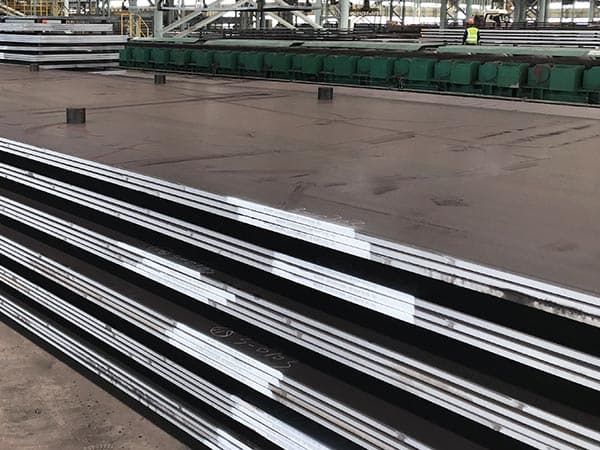
Current Market Dynamics of S315MC Steel in China
The recent trajectory of the Chinese steel market indicates that S315MC yield prices continue to decline, a trend driven by a complex interplay of oversupply, fluctuating raw material costs, and a cautious downstream procurement strategy. S315MC, a high-yield strength steel for cold forming, is a critical material for the automotive and machinery sectors. The downward pressure on prices presents a unique window for manufacturers to optimize their supply chains, yet it requires a profound understanding of the material's technical value to maximize cost-efficiency without compromising structural integrity.
As domestic mills increase production efficiency, the availability of S315MC has surged. This abundance, coupled with the stabilization of iron ore and coking coal prices, has allowed for more competitive pricing models. However, for engineers and procurement specialists, the focus must extend beyond the price tag to the intrinsic properties that make S315MC a preferred choice for weight-saving and high-performance structural components.
Technical Profile: Understanding S315MC High-Strength Steel
S315MC is a thermomechanically rolled (TMCP) steel grade defined under the EN 10149-2 standard, often mirrored in Chinese GB/T standards. Its primary appeal lies in its high yield strength combined with exceptional cold-forming capabilities. Unlike traditional structural steels, S315MC is designed to be thinner and lighter while maintaining superior load-bearing capacity, making it indispensable in the modern push for fuel efficiency and reduced carbon footprints in transportation.
The 'S' signifies structural steel, '315' denotes the minimum yield strength of 315 MPa, and 'MC' indicates that the steel is thermomechanically rolled for improved grain refinement. This microstructural refinement is the secret behind its high toughness and weldability, even at lower temperatures.
Chemical Composition and Material Consistency
The performance of S315MC is rooted in its precise chemical makeup. By utilizing micro-alloying elements such as Niobium (Nb), Vanadium (V), and Titanium (Ti), manufacturers can achieve high strength without the brittleness often associated with high-carbon steels. The following table outlines the typical chemical requirements for S315MC:
| Element | Max Content (%) |
|---|---|
| Carbon (C) | 0.12 |
| Manganese (Mn) | 1.30 |
| Silicon (Si) | 0.50 |
| Phosphorus (P) | 0.025 |
| Sulfur (S) | 0.020 |
| Aluminium (Al) | 0.015 (min) |
| Nb + V + Ti | 0.22 (total) |
Low carbon content is a pivotal feature of S315MC, ensuring that the material remains highly weldable. The inclusion of Niobium and Titanium helps in controlling the grain size during the rolling process, which directly contributes to the steel's ability to resist crack propagation during heavy forming operations.
Mechanical Properties and Yield Strength Performance
While the market focuses on the declining yield prices, the mechanical reliability of S315MC remains its strongest selling point. The material exhibits a fine balance between strength and ductility, which is essential for components that undergo complex bending or stamping. The mechanical properties are tested both longitudinal and transverse to the rolling direction to ensure isotropic reliability.
| Property | Value Range |
|---|---|
| Yield Strength (ReH) | Min 315 MPa |
| Tensile Strength (Rm) | 390 - 510 MPa |
| Elongation (A80mm) | Min 20% (for thickness < 3mm) |
| Elongation (A5) | Min 24% (for thickness ≥ 3mm) |
The high elongation percentage indicates that S315MC can withstand significant deformation before failure. This is particularly useful in the manufacturing of complex chassis components where deep drawing and tight-radius bending are common. The consistency of these mechanical properties across different batches is a hallmark of high-quality Chinese mills, which have adopted advanced automated control systems in their rolling lines.
Process Performance: Welding and Cold Forming
One of the primary reasons S315MC maintains its popularity despite market fluctuations is its exceptional processability. Welding is a critical factor in structural assembly. S315MC can be welded using all standard methods, including MIG/MAG, TIG, and submerged arc welding. Due to its low carbon equivalent (CEV), it does not require preheating in most standard thicknesses, significantly reducing labor costs and cycle times in the factory.
- Cold Bending: S315MC is specifically designed for cold forming. It can be bent to very small internal radii without the risk of surface cracking or edge tearing.
- Stamping: The uniform grain structure allows for high-speed stamping operations, making it ideal for mass-produced automotive parts.
- Laser Cutting: The clean chemical composition and low impurity levels result in high-quality laser cut edges, which require minimal post-processing.
Manufacturers utilizing S315MC benefit from reduced tool wear compared to higher-strength grades like S700MC, while still achieving a significant weight reduction over standard S235JR or Q235B steels. This middle-ground positioning makes S315MC an incredibly versatile tool for industrial designers.
Environmental Adaptability and Fatigue Resistance
Beyond the factory floor, S315MC demonstrates robust environmental adaptability. While it is not a weathering steel per se, its dense surface structure and controlled chemistry provide a reliable base for various coating technologies, including hot-dip galvanizing, E-coating, and powder coating. This ensures that structural components used in harsh outdoor environments maintain their integrity over long service lives.
Fatigue resistance is another critical attribute. In the transportation industry, components are subjected to cyclic loading. The fine-grained microstructure of S315MC provides a higher fatigue limit compared to traditional hot-rolled steels. This means that parts made from S315MC can be designed with thinner sections without increasing the risk of fatigue failure, directly contributing to the "lightweighting" trend in modern engineering.
Expanding Industry Applications
The decline in S315MC prices has accelerated its adoption across a wider range of industries. While traditionally dominated by the automotive sector, other fields are now recognizing the cost-to-performance ratio of this grade.
- Automotive Industry: Used extensively for longitudinal beams, cross members, and chassis frames where strength and weight are critical.
- Agricultural Machinery: Ideal for the frames of plows, harvesters, and trailers that require high durability in rugged terrain.
- Construction Equipment: Applied in the booms and structural supports of cranes and excavators.
- Storage Systems: High-density racking systems and heavy-duty shelving benefit from the high yield strength to support massive loads with minimal material usage.
The ability to replace thicker, heavier mild steel with thinner S315MC not only saves on the material cost per unit but also reduces shipping costs and energy consumption during the end-use phase. As prices continue to decline in the Chinese market, the ROI for switching to S315MC becomes even more compelling for SMEs (Small and Medium Enterprises).
Strategic Procurement in a Declining Price Environment
With China S315MC yield prices continuing to decline, procurement teams should look beyond immediate savings. Establishing long-term partnerships with reputable mills ensures material consistency, which is vital for automated production lines. It is also an opportune time to conduct R&D on product upgrades. If a product currently uses Q235B, upgrading to S315MC during this price dip can enhance the product's market competitiveness through improved strength and reduced weight without a prohibitive increase in raw material expenditure.
Furthermore, monitoring the price of alloying elements like Niobium and Titanium can provide early warnings for when the price floor might be reached. Inventory management should be balanced; while prices are low, overstocking carries risks if the market shifts toward even higher-strength grades or if local environmental regulations impact production outputs in certain Chinese provinces.
The current market situation for S315MC in China represents a strategic opportunity. By leveraging the material's superior mechanical properties, excellent weldability, and enhanced fatigue resistance, manufacturers can produce higher-quality goods at a lower cost basis. Understanding the technical nuances of S315MC ensures that the price decline is not just a short-term gain, but a foundation for long-term engineering excellence and market leadership.
Leave a message