
What is the S355MC composition steel measurement
A comprehensive guide to S355MC composition steel measurement, covering chemical analysis, mechanical properties, processing performance, and industrial applications.
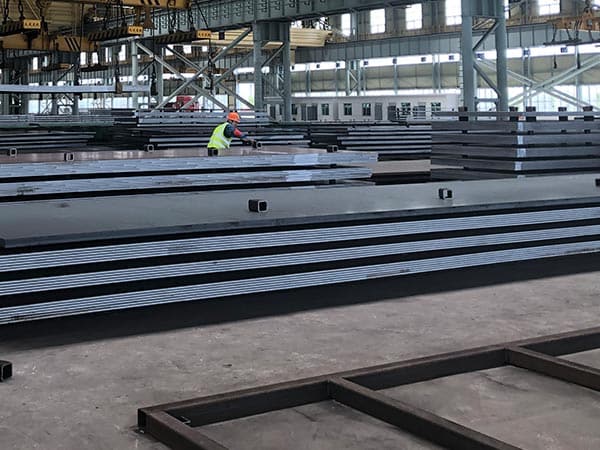
Defining S355MC: The Standard of High-Strength Cold Forming Steel
S355MC is a high-yield-strength, hot-rolled steel specifically designed for cold forming applications. Governed by the EN 10149-2 standard, this grade represents a category of thermomechanically rolled steels that offer a unique combination of high strength, excellent ductility, and superior weldability. The 'S' denotes structural steel, '355' refers to the minimum yield strength of 355 MPa, 'M' indicates its thermomechanical rolling delivery condition, and 'C' signifies its suitability for cold forming. Understanding the S355MC composition steel measurement is vital for engineers and procurement specialists who require materials that can withstand significant stress while remaining easy to shape and join. Unlike traditional structural steels, S355MC achieves its properties through a sophisticated micro-alloying process and controlled rolling temperatures rather than high carbon content.
The Precise Chemical Composition of S355MC
The chemical makeup of S355MC is the foundation of its mechanical performance. The measurement of chemical elements is strictly controlled to ensure the steel maintains its fine-grained structure. The most notable characteristic of S355MC is its extremely low carbon content, which is significantly lower than that of standard structural steels like s355jr. This low carbon level is the primary reason for its exceptional welding characteristics and cold-forming capabilities. Manganese is added to increase strength and hardness, while silicon provides deoxidation. The inclusion of micro-alloying elements such as Niobium, Vanadium, and Titanium is what truly sets S355MC apart, as these elements refine the grain size and enhance yield strength without compromising toughness.
| Element | Maximum Percentage (%) |
|---|---|
| Carbon (C) | 0.12 |
| Manganese (Mn) | 1.50 |
| Silicon (Si) | 0.50 |
| Phosphorus (P) | 0.025 |
| Sulfur (S) | 0.020 |
| Aluminum (Al) total | 0.015 |
| Niobium (Nb) | 0.09 |
| Vanadium (V) | 0.20 |
| Titanium (Ti) | 0.15 |
These measurements ensure that the steel remains clean and free from impurities that could lead to brittle failure. The low sulfur and phosphorus content are particularly important for preventing lamellar tearing during welding and ensuring uniform performance across the entire plate or coil.
Mechanical Property Measurements and Thresholds
The mechanical properties of S355MC are measured through standardized tensile and impact tests. The primary metric is the yield strength, which must be at least 355 MPa for thicknesses up to 16mm. As the thickness increases, the yield strength requirements may vary slightly, but the core objective remains the same: providing a high strength-to-weight ratio. Tensile strength, which measures the maximum stress the material can handle before breaking, typically ranges between 430 and 550 MPa. Another critical measurement is elongation, which indicates the steel's ability to deform plastically before fracture. For S355MC, elongation values are impressively high, often exceeding 19-23% depending on the gauge, which allows for complex bending and deep drawing operations.
| Property | Measurement Range / Minimum |
|---|---|
| Yield Strength (ReH) | min. 355 MPa |
| Tensile Strength (Rm) | 430 - 550 MPa |
| Elongation (A80mm, t < 3mm) | min. 19% |
| Elongation (A5, t ≥ 3mm) | min. 23% |
| Bending Radius (90°) | 0.5t to 1.5t (depending on thickness) |
These mechanical measurements are not just numbers; they represent the safety margins and reliability of the final structures. Engineers use these values to calculate the load-bearing capacity of automotive frames, crane booms, and structural sections.
Thermomechanical Rolling: The Secret to Performance
The 'M' in S355MC stands for thermomechanically rolled. This process involves a carefully controlled temperature-time cycle during the rolling phase in the mill. Unlike traditional normalizing, where the steel is heated above its critical temperature and then cooled, thermomechanical rolling (TMCP) occurs at specific temperatures that prevent grain growth. This results in a fine-grained microstructure that is inherently tougher and stronger. The measurement of temperature during this process is critical; if the steel is rolled too hot, the grains become coarse, reducing toughness. If it is too cold, the rolling forces become excessive. This metallurgical precision allows S355MC to achieve its high yield strength with minimal alloying, making it more cost-effective and easier to weld than quenched and tempered steels.
Cold Forming and Fabrication Versatility
Fabricators choose S355MC because of its predictable behavior during cold forming. The measurement of the minimum bending radius is a key parameter here. Because of its fine grain structure and low carbon content, S355MC can be bent to very tight radii without cracking on the outer tension surface. This is particularly beneficial for manufacturers of complex chassis components and longitudinal beams in the automotive industry. Furthermore, the steel's consistent thickness and flatness, measured according to EN 10051, ensure that automated laser cutting and robotic welding systems can operate with high precision and minimal downtime. The low Carbon Equivalent Value (CEV) means that preheating is rarely required for welding, significantly reducing energy costs and production time.
Weight Reduction and Structural Efficiency
One of the most significant advantages of using S355MC is the potential for weight reduction. By utilizing a steel with a 355 MPa yield strength instead of a standard 235 MPa grade, designers can reduce the thickness of structural components by up to 30% while maintaining the same load-carrying capacity. This measurement of efficiency is a driving force in the transportation sector, where lighter vehicles translate directly into higher fuel efficiency and increased payload capacity. In the construction of heavy machinery, such as excavators and mobile cranes, the high strength-to-weight ratio of S355MC allows for longer reach and greater lifting capacities without adding unnecessary bulk to the machine's own weight.
Environmental Adaptability and Fatigue Life
S355MC is not only strong but also resilient in various environmental conditions. While it is not a dedicated weathering steel, its clean chemical composition provides a stable substrate for coatings and galvanization. In terms of mechanical environment adaptability, S355MC exhibits good fatigue resistance. Fatigue is the measurement of how a material performs under cyclic loading, such as the vibrations experienced by a truck frame over thousands of miles. The fine-grained structure of S355MC inhibits the initiation and propagation of micro-cracks, leading to a longer service life for critical components. Additionally, many S355MC variants are tested for impact toughness at low temperatures (e.g., -20°C or -40°C), ensuring they do not become brittle in cold climates.
Diverse Industrial Applications
The versatility of S355MC has led to its adoption across a wide range of industries. In the automotive sector, it is the preferred material for truck chassis, cross members, and suspension parts. The agricultural industry uses it for trailer frames and harvesting equipment components that require both strength and the ability to be formed into specific shapes. In the energy sector, S355MC is found in the structural supports for solar panels and wind turbine internal components. The measurement of its success in these industries is seen in the reduced failure rates and the ability to create more aerodynamic and efficient designs. Cold-pressed parts, such as brackets and housings, also benefit from the steel's excellent surface quality and consistent mechanical properties.
Quality Assurance and Testing Standards
To ensure that every batch of S355MC meets the required composition and performance measurements, rigorous quality assurance protocols are followed. Each coil or plate is usually accompanied by a 3.1 or 3.2 material test certificate (MTC) according to EN 10204. This document provides the actual heat analysis (chemical composition) and the results of the tensile and bend tests for that specific batch. Ultrasonic testing may also be employed to detect internal flaws or inclusions. For end-users, verifying these measurements against the EN 10149-2 standard is the best way to guarantee that the material will perform as expected during fabrication and throughout its service life.
Optimizing Procurement for S355MC
When sourcing S355MC, it is important to consider the dimensional tolerances. Standard measurements follow EN 10051 for hot-rolled products. Buyers should specify the required surface finish and whether the material should be pickled and oiled (P&O) to remove mill scale, which is essential for subsequent painting or plating. Understanding the interplay between chemical composition, mechanical measurements, and processing costs allows businesses to make informed decisions that balance performance with economic viability. By choosing S355MC, manufacturers are investing in a material that combines the reliability of traditional steel with the advanced performance of modern metallurgical engineering.
Leave a message