
What is the stock of S355MC hot rolled steel?
Discover the technical depth of S355MC hot rolled steel. This guide explores stock availability, mechanical properties, chemical composition, and processing advantages of EN 10149-2 high-yield strength steel for automotive and structural engineering.
The Fundamental Nature of S355MC Hot Rolled Steel Stock
S355MC is a high-yield strength, thermomechanically rolled steel specifically engineered for cold-forming applications. Governed by the European standard EN 10149-2, the "S" stands for structural steel, "355" represents the minimum yield strength of 355 MPa, and "MC" denotes that the material is thermomechanically rolled (M) and suitable for cold forming (C). Unlike standard structural steels, S355MC is characterized by its refined grain structure and low carbon content, which provide a unique balance of strength, weldability, and ductility.
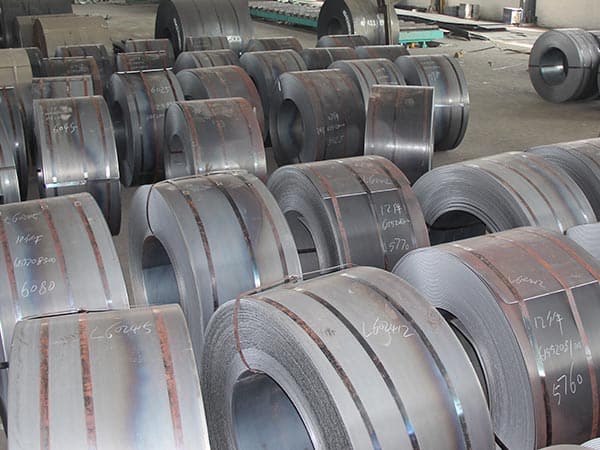
When discussing the stock of S355MC hot rolled steel, it is essential to recognize that this material is typically available in a variety of forms, including hot-rolled black coils, slit strips, and cut-to-length sheets. Due to its popularity in the automotive and heavy machinery sectors, stockists usually maintain a wide range of thicknesses, typically from 2.0mm to 20mm. Many suppliers also offer S355MC in a Pickled and Oiled (P&O) condition, which removes surface scale and provides a cleaner finish for subsequent processing such as laser cutting or painting.
The Science of Thermomechanical Rolling (TMCP)
The performance of S355MC is largely a result of the Thermomechanically Controlled Processing (TMCP). This metallurgical technique involves precise temperature control during the rolling process combined with specific cooling rates. By controlling the transformation of the austenite grain structure, manufacturers can achieve a very fine ferrite-pearlite grain size. This refinement is what allows S355MC to maintain high yield strength without the need for high alloy content, which would otherwise compromise weldability and cold-forming capabilities.
This process ensures that the material possesses high toughness even at low temperatures. For industries operating in harsh environments, such as mobile crane manufacturing or offshore transport equipment, the consistency of the grain structure across the entire length of the coil is a critical factor in ensuring structural integrity.
Detailed Chemical Composition Analysis
The chemical makeup of S355MC is meticulously balanced to ensure optimal performance. The use of micro-alloying elements such as Niobium (Nb), Vanadium (V), and Titanium (Ti) is a hallmark of this grade. These elements form fine carbides and nitrides that pin grain boundaries during rolling, preventing grain growth and enhancing strength through precipitation hardening.
| Element | Maximum Percentage (%) |
|---|---|
| Carbon (C) | 0.12 |
| Manganese (Mn) | 1.50 |
| Silicon (Si) | 0.50 |
| Phosphorus (P) | 0.025 |
| Sulphur (S) | 0.020 |
| Aluminum (Al) | 0.015 (Min) |
The exceptionally low carbon content (max 0.12%) is the primary reason for the material's excellent weldability. By keeping carbon levels low, the risk of hardening in the heat-affected zone (HAZ) is significantly reduced, preventing cold cracking during the welding of complex structural frames.
Mechanical Properties and Structural Reliability
S355MC is favored for its high strength-to-weight ratio. By utilizing S355MC instead of traditional S235 or s355jr structural steels, engineers can often reduce the thickness of components without sacrificing load-bearing capacity, leading to lighter final products and improved fuel efficiency in transport applications.
| Property | Value Range |
|---|---|
| Yield Strength (ReH) | Min 355 MPa |
| Tensile Strength (Rm) | 430 - 550 MPa |
| Elongation (A80mm) | Min 19% (t < 3mm) |
| Elongation (A5) | Min 23% (t ≥ 3mm) |
The elongation properties indicate that while the steel is strong, it retains enough plasticity to undergo significant deformation before fracture. This is vital for safety-critical components that must absorb energy during impacts, such as truck chassis members or automotive safety cages.
Superior Cold Forming and Processing Performance
One of the primary reasons S355MC is kept in high stock volumes is its versatility in the workshop. The "C" designation in its name highlights its suitability for cold forming. Unlike standard S355JR, which may crack when bent to tight radii, S355MC is designed to be folded and pressed with ease.
- Bending: S355MC supports tight bending radii. For thicknesses up to 3mm, the minimum bending radius is often as low as 0.25 times the thickness, depending on the orientation relative to the rolling direction.
- Welding: It can be welded using all standard methods (MIG/MAG, TIG, MMA, Laser). Due to its low Carbon Equivalent (CEV), preheating is generally unnecessary even for thicker sections.
- Laser Cutting: The consistent chemical composition and flat surface (especially in P&O condition) make it an ideal candidate for high-speed laser cutting, resulting in clean edges and minimal dross.
Expanding Applications Across Industries
The demand for S355MC stock spans multiple high-performance sectors. Its ability to provide structural rigidity while remaining lightweight makes it indispensable in modern engineering.
Automotive and Transportation: The most significant use of S355MC is in the production of truck frames, chassis components, and cross members. The high yield strength allows for thinner gauges, reducing the tare weight of vehicles and increasing payload capacity. It is also used in the manufacturing of trailers and specialized transport equipment.
Heavy Machinery and Lifting: In the production of telescopic booms for cranes, S355MC provides the necessary strength to lift heavy loads while maintaining the flexibility required for telescopic movement. Agricultural machinery, such as plows and harvesters, also utilizes this grade for parts that undergo constant stress and vibration.
Storage and Racking: High-density warehouse racking systems require materials that can support immense vertical loads while being thin enough to maximize storage space. S355MC's high yield strength makes it a preferred choice for uprights and beams in these systems.
Comparing S355MC and S355JR: Key Differences
It is a common misconception that S355MC and S355JR are interchangeable. While they share a similar yield strength, their manufacturing processes and intended uses differ significantly. S355JR is a standard structural steel (EN 10025-2) usually supplied in a hot-rolled or normalized condition. It is designed for general construction where cold forming is not a primary requirement.
In contrast, S355MC's thermomechanical rolling produces a much finer grain structure. This makes S355MC far superior for complex bending and pressing. If a project requires intricate shapes or weight reduction through precision engineering, S355MC is the technically superior choice. Furthermore, S355MC typically offers better surface quality, especially when sourced as pickled and oiled, which is critical for high-end manufacturing finishes.
Strategic Sourcing and Stock Availability
Sourcing S355MC requires an understanding of the supply chain. Major steel mills in Europe and Asia produce this grade to meet global demand. When looking for stock, it is important to verify the mill test certificates (MTC) to ensure compliance with EN 10149-2. Most stockists maintain standard widths of 1250mm and 1500mm, with custom widths available through slitting services.
The environmental adaptability of S355MC is also noteworthy. While it is not a weathering steel like Corten, its uniform structure allows for excellent adhesion of protective coatings. Whether galvanized or powder-coated, S355MC components demonstrate long-term durability in diverse climates, from humid coastal regions to dry industrial zones.
The versatility of S355MC hot rolled steel makes it a cornerstone of modern manufacturing. Its high yield strength, combined with exceptional cold-forming properties and weldability, allows for the creation of efficient, durable, and lightweight structures. By understanding the technical nuances of this grade, from its micro-alloyed chemistry to its thermomechanical processing, engineers and procurement professionals can better leverage its attributes to optimize their production processes and product performance.
Leave a message