
What is the cold forming S355MC high-strength steel price export to South Africa
Explore the comprehensive guide on S355MC high-strength steel pricing for South African exports. Learn about its mechanical properties, cold forming capabilities, and market drivers.
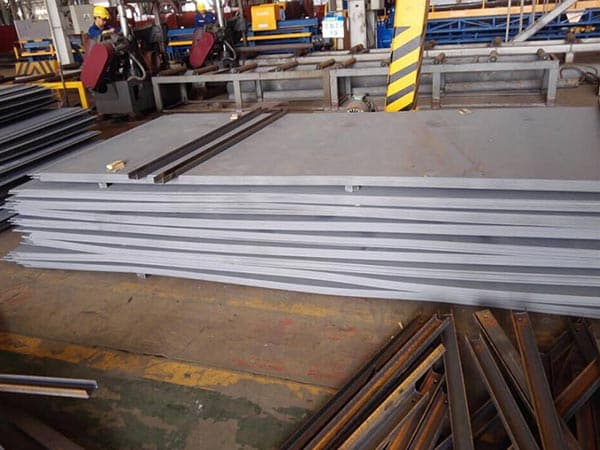
The Strategic Value of S355MC High-Strength Steel in the South African Market
Understanding the price of exporting S355MC high-strength steel to South Africa requires a deep dive into its metallurgical excellence and the specific demands of the Southern African industrial landscape. S355MC, governed by the EN 10149-2 standard, is a thermomechanically rolled steel designed specifically for cold forming. Its popularity in South Africa stems from the country's robust mining, automotive, and renewable energy sectors, where material weight reduction and structural integrity are paramount.
The pricing for S355MC is not a static figure; it is influenced by global raw material costs, shipping logistics to major ports like Durban or Cape Town, and the specific processing requirements of the end-user. For South African buyers, the value proposition of S355MC lies in its ability to offer higher strength without the weight penalty of traditional structural steels, leading to significant savings in transport and fuel costs over the lifecycle of the finished product.
Metallurgical Composition and Its Impact on Performance
The exceptional performance of S355MC is rooted in its precise chemical composition. Unlike standard hot-rolled steels, S355MC utilizes micro-alloying elements such as Niobium (Nb), Vanadium (V), and Titanium (Ti). These elements refine the grain structure during the thermomechanical rolling process, resulting in a steel that is both incredibly strong and remarkably ductile.
For South African manufacturers, this refined grain structure translates to superior weldability and toughness, even in the varying climatic conditions found from the humid coastlines of KwaZulu-Natal to the arid interiors of the Northern Cape. The low carbon content ensures that the steel maintains its properties during high-speed welding processes common in the automotive assembly lines of Port Elizabeth and Pretoria.
| Element | Max Content (%) | Role in Performance |
|---|---|---|
| Carbon (C) | 0.12 | Ensures excellent weldability and prevents brittleness. |
| Manganese (Mn) | 1.50 | Increases strength and hardness. |
| Silicon (Si) | 0.50 | Deoxidizer that improves yield strength. |
| Niobium (Nb) | 0.09 | Grain refinement for high toughness. |
Mechanical Properties: Why S355MC Excels in Cold Forming
The "MC" designation signifies that this steel is intended for cold forming (C) and has been thermomechanically rolled (M). With a minimum yield strength of 355 MPa, it provides a substantial upgrade over standard S235 or S275 grades. However, strength is only half the story. The real advantage for South African fabricators is its elongation and bending radius.
When producing complex components like truck chassis, crane arms, or solar mounting brackets, the steel must withstand severe deformation without cracking. S355MC offers an elongation at break of approximately 19% to 23% (depending on thickness), allowing for tight bend radii. This reduces the need for heat treatment post-forming, thereby lowering production costs and increasing throughput for local factories.
Environmental Adaptability and Durability in South Africa
South Africa presents a unique set of environmental challenges. Coastal regions face high salinity and humidity, while the highveld experiences intense UV radiation and temperature fluctuations. S355MC, while not a weathering steel like Corten, provides a clean surface finish due to the thermomechanical process, which is ideal for high-quality powder coating or galvanizing.
The structural stability of S355MC makes it highly resistant to fatigue, a critical factor for the heavy-duty trailers and mining equipment traversing the N3 corridor. Its ability to maintain mechanical integrity under vibration and cyclical loading ensures that infrastructure built with this material has a longer service life, reducing the total cost of ownership for South African enterprises.
Factors Influencing the Export Price to South Africa
When calculating the landed cost of S355MC in South Africa, several variables come into play beyond the base metal price. Freight rates are a primary driver; the distance from major production hubs in Asia or Europe to Durban significantly impacts the final quote. Additionally, the volatility of the South African Rand (ZAR) against the US Dollar (USD) can cause price fluctuations even when the global steel price remains stable.
- Volume and Dimensions: Bulk orders of standard coil sizes generally attract lower premiums compared to custom-cut sheets.
- Quality Certifications: Ensuring the steel comes with 3.1 or 3.2 Mill Test Certificates (MTC) is vital for South African compliance standards.
- Import Duties and Taxes: Understanding the current ITAC (International Trade Administration Commission) regulations in South Africa is essential for accurate budgeting.
- Packaging for Sea Freight: Export-grade packaging, including VCI (Volatile Corrosion Inhibitor) paper and steel strapping, is necessary to prevent rust during the long sea voyage.
Applications Across Key South African Industries
The versatility of S355MC allows it to penetrate various sectors of the South African economy. In the Automotive Industry, it is used for structural parts where weight reduction is necessary to meet fuel efficiency standards without compromising safety. Chassis frames, cross members, and reinforcement pillars are prime examples.
Within the Renewable Energy Sector, particularly the massive solar farm projects in the Karoo, S355MC is the preferred choice for mounting structures. Its high strength-to-weight ratio allows for longer spans and fewer support pillars, reducing both material and installation costs. Furthermore, the Mining Sector utilizes S355MC for the construction of conveyor systems and underground support structures where reliability is non-negotiable.
| Industry | Specific Application | Key Benefit of S355MC |
|---|---|---|
| Transport | Truck Chassis & Trailers | Increased payload capacity due to lower tare weight. |
| Construction | Cold-formed Sections | High precision and structural integrity. |
| Agriculture | Ploughs & Harvesters | Excellent wear resistance and formability. |
| Energy | Solar Tracker Frames | Durability and ease of mass production. |
Logistics and Supply Chain Excellence for South African Exports
Successful procurement of S355MC for the South African market hinges on a reliable supply chain. This involves not just the manufacturing of the steel, but the meticulous handling and shipping processes. Given the transit time to South African ports, moisture control is paramount. Suppliers must utilize seaworthy packaging to ensure the steel arrives in pristine condition, ready for immediate use in cold forming lines.
Working with experienced exporters who understand the specific documentation required by South African customs—including Bills of Lading, Packing Lists, and Certificates of Origin—is crucial. This minimizes delays at the port of entry and ensures that the high-strength steel can be integrated into production schedules without unforeseen interruptions. By focusing on these logistical details, buyers can mitigate risks and ensure that the price paid reflects the high quality and performance of the S355MC grade.
Leave a message