
What is the asme material HR coil Q235 pickled steel coil equivalent
Detailed analysis of Q235 pickled steel coil equivalents under ASME/ASTM standards. Explore mechanical properties, chemical composition, and industrial applications of Q235, SA36, and S235JR.
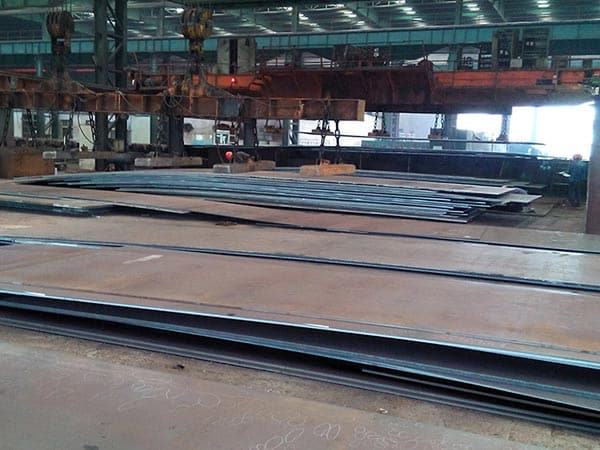
Understanding the Global Equivalents for Q235 Pickled Steel Coils
In the global steel trade, identifying the correct cross-reference for material grades is essential for engineering integrity and procurement efficiency. When asking what is the ASME material HR coil Q235 pickled steel coil equivalent, the primary answer lies within the ASTM A36 or ASME SA36 specifications, though several nuances exist depending on the specific application and processing state.
Q235 is a Chinese carbon structural steel defined under the GB/T 700 standard. The "235" denotes its minimum yield strength of 235 MPa. When this material is processed as a Hot Rolled (HR) coil and subsequently undergoes a pickling process (acid washing to remove surface scale), it becomes a Pickled and Oiled (P&O) product. This treatment enhances surface quality, making it a preferred choice for downstream processes like cold rolling, stamping, and painting.
Direct Comparison: Q235 vs. ASME SA36 and ASTM A36
The most common equivalent for Q235 in the American system is ASTM A36 for general structural use, or ASME SA36 for pressure vessel and boiler components. While they are not identical twins, their functional overlap is significant enough for most engineering projects.
| Feature | GB/T 700 Q235B | ASTM A36 / ASME SA36 | EN 10025-2 S235JR |
|---|---|---|---|
| Yield Strength (min) | 235 MPa | 250 MPa (36 ksi) | 235 MPa |
| Tensile Strength | 370-500 MPa | 400-550 MPa | 360-510 MPa |
| Carbon Content (max) | 0.20% | 0.25% - 0.29% | 0.17% - 0.20% |
| Elongation (min) | 25% | 20% - 23% | 24% - 26% |
As shown in the table, Q235B aligns closely with S235JR and A36. However, A36 typically specifies a slightly higher yield strength (250 MPa) compared to the 235 MPa of Q235. For HR coils intended for forming rather than structural frames, ASTM A1011 CS Type B or ASTM A1011 Grade 36 are often cited as the most appropriate commercial equivalents for pickled steel coils.
The Significance of the Pickling Process (P&O)
The transition from a standard Hot Rolled (HR) coil to a Pickled and Oiled (P&O) coil involves passing the steel through an acid bath (usually hydrochloric acid). This removes the iron oxide scale formed during hot rolling. Why is this critical for Q235 and its ASME equivalents?
- Surface Quality: Pickling provides a clean, smooth surface free of abrasive scale, which protects downstream tooling and dies during stamping or forming.
- Dimensional Accuracy: While not as precise as cold-rolled steel, pickled coils offer better thickness consistency than raw HR coils.
- Corrosion Protection: After pickling, a thin layer of oil is applied to prevent flash rusting. This is vital for Q235, which lacks significant alloying elements to resist atmospheric corrosion.
- Paint Adhesion: A pickled surface is the ideal substrate for powder coating or painting, ensuring the finish does not flake off due to underlying scale.
Chemical Composition and Weldability Attributes
Q235 is categorized as a low-carbon steel. Its chemical profile is designed for versatility. The low carbon content (typically around 0.14% to 0.22%) ensures excellent weldability. Whether using MIG, TIG, or submerged arc welding, Q235 and its ASME SA36 counterpart do not require preheating or post-weld heat treatment in standard thicknesses.
The manganese (Mn) content, ranging from 0.30% to 0.65%, provides necessary toughness and strength without compromising ductility. Phosphorus (P) and Sulfur (S) are kept to a minimum (usually below 0.045% for Q235B) to prevent brittleness and improve the internal cleanliness of the steel. This clean chemistry allows the pickled coil to undergo moderate drawing and bending without cracking.
Mechanical Performance and Environmental Adaptability
The mechanical properties of Q235 pickled coils make them a workhorse in industrial manufacturing. The yield strength of 235 MPa is sufficient for a vast array of light-to-medium structural applications. Its elongation properties, often exceeding 25%, indicate high plasticity, allowing the material to absorb energy and deform before fracture.
In terms of environmental adaptability, Q235 pickled steel is primarily intended for indoor use or applications where a protective coating will be applied. Without painting or galvanizing, the material will oxidize rapidly in humid or saline environments. However, when treated, it serves reliably for decades. For projects requiring ASME certification, SA36 ensures that the material has been tested to meet the rigorous safety standards required for pressurized systems or structural integrity in public works.
Expanding Industry Applications
Because Q235 pickled coils offer a balance between cost and performance, they are ubiquitous across various sectors:
- Automotive Industry: Used for non-exposed structural parts, brackets, and chassis components where a clean surface is needed for welding.
- Machinery Manufacturing: Ideal for laser cutting and CNC punching. The absence of scale extends the life of expensive laser nozzles and cutting tools.
- Construction and Infrastructure: Used in the production of welded pipes, light steel keels, and cable trays.
- Household Appliances: Components for refrigerators and washing machines that require subsequent painting or coating often start as Q235 pickled coils.
- Pressure Vessels (ASME SA36): When substituted with SA36, these coils are used for storage tank shells and structural supports within industrial plants.
Technical Sourcing: How to Choose Between Q235 and ASME Equivalents
When sourcing material, it is vital to specify the sub-grade. For Q235, the grades range from A to D (e.g., Q235A, Q235B, Q235C, Q235D). Q235B is the most common for international trade as it requires a V-notch impact test at 20°C, providing a baseline for toughness that aligns well with ASTM A36.
If your project must strictly adhere to ASME Section II, you should request SA36 specifically, as it carries the necessary Mill Test Report (MTR) documentation required for code compliance. However, for general commercial fabrication where "Q235 pickled" is specified, ASTM A1011 Grade 36 is the most logical substitute in the North American market due to its availability in coil form and similar mechanical thresholds.
Processing Advantages of Pickled Coils
Using pickled Q235 over standard hot-rolled black coils offers significant economic advantages in high-volume production. The removal of the hard iron oxide layer reduces the wear on stamping dies by up to 50%, significantly lowering maintenance costs. Furthermore, the oil film applied post-pickling acts as a preliminary lubricant for mild forming operations. This makes the material highly efficient for manufacturers who require a "ready-to-process" steel without the capital investment of an in-house pickling line.
The material's adaptability to cold bending is another highlight. Q235 can be bent 180 degrees (with a specific radius based on thickness) without showing signs of surface distress, making it perfect for complex geometries in shelving, racking, and enclosure manufacturing.
Final Technical Considerations
Identifying the equivalent of Q235 pickled steel coil requires looking at the end-use. For structural integrity, ASME SA36 is the benchmark. For surface-sensitive manufacturing, ASTM A1011 series is the go-to. By understanding the chemical and mechanical overlaps between GB/T 700 and ASME/ASTM standards, engineers can safely specify materials that meet both performance requirements and budget constraints. The pickled and oiled finish remains the gold standard for those seeking the strength of hot-rolled steel with a surface quality that approaches cold-rolled standards.
Leave a message