
Growth of automotive industry used steel S355MC exported to the Middle East
Comprehensive analysis of S355MC high-strength steel's role in the Middle Eastern automotive industry, covering mechanical properties, processing advantages, and environmental durability.
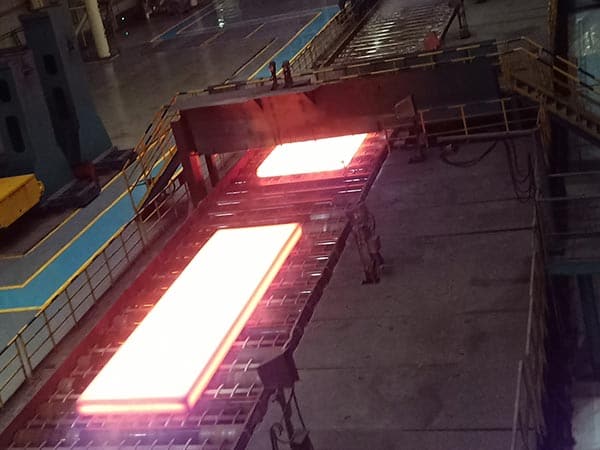
Strategic Evolution of S355MC in the Middle Eastern Automotive Sector
The Middle Eastern automotive landscape is undergoing a radical transformation. Driven by economic diversification initiatives like Saudi Vision 2030 and the UAE's industrial expansion, the region has transitioned from a pure vehicle importer to a burgeoning hub for automotive assembly and component manufacturing. At the heart of this industrial surge lies S355MC high-strength low-alloy (HSLA) steel. This thermomechanically rolled steel, governed by the EN 10149-2 standard, has become the preferred material for manufacturers seeking to balance structural integrity with weight reduction.
The demand for S355MC in the Middle East is not merely a matter of volume but a requirement for specific material excellence. As global automotive trends lean toward lightweighting to improve fuel efficiency and reduce emissions, S355MC offers a unique value proposition. Its high yield strength allows for thinner sections without compromising the safety or load-bearing capacity of vehicle frames, which is critical for the heavy-duty commercial vehicles and trailers frequently used in the region's logistics and construction sectors.
Chemical Composition and the Science of Micro-alloying
The superior performance of S355MC stems from its precise chemical metallurgy. Unlike traditional structural steels, S355MC utilizes a micro-alloying strategy involving elements such as Niobium (Nb), Vanadium (V), and Titanium (Ti). These elements facilitate grain refinement during the thermomechanical rolling process, resulting in a fine-grained microstructure that enhances both strength and toughness.
| Element | C (max) | Mn (max) | Si (max) | P (max) | S (max) | Al (min) |
|---|---|---|---|---|---|---|
| Content (%) | 0.12 | 1.50 | 0.50 | 0.025 | 0.020 | 0.015 |
Low carbon content (max 0.12%) is fundamental to its exceptional weldability. In the Middle Eastern manufacturing environment, where automated welding and high-speed assembly lines are becoming standard, the consistency of S355MC's chemical profile ensures minimal defects and high throughput. The controlled levels of Sulfur and Phosphorus further improve the internal cleanliness of the steel, reducing the risk of lamellar tearing during complex forming operations.
Mechanical Properties and Structural Reliability
For automotive engineers in the Middle East, the mechanical reliability of S355MC under extreme conditions is non-negotiable. The material is characterized by a minimum yield strength of 355 MPa, providing a robust safety margin for chassis components, cross members, and longitudinal beams. The elongation properties ensure that the material can absorb significant energy during an impact, a vital safety feature for passenger and commercial vehicles alike.
- Yield Strength (ReH): Minimum 355 MPa, ensuring high load-bearing capacity.
- Tensile Strength (Rm): Range of 430-550 MPa, providing structural stability.
- Elongation (A80mm): Minimum 19-23% depending on thickness, allowing for complex deformation.
- Impact Toughness: Excellent performance even at lower temperatures, though primarily optimized for ambient and high-heat stability in desert climates.
The consistency of these properties across different batches is what makes S355MC a reliable export commodity. Middle Eastern buyers prioritize materials that can withstand the dynamic loads of unpaved desert roads and the static loads of heavy industrial transport. The fine-grained structure of S355MC provides a superior fatigue resistance, extending the lifecycle of the vehicle components.
Advanced Processing Performance: Cold Forming and Welding
One of the primary reasons for the growth of S355MC exports to the Middle East is its exceptional cold forming capability. Automotive manufacturers require steel that can be bent, pressed, and stamped into intricate shapes without cracking or excessive springback. S355MC excels in this regard due to its high ductility relative to its strength level.
In the workshop, S355MC demonstrates remarkable versatility:
- Bending: It can be bent to tight radii (often 0.5x to 1.5x the thickness) without surface fracturing, which is essential for forming U-bolts, brackets, and frame rails.
- Welding: Its low carbon equivalent (CEV) allows for welding using all standard methods (MIG, TIG, Laser, Spot welding) without the need for pre-heating, significantly reducing energy costs and production time.
- Laser Cutting: The clean surface and consistent thickness of S355MC make it ideal for high-precision laser cutting, resulting in smooth edges and minimal heat-affected zones.
These processing advantages allow Middle Eastern factories to maintain high efficiency. By reducing the scrap rate and eliminating the need for complex heat treatments post-forming, S355MC optimizes the total cost of ownership for automotive OEMs (Original Equipment Manufacturers).
Environmental Adaptability in Arid and Saline Climates
The Middle East presents a unique set of environmental challenges, including extreme heat (often exceeding 50°C), high UV radiation, and, in coastal regions, high salinity. While S355MC is a carbon steel, its surface quality and metallurgical stability make it an excellent substrate for advanced protective coatings.
Corrosion Resistance and Surface Treatment: In the automotive industry, S355MC components are typically subjected to E-coating (electrophoretic deposition) or hot-dip galvanizing. The steel's chemistry is optimized to ensure excellent adhesion of these coatings. In the sandy environments of Saudi Arabia or Oman, the abrasion resistance of the underlying steel combined with a robust coating prevents the premature degradation of the vehicle's structural integrity.
Furthermore, the thermal stability of S355MC ensures that its mechanical properties do not degrade under the intense solar heating common in the region. Unlike some polymers or lower-grade alloys that might soften or become brittle, S355MC maintains its structural stiffness, ensuring the vehicle remains safe and functional throughout its service life.
Expanding Industry Applications in the Middle East
The application of S355MC in the Middle East extends beyond traditional passenger cars. The region's heavy reliance on logistics and infrastructure development has created a massive market for commercial vehicle components. S355MC is extensively used in the manufacturing of:
- Truck Chassis and Frames: Providing the necessary strength to carry heavy loads over long distances.
- Trailer Side Guards and Cross Members: Reducing the dead weight of trailers to increase payload capacity.
- Construction Equipment Cabs: Ensuring operator safety through high-strength roll-over protective structures (ROPS).
- Bus Frames: Facilitating the development of public transport networks in expanding urban centers like Riyadh and Dubai.
As the Middle East moves toward localizing the production of Electric Vehicles (EVs), the role of S355MC is evolving. EV battery enclosures and specialized lightweight frames require materials that offer high strength-to-weight ratios, a niche where S355MC continues to outperform traditional mild steels.
Export Logistics and Quality Assurance for the Middle East
Exporting S355MC to the Middle East involves more than just shipping metal; it requires a rigorous quality assurance framework. Suppliers must adhere to international standards while meeting the specific documentation requirements of Middle Eastern customs and industrial regulators (such as SASO in Saudi Arabia).
Key considerations for successful export include:
- Packaging: Anti-corrosive packaging (VCI paper and seaworthy wrapping) is essential to protect the steel from moisture during sea transit and humidity in port warehouses.
- Certification: Mill Test Certificates (MTC) according to EN 10204 3.1 are mandatory to verify the chemical and mechanical properties.
- Dimensional Precision: Middle Eastern manufacturers utilize high-precision automated equipment, requiring steel with tight tolerances on thickness, flatness, and width.
The growth of S355MC exports is a testament to the deepening industrial ties between global steel producers and the Middle Eastern automotive sector. By providing a material that is easy to process, incredibly strong, and adaptable to harsh environments, steel suppliers are fueling the next chapter of the region's industrial revolution. The synergy between high-performance S355MC steel and the ambitious manufacturing goals of Middle Eastern nations ensures a sustainable and upward trajectory for this vital trade corridor.
Leave a message