
What is the EN10149-2 S700MC pipe schedule
Comprehensive analysis of EN10149-2 S700MC pipe schedules, including mechanical properties, chemical composition, processing performance, and industrial applications for high-strength structural engineering.
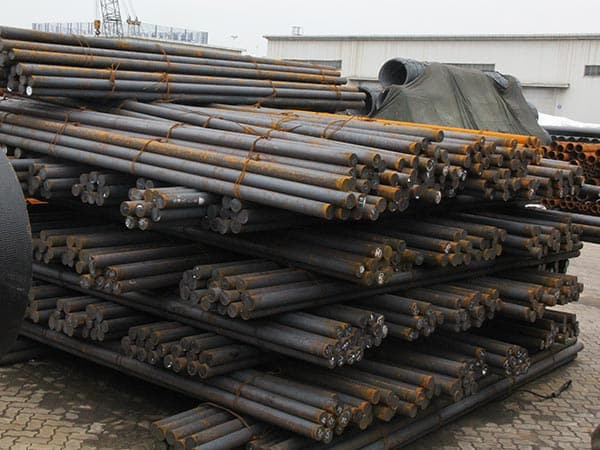
Understanding the Core of EN10149-2 S700MC Pipe Specifications
The term EN10149-2 S700MC refers to a specific grade of high-yield strength steel produced through a thermomechanically controlled process (TMCP). Unlike traditional structural steels, S700MC is designed for cold forming, making it an ideal candidate for manufacturing high-performance pipes and hollow sections. When discussing the "pipe schedule" for S700MC, it is essential to recognize that this material is often utilized to create custom-engineered piping solutions where weight reduction and high load-bearing capacity are paramount. The "S" denotes structural steel, "700" indicates a minimum yield strength of 700 MPa, "M" signifies the thermomechanical rolling delivery condition, and "C" highlights its suitability for cold forming.
Unlike standard carbon steel pipes that follow rigid ANSI/ASME B36.10 schedules (like Schedule 40 or 80), S700MC pipes are frequently produced in specific wall thicknesses ranging from 2mm to 20mm, depending on the manufacturer's capabilities and the project's structural requirements. The primary advantage of using S700MC in a piping context is the ability to achieve the same structural integrity as thicker, lower-grade steels while significantly reducing the overall weight of the system.
Chemical Composition and Its Impact on Performance
The exceptional properties of S700MC are rooted in its precise chemical makeup. By maintaining a low carbon equivalent (CEV), the material ensures excellent weldability and toughness without the need for expensive alloying elements. The use of micro-alloying elements such as Niobium (Nb), Vanadium (V), and Titanium (Ti) facilitates grain refinement during the thermomechanical rolling process.
| Element | Maximum Content (%) |
|---|---|
| Carbon (C) | 0.12 |
| Manganese (Mn) | 2.10 |
| Silicon (Si) | 0.60 |
| Phosphorus (P) | 0.025 |
| Sulfur (S) | 0.015 |
| Aluminium (Al) | 0.015 (min) |
| Nb + V + Ti | 0.22 |
This lean chemistry is critical for the pipe schedule considerations because it allows for thinner walls to handle higher pressures or structural loads. The low sulfur content also contributes to the material's superior lamellar tearing resistance, which is vital in complex welded pipe joints.
Mechanical Properties and Structural Efficiency
The defining characteristic of S700MC is its high yield strength. In the context of pipe design, this allows engineers to rethink traditional wall thickness calculations. By utilizing a 700 MPa yield material, the wall thickness can often be reduced by 30% to 50% compared to S355 grade steel, leading to massive savings in material costs and transportation energy.
| Property | Value (Minimum) |
|---|---|
| Yield Strength (ReH) | 700 MPa |
| Tensile Strength (Rm) | 750 - 950 MPa |
| Elongation (A80mm for t < 3mm) | 10% |
| Elongation (A5 for t ≥ 3mm) | 12% |
| Bending Radius (90°) | 2.0 x Thickness (t) |
The high tensile-to-yield ratio ensures that the pipes can withstand significant stress before permanent deformation occurs. Furthermore, the elongation properties, while lower than mild steel, are carefully balanced to allow for the tight bending radii required in modern chassis and framework designs.
Processing Performance: Welding and Cold Forming
Fabricating pipes from S700MC requires an understanding of its thermomechanical history. Since the strength is derived from the rolling process rather than heat treatment, excessive heat input during welding can lead to a softened zone in the Heat Affected Zone (HAZ). Low heat input welding techniques, such as MIG/MAG with optimized pulse settings, are recommended to maintain the integrity of the 700 MPa yield strength.
- Cold Forming: S700MC is specifically designed for cold forming. It can be rolled into pipes or bent into complex shapes without cracking, provided the minimum bend radii are respected.
- Cutting: Laser and plasma cutting are highly effective. The low carbon content ensures a clean edge with minimal dross, which is essential for subsequent welding operations.
- Welding Consumables: It is critical to use matching strength consumables (e.g., ER110S-G or similar) to ensure the weld metal meets the base material's mechanical performance.
When determining the pipe schedule for a project, the fabricator must account for the springback effect during cold forming, which is more pronounced in S700MC than in lower-strength grades due to its high elastic limit.
Environmental Adaptability and Fatigue Resistance
S700MC pipes are frequently used in mobile machinery and transport equipment where they are subjected to dynamic loads and varying temperatures. The fine-grained microstructure provides excellent fatigue resistance, which is a critical factor in extending the service life of structural components. Unlike some high-strength steels that become brittle at low temperatures, S700MC maintains adequate notch toughness, often specified at -20°C or -40°C depending on the specific sub-grade (though EN10149-2 primarily focuses on room temperature properties, many manufacturers provide guaranteed low-temp impact values).
This environmental resilience makes S700MC pipes suitable for offshore structures, agricultural machinery operating in harsh climates, and high-altitude crane booms. The weight reduction achieved through thinner pipe schedules also contributes to lower fuel consumption in mobile applications, aligning with modern sustainability goals.
Application Industries and Strategic Advantages
The adoption of EN10149-2 S700MC pipe schedules is transforming several key industries by enabling the design of lighter, stronger, and more efficient structures.
- Automotive and Transport: Used in truck chassis, trailer frames, and protective cages where reducing dead weight increases payload capacity.
- Lifting and Handling: Telescopic crane booms and aerial platforms rely on S700MC pipes to reach greater heights while maintaining stability.
- Agricultural Engineering: Large-scale sprayers and harvesters utilize these pipes for their main frames to withstand the stresses of uneven terrain.
- Energy and Infrastructure: High-strength hollow sections are used in support structures for solar arrays and wind turbine components.
By moving away from traditional pipe schedules and embracing the high-strength capabilities of S700MC, engineers can optimize the strength-to-weight ratio of their products. This shift not only reduces raw material consumption but also simplifies assembly and reduces the load on foundations or vehicle axles.
Technical Comparison: S700MC vs. Traditional Grades
To appreciate the value of S700MC pipe schedules, one must compare them to standard structural grades like S355. While S355 is versatile, its lower yield strength necessitates much thicker walls to achieve the same load capacity. For instance, a pipe made of S700MC can often replace an S355 pipe with twice the wall thickness. This reduction has a ripple effect: less welding wire is needed, welding time is reduced, and the total weight of the finished structure is halved. This is the primary reason why S700MC is the material of choice for industries where performance and efficiency are the top priorities.
Leave a message