
What are the well-know ten S355MC hot rolled steel hot rolled plates mills in Qatar
A comprehensive guide to S355MC hot rolled steel plates in Qatar, covering technical specifications, mechanical properties, and the leading supply nodes for industrial applications.
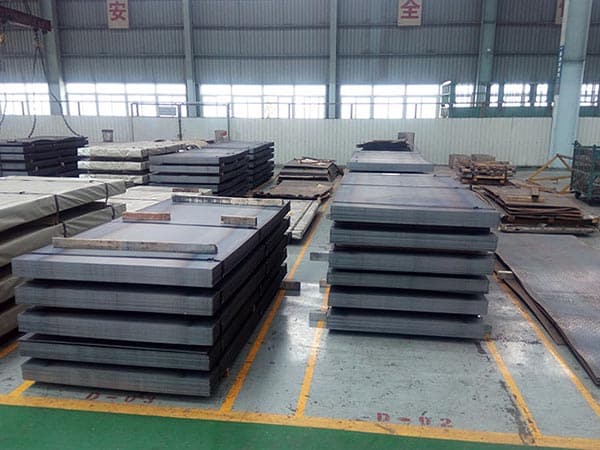
The Strategic Importance of S355MC Steel in Qatar's Industrial Landscape
S355MC is a high-strength, cold-forming steel produced through thermomechanical rolling, governed by the EN 10149-2 standard. In the rapidly evolving infrastructure of Qatar, particularly following the massive development projects in Lusail and the expansion of the North Field LNG facilities, the demand for materials that combine high yield strength with excellent formability has skyrocketed. S355MC stands out because it offers a minimum yield strength of 355 MPa while maintaining a low carbon footprint, which is essential for modern engineering designs focused on weight reduction and structural efficiency.
Understanding the supply chain in Qatar requires a look at both domestic production and the robust network of industrial stockists that function as the primary mills of supply for the local market. While Qatar Steel is the nation's flagship producer, the complexity of the S355MC grade—often requiring specific thermomechanical processing (MC)—means that the market is served by a blend of local manufacturing and high-tier regional distributors who provide value-added processing like precision cutting and leveling.
Technical Profile: Chemical Composition and Micro-Alloying
The performance of S355MC is rooted in its precise chemical makeup. Unlike standard structural steels, S355MC utilizes micro-alloying elements such as Niobium (Nb), Vanadium (V), and Titanium (Ti). These elements facilitate grain refinement during the thermomechanical rolling process, which is the key to achieving high strength without sacrificing ductility.
The low carbon content (typically below 0.12%) ensures that the material remains highly weldable, a critical factor for the construction of heavy machinery and transport infrastructure in Doha’s industrial zones. Below is a detailed breakdown of the chemical requirements according to the EN 10149-2 standard:
| Element | Max Content (%) |
|---|---|
| Carbon (C) | 0.12 |
| Manganese (Mn) | 1.50 |
| Silicon (Si) | 0.50 |
| Phosphorus (P) | 0.025 |
| Sulfur (S) | 0.020 |
| Aluminium (Al) | 0.015 |
Mechanical Properties and Structural Integrity
The "MC" designation indicates that the steel is thermomechanically rolled, which results in a fine-grained structure. This provides S355MC with superior mechanical properties compared to normalized steels of the same strength level. For engineers in Qatar working on offshore platforms or heavy-duty vehicle frames, the high yield-to-tensile ratio is a significant advantage.
- Yield Strength: Minimum 355 MPa, providing robust resistance against permanent deformation.
- Tensile Strength: Ranges between 430 and 550 MPa, ensuring structural safety under extreme loads.
- Elongation: Typically 19% to 23% depending on thickness, allowing for complex bending and forming operations.
- Impact Toughness: Excellent performance even at lower temperatures, though S355MC is primarily optimized for formability.
Identifying the Top Supply Nodes for S355MC in Qatar
While the term "mill" traditionally refers to the melting and rolling facility, in the Qatari context, the most influential entities are those that control the supply, quality assurance, and primary processing of S355MC plates. Here are the key entities that dominate the S355MC landscape in Qatar:
1. Qatar Steel Company (Mesaieed): As the primary domestic producer, Qatar Steel provides the backbone of the local market. While they focus heavily on rebar and sections, their influence on the plate market through strategic partnerships is unparalleled.
2. Al Qataria for Steel Industries: A major player in the fabrication and supply of high-grade plates, providing essential processing services for S355MC used in structural engineering.
3. Qatar National Steel Factory: Known for its extensive inventory and ability to supply specific EN standards to the oil and gas sector.
4. ArcelorMittal Projects Qatar: Leveraging a global mill network, they provide high-spec S355MC plates directly to large-scale infrastructure projects in the Middle East.
5. Middle East Steel Factory (MESF): A key facility for localized processing, offering cutting and shaping of hot rolled plates to meet the precise needs of the transport industry.
6. Doha Steel: A prominent distributor that maintains significant stocks of high-strength low-alloy (HSLA) steels, catering to the immediate needs of the construction sector.
7. Specialized Steel Service Centers: Various centers in the Mesaieed Industrial Area that focus on the thermomechanical grades required for specialized vehicle body manufacturing.
8. Regional Giants (Supplying Qatar): Companies like Emirates Steel Arkan often supply the Qatari market with specific plate grades not produced locally in volume.
9. Global Trading Hubs: Major international traders with local offices in Doha that facilitate the import of S355MC from European and Asian mills to ensure price competitiveness.
10. Custom Fabrication Mills: Smaller, specialized facilities that focus on the secondary rolling and precision finishing of S355MC for the aerospace and defense sectors within the region.
Processing Performance: Welding and Forming
S355MC is highly regarded for its processability. In the Qatari manufacturing sector, where efficiency is paramount, the ability to weld and bend this steel without pre-heating or post-weld heat treatment (in most thicknesses) is a major cost-saver. The low carbon equivalent (CEV) value significantly reduces the risk of cold cracking in the heat-affected zone (HAZ).
When it comes to cold forming, S355MC allows for tight bending radii. This is particularly useful for the production of C-channels, U-profiles, and complex automotive components. Unlike traditional S355J2 structural steel, the MC grade is specifically designed to be bent and folded without surface cracking, provided the minimum inner bend radius is respected.
Environmental Adaptability in the Gulf Climate
Qatar’s environment is characterized by extreme heat, high humidity, and high salinity due to its coastal geography. While S355MC is not a "weathering steel" like Corten, its fine-grained structure provides a consistent substrate for advanced coating systems. For applications in the Ras Laffan industrial city, S355MC plates are typically treated with high-performance epoxy coatings or galvanization to withstand the corrosive maritime atmosphere.
The thermal stability of S355MC is also noteworthy. The thermomechanical rolling process ensures that the steel maintains its dimensional stability even when subjected to the fluctuating temperatures of the Arabian Peninsula, where daytime surface temperatures on steel can exceed 70°C.
Primary Application Industries in Qatar
The utilization of S355MC in Qatar spans several high-growth sectors. Its high strength-to-weight ratio makes it the material of choice for projects where reducing the dead weight of a structure translates directly into energy savings or increased payload capacity.
- Transportation: Manufacturing of trailers, truck frames, and heavy-duty containers used in the logistics chain between Hamad Port and the rest of the country.
- Oil and Gas: Secondary structures, cable trays, and support brackets where high strength is required but weight must be minimized for offshore installation.
- Construction: High-rise building components and temporary shoring systems that require frequent assembly and disassembly.
- Renewable Energy: Support structures for solar PV arrays in Qatar’s burgeoning solar farms, where durability and ease of installation are key.
Comparative Analysis: S355MC vs. Standard Structural Steel
To better understand why S355MC is preferred over standard s355jr or S355J2 in specific applications, consider the following comparison table:
| Feature | S355MC (EN 10149-2) | S355JR (EN 10025-2) |
|---|---|---|
| Rolling Process | Thermomechanical (MC) | As Rolled / Normalized | Formability | Excellent (Optimized for bending) | Limited (Prone to cracking on tight bends) | Weight Saving | High (Allows for thinner sections) | Moderate | Weldability | Superior (Lower Carbon Equivalent) | Good |
| Grain Size | Very Fine | Coarser |
Procurement Considerations for the Qatari Market
When sourcing S355MC in Qatar, it is vital to ensure that the material comes with 3.1 or 3.2 Material Test Reports (MTRs). Given the critical nature of the projects in the region, traceability is non-negotiable. Buyers should verify that the thermomechanical rolling parameters are clearly stated to distinguish the product from standard hot-rolled plates that may not offer the same cold-forming capabilities.
Furthermore, considering the logistical advantages of the Qatar Free Zones, many suppliers now offer "just-in-time" delivery of S355MC plates, which are pre-cut using CNC plasma or laser cutting technologies. This localized value-add is what defines the modern "mill" experience in Qatar, moving beyond simple production to integrated material solutions.
Leave a message