
What is structure steel plate s700m equivalent steel grade
A comprehensive technical guide to S700M structural steel plate, its mechanical properties, chemical composition, and a detailed comparison with global equivalent grades like Q700D and ASTM A514.
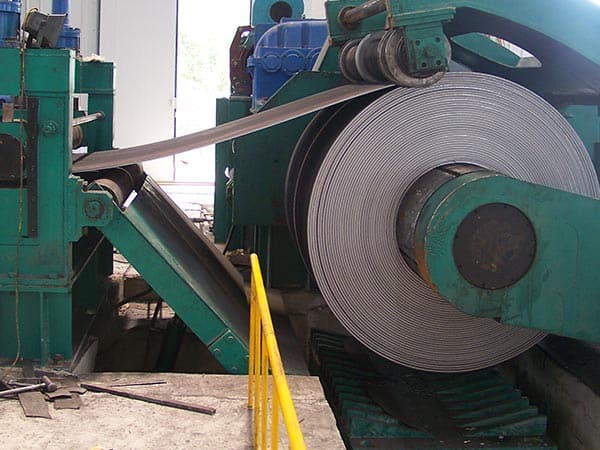
Understanding the S700M Structural Steel Specification
S700M is a high-strength, fine-grained structural steel produced using the Thermomechanical Control Process (TMCP), as defined by the European standard EN 10025-4. The nomenclature provides a clear roadmap of its capabilities: 'S' stands for structural steel, '700' indicates a minimum yield strength of 700 MPa for thicknesses up to 16mm, and 'M' signifies the thermomechanical rolling delivery condition. Unlike traditional normalized steels, S700M achieves its exceptional strength through a combination of precise temperature control and mechanical deformation during the rolling process, followed by rapid cooling. This results in a fine-grained microstructure that offers a unique balance of high yield strength, excellent toughness, and superior weldability.
Engineering projects prioritizing weight reduction without sacrificing structural integrity frequently turn to S700M. By utilizing 700 MPa steel instead of standard S355, designers can reduce plate thickness by up to 40-50%, leading to lighter structures, lower transportation costs, and reduced welding consumables. This material is a cornerstone for modern heavy-duty machinery, transport systems, and complex steel structures where dead weight is a critical constraint.
Mechanical Properties and Performance Metrics
The performance of S700M is characterized by its high yield-to-tensile ratio and impressive impact energy values. The thermomechanical rolling process ensures that the steel maintains its properties even at low temperatures, which is vital for equipment operating in harsh climates. Below are the core mechanical requirements according to EN 10025-4:
| Property | Value (Thickness ≤ 16mm) | Value (16mm < t ≤ 40mm) |
|---|---|---|
| Minimum Yield Strength (ReH MPa) | 700 | 680 |
| Tensile Strength (Rm MPa) | 750 - 950 | 750 - 950 |
| Minimum Elongation (A5 %) | 12 | 12 |
| Impact Energy (Charpy V-notch at -20°C) | 40J | 40J |
It is important to distinguish S700M from its sibling, S700MC (EN 10149-2). While both share a 700 MPa yield strength, S700MC is specifically designed for cold forming and is typically available in thinner gauges (up to 20mm), whereas S700M is intended for heavier structural applications and follows more stringent structural engineering requirements.
Global Equivalent Steel Grades for S700M
Identifying equivalents for S700M requires a nuanced understanding of international standards. While many grades share similar yield strengths, the manufacturing process (TMCP vs. Quenched and Tempered) and chemical limits can vary significantly. Engineers must verify that the equivalent grade meets the specific toughness and welding requirements of the original design.
- Chinese Standard (GB/T 1591): The closest equivalent is Q700D or Q700E. Like S700M, these are high-strength low-alloy (HSLA) steels. The 'D' and 'E' suffixes denote impact testing at -20°C and -40°C, respectively. Q700D aligns closely with S700M in terms of chemical composition and mechanical performance.
- American Standard (ASTM): There is no direct TMCP equivalent in the ASTM system for S700M. However, ASTM A514 Grade Q or ASTM A709 Grade 100 are often compared due to their 690-700 MPa yield strength. It is critical to note that A514 is a Quenched and Tempered (Q+T) steel, which may have different welding heat-affected zone (HAZ) characteristics compared to the TMCP-produced S700M.
- Proprietary Brands: Many top-tier mills produce proprietary grades that exceed standard requirements. Strenx 700 (SSAB), ALFORM 700 (Voestalpine), and DILLIMAX 690 (Dillinger) are frequently used as high-performance alternatives. These brands often offer tighter tolerances and better surface finishes than standard EN 10025-4 grades.
- Japanese Standard (JIS): JIS G3128 SHY685 is a comparable grade used in high-strength pressure vessels and structural applications, though it is more commonly supplied in the Q+T condition.
Chemical Composition and Weldability Advantages
One of the primary advantages of S700M over Quenched and Tempered steels (like S700Q) is its lower Carbon Equivalent Value (CEV). The TMCP process allows the steel to reach high strength with minimal alloying elements. This low CEV significantly enhances weldability by reducing the risk of cold cracking in the heat-affected zone.
Typical chemical composition limits for S700M include low carbon content (usually ≤ 0.12%), and micro-alloying elements such as Niobium (Nb), Vanadium (V), and Titanium (Ti). These elements promote grain refinement and precipitation hardening. Because the steel is so clean and fine-grained, preheating requirements for welding are often much lower than those for Q+T steels of the same strength level, saving significant time and energy in the fabrication shop.
Processing and Fabrication Considerations
Working with S700M requires specialized knowledge to preserve the properties imparted by the thermomechanical rolling process. Since the strength is derived from the rolling temperature and cooling rate, heat treatment after fabrication is generally prohibited. Stress relieving or normalizing S700M will lead to a significant loss of yield strength and toughness.
Cutting: S700M can be cut using plasma, laser, or oxy-fuel methods. Due to its high strength, laser cutting provides the best edge quality and minimal thermal distortion. When using oxy-fuel, it is essential to manage the heat input to avoid softening the edges.
Cold Forming: Despite its high strength, S700M exhibits good cold forming characteristics. However, larger bending radii are required compared to standard structural steels. Typically, a minimum bending radius of 2.0 to 3.0 times the plate thickness is recommended, depending on the orientation of the bend relative to the rolling direction.
Welding: Matching strength welding consumables are required (e.g., E110 series electrodes). It is vital to control the cooling time (t8/5) to ensure the weld metal and HAZ maintain the required toughness. Excessive heat input can coarsen the grain structure, leading to localized softening.
Environmental Adaptability and Industrial Applications
S700M is engineered for durability in demanding environments. Its fine-grained structure provides excellent resistance to brittle fracture, making it suitable for low-temperature applications in offshore engineering and Arctic environments. While it is not a "weathering steel" like Corten, its dense surface and controlled chemistry provide a stable base for modern protective coating systems.
The application of S700M is widespread across sectors where weight efficiency is paramount:
- Lifting and Transport: Telescopic booms for mobile cranes, trailer chassis, and heavy-duty truck frames benefit from the high strength-to-weight ratio.
- Energy and Offshore: Jack-up rig components, wind turbine foundations, and structural supports for offshore platforms where high yield strength reduces the overall mass of the structure.
- Mining and Construction: Support structures for conveyors, heavy-duty earthmoving equipment, and bridge girders where long spans require minimized self-weight.
The transition from traditional S355 to S700M represents a significant technological leap. By understanding the equivalent grades and the metallurgical nuances of the TMCP process, engineers can optimize designs for the next generation of high-performance structures, ensuring both safety and economic efficiency.
Leave a message