
What is the weight of HR coil Q235 pickled steel coil?
Comprehensive guide on the weight calculation, physical properties, and technical specifications of HR coil Q235 pickled steel, including density factors and industry applications.
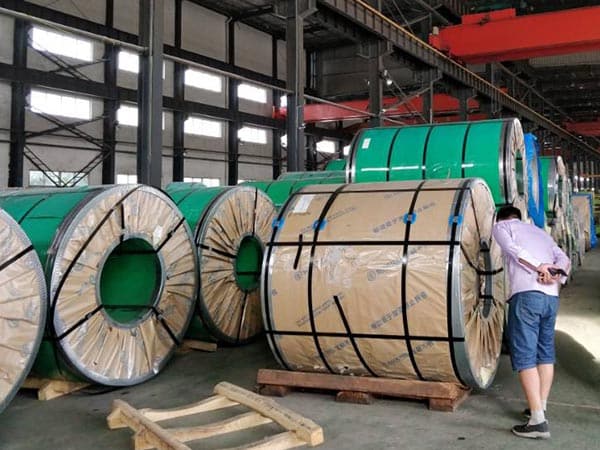
The Fundamentals of Q235 Pickled Steel Coil Weight Calculation
Understanding the weight of HR coil Q235 pickled steel is a critical requirement for procurement managers, structural engineers, and logistics coordinators. The weight of a steel coil is not merely a number on a scale; it dictates shipping costs, storage requirements, and the feasibility of manufacturing processes. To calculate the theoretical weight of a Q235 pickled coil, the industry standard density of 7.85 g/cm³ (or 7850 kg/m³) is used. This density remains constant across the Q235 series, regardless of whether the material is in its raw hot-rolled state or has undergone the pickling and oiling (P&O) process.
The formula for calculating the weight of a flattened steel sheet from a coil is: Weight (kg) = Thickness (mm) × Width (m) × Length (m) × 7.85. However, when dealing with intact coils, the weight is usually determined by the mill's capacity and the specific order requirements. Typically, a standard Q235 pickled coil weighs between 15 to 28 metric tons, though 'baby coils' or slit coils can be significantly lighter, ranging from 3 to 8 tons depending on the processing equipment's limitations.
Technical Specifications and Material Grade: Why Q235?
Q235 is a carbon structural steel grade defined by the Chinese GB/T 700 standard. The 'Q' stands for yield strength, and '235' represents the minimum yield point of 235 MPa. This grade is favored for its excellent weldability, plasticity, and toughness. When this material undergoes pickling—a process where hydrochloric acid removes surface scales and oxides—it becomes a 'pickled and oiled' (P&O) product. This surface treatment does not significantly alter the base weight of the steel, but it ensures a cleaner surface for subsequent processing like cold rolling or painting.
| Element/Property | Specification (Q235B) | Impact on Weight/Quality |
|---|---|---|
| Carbon (C) Content | ≤ 0.20% | Maintains ductility without adding excess mass. |
| Manganese (Mn) | 0.35% - 0.80% | Enhances strength and hardness. |
| Yield Strength | ≥ 235 MPa | Determines structural load-bearing capacity. |
| Tensile Strength | 370 - 500 MPa | Crucial for high-tension applications. |
| Density | 7.85 g/cm³ | The constant factor in all weight calculations. |
The Impact of the Pickling Process on Coil Attributes
The pickling process is a chemical descaling method. Hot-rolled steel naturally forms a dark, abrasive iron oxide layer (scale) during the cooling process. By passing the HR coil through an acid bath, this scale is stripped away, leaving a smooth, silver-grey finish. While the removal of scale technically reduces the total weight by a negligible fraction (usually less than 0.5%), the primary change is in surface quality. Pickled coils are almost always oiled immediately after descaling to prevent 'flash rusting,' which is a vital consideration for long-distance maritime transport.
For manufacturers, the weight of the Q235 pickled coil is easier to manage than raw HR coils because the surface is free of debris that can interfere with precision measuring tools. This precision allows for more accurate 'theoretical weight' vs. 'actual weight' reconciliation, a common point of discussion in international steel trading.
Dimensional Variations and Their Weight Consequences
The total weight of a Q235 pickled coil is a function of its physical dimensions: thickness, width, and the outer diameter (OD). Standard thicknesses for these coils typically range from 1.5mm to 6.0mm, with widths often set at 1000mm, 1250mm, or 1500mm. A 2.0mm thick coil that is 1250mm wide will naturally have a different 'weight per meter' than a 4.0mm coil of the same width.
- Inner Diameter (ID): Most Q235 coils have a standard ID of 508mm or 610mm. A larger ID reduces the total volume of steel for a given OD, thus reducing the weight.
- Outer Diameter (OD): This is usually limited by the warehouse crane capacity or the uncoiler machine's specifications, often capped at 2000mm.
- Edge Condition: Mill edge (as rolled) coils might have slight variations in width, whereas slit edge coils have precise widths, leading to more predictable weight calculations.
Logistics and Handling Considerations
When shipping Q235 pickled steel coils, weight distribution is paramount. Because these coils are heavy and concentrated loads, they require specialized 'coil cradles' or dunnage during truck or rail transport. In containerized shipping, a 20-foot container (20GP) typically has a weight limit of 26 to 28 tons. This means a single large Q235 coil might reach the weight limit of the container before it even fills 10% of the physical space.
Properly calculating the weight is also essential for crane safety. Overloading a 20-ton overhead crane with a 22-ton coil can lead to catastrophic equipment failure. Therefore, verifying the Actual Weight (AW) via a weighbridge is the only acceptable method for safety-critical operations, even if the Theoretical Weight (TW) is used for invoicing purposes.
Expanding Utility: Where Q235 Pickled Coils Excel
The versatility of Q235 steel, combined with the clean surface of the pickled finish, makes it a staple in various industrial sectors. Unlike standard hot-rolled steel, the pickled version can be directly used in processes that require high surface adhesion.
- Automotive Components: Used for chassis parts, brackets, and internal reinforcements where weight-to-strength ratios are calculated precisely.
- Machinery Manufacturing: Ideal for laser cutting and stamping because the absence of scale extends the life of cutting tools and dies.
- Home Appliances: Often serves as the base material for brackets and internal frames that require a clean surface for welding or light coating.
- Pipe and Tube Production: Pickled Q235 is the preferred feed material for high-frequency welded pipes that need a smooth internal and external finish.
Strategic Procurement: Navigating Weight Tolerances
In the steel trade, the 'Weight Tolerance' is a contractual term that buyers must understand. Most mills operate within a +/- 3% to 5% weight tolerance. When ordering 500 tons of Q235 pickled steel, the actual delivered weight might vary. Professional buyers often negotiate whether the final payment is based on 'Theoretical Weight' (calculated by dimensions) or 'Actual Weight' (measured by scale). For pickled products, actual weight is generally preferred because the removal of scale makes the material more uniform, reducing the discrepancy between the two methods.
To ensure quality, buyers should request a Mill Test Certificate (MTC) which details the heat number, chemical composition, and the exact weight of each coil. This documentation is the cornerstone of supply chain transparency and ensures that the Q235 material meets the structural requirements of the intended project.
Environmental Adaptability and Storage
While Q235 is a robust carbon steel, the pickling process leaves the surface 'active' and prone to oxidation. The protective oil film applied at the mill is effective, but it is not a permanent solution. The weight and integrity of the coil can be compromised by deep pitting corrosion if stored in high-humidity environments. Warehousing should be climate-controlled or at least well-ventilated, with coils kept off the ground to prevent moisture wicking. For projects in coastal regions, the salt-laden air can accelerate corrosion, making the timing between uncoiling and final coating (painting or galvanizing) a critical factor in maintaining the steel's design weight and structural integrity.
Leave a message