
What corrodes cold forming S355MC high-strength steel the fastest?
A professional analysis of S355MC high-strength steel corrosion mechanisms, focusing on chloride environments, acidic exposure, and the impact of cold forming stress.
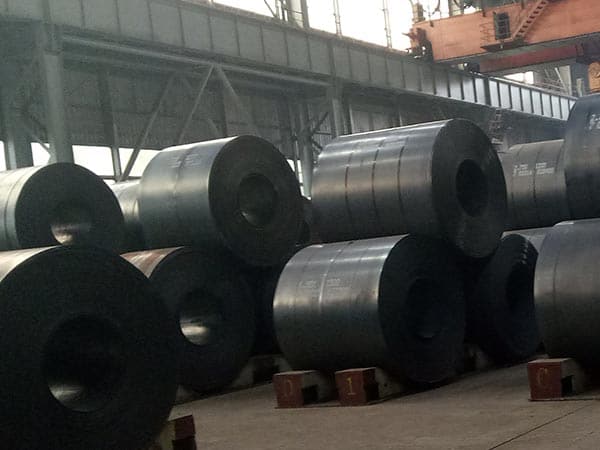
Understanding the Vulnerability of S355MC High-Strength Steel
S355MC is a cornerstone of modern structural engineering, specifically designed for cold forming processes where high yield strength and weight reduction are paramount. Defined by the EN 10149-2 standard, this thermomechanically rolled steel offers a unique balance of ductility and toughness. However, the very micro-alloying elements that provide its strength—niobium, titanium, and vanadium—interact uniquely with corrosive environments. While S355MC is not a 'weathering steel' like Corten, its performance under atmospheric stress is a subject of intense scrutiny for engineers in the automotive and heavy machinery sectors.
The question of what corrodes S355MC the fastest is not merely academic; it is a critical operational concern. Like most high-strength low-alloy (HSLA) steels, S355MC lacks the high chromium content found in stainless steels, making it susceptible to various forms of oxidation. The rate of degradation is dictated by the synergy between its fine-grained microstructure and the external chemical stimuli. To understand its limits, we must examine the specific environments where its protective oxide layer fails most spectacularly.
Primary Corrosive Catalysts: Chloride Attack and Saline Exposure
Among all environmental factors, chloride ions are the most aggressive enemies of S355MC steel. In marine environments or regions where de-icing salts are used on roads, chlorides act as a catalyst that accelerates the electrochemical reaction of rusting. Unlike general atmospheric corrosion, chloride-induced corrosion is often localized, leading to pitting. This is particularly dangerous for S355MC because it is often used in thinner gauges to save weight; a small pit can significantly reduce the structural integrity of a high-stress component.
Chlorides penetrate the initial layer of iron oxide (rust) and prevent the formation of a stable, protective patina. Instead, they facilitate the formation of soluble iron chlorides, which wash away and expose fresh steel to further attack. For S355MC components used in truck chassis or crane booms, the presence of salt spray combined with high humidity creates a perpetual cycle of wetting and drying, which is the fastest way to compromise the material's thickness.
Acidic Degradation: Industrial Pollutants and pH Sensitivity
Industrial atmospheres characterized by high concentrations of sulfur dioxide (SO2) and nitrogen oxides (NOx) pose the second greatest threat. When these gases combine with atmospheric moisture, they form weak sulfuric and nitric acids, resulting in acid rain. S355MC, with its specific micro-alloying profile, is highly sensitive to low pH environments. Acidic conditions strip away the natural mill scale and prevent any form of passivation.
In environments such as chemical processing plants or heavy industrial zones, the corrosion rate of S355MC can be several times higher than in rural settings. The acidity promotes the hydrogen evolution reaction at the cathodic sites of the steel surface. For high-strength steels like S355MC, this also introduces the risk of hydrogen embrittlement, where hydrogen atoms penetrate the grain boundaries, making the steel brittle and prone to sudden failure under load.
The Role of Cold Forming Stress in Accelerated Corrosion
The 'C' in S355MC stands for cold forming, which is its primary application. However, the process of bending, stretching, and pressing the steel into complex shapes introduces residual internal stresses. These stressed areas become electrochemically more active than the non-deformed sections of the same part. This phenomenon, known as stress-induced corrosion, means that the bends and corners of a fabricated S355MC component will often corrode faster than the flat surfaces.
When the crystal lattice is distorted during cold forming, the dislocation density increases. These dislocations serve as high-energy sites that attract corrosive agents. Furthermore, if the S355MC part is subjected to cyclic mechanical loads in a corrosive environment, it may suffer from Corrosion Fatigue. The combination of high yield strength (355 MPa) and localized corrosion pits creates perfect initiation points for fatigue cracks, which can propagate rapidly through the fine-grained structure.
Mechanical and Technical Specifications of S355MC
To understand how S355MC reacts to its environment, one must look at its chemical composition and mechanical properties. The fine grain size is achieved through controlled rolling and cooling, which improves toughness but also increases the total area of grain boundaries. While grain refinement is excellent for strength, in certain specific chemical baths, these boundaries can become pathways for intergranular corrosion.
| Element | C (max) | Mn (max) | Si (max) | P (max) | S (max) | Al (min) | Nb (max) | Ti (max) |
|---|---|---|---|---|---|---|---|---|
| Content (%) | 0.12 | 1.50 | 0.50 | 0.025 | 0.020 | 0.015 | 0.09 | 0.15 |
The mechanical properties are equally vital for determining how much corrosion the material can withstand before structural failure occurs. The high yield-to-tensile ratio of S355MC means there is less "warning" before the steel reaches its plastic limit if the cross-section has been thinned by rust.
| Property | Yield Strength (MPa) | Tensile Strength (MPa) | Elongation (%) | Impact Energy (J) |
|---|---|---|---|---|
| Value | ≥ 355 | 430 - 550 | ≥ 23 | Typically 27J at -20°C |
Comparative Analysis of Environmental Adaptation
S355MC performs differently depending on the specific "micro-climate" it inhabits. Within the automotive industry, for example, a chassis rail made of S355MC might last 20 years in a dry, inland climate but show significant structural pitting within 5 years in a coastal city. The following list ranks the factors that accelerate corrosion in S355MC from fastest to slowest:
- Direct Salt Spray / Marine Immersion: The fastest degradation due to high conductivity and chloride interference.
- High-Humidity Industrial Zones: Accelerated by SO2 and moisture forming acidic films.
- Stagnant Water / Crevice Exposure: Where S355MC parts overlap, oxygen depletion zones cause rapid localized thinning.
- Arid Atmospheric Exposure: The slowest rate, where a stable oxide layer can partially form.
Strategic Mitigation: Extending the Lifespan of S355MC Components
Given its susceptibility to chlorides and acids, S355MC is rarely used in its bare state for outdoor applications. The most common protection method is Hot-Dip Galvanizing. The zinc layer provides sacrificial protection; even if the coating is scratched, the zinc will corrode in preference to the S355MC substrate. However, designers must be careful with the silicon content in S355MC, as it can affect the growth of the zinc-iron alloy layer (Sandelin Effect).
Another effective strategy is Cathodic Dip Coating (KTL/E-coat), which is standard in the automotive sector. This process ensures that even the internal cavities of complex cold-formed S355MC parts are coated, preventing the "inside-out" corrosion that often plagues hollow structural sections. For heavy machinery, a combination of epoxy primers and polyurethane topcoats is often employed to provide a barrier against both chemical attack and UV degradation.
Designers can also mitigate corrosion through geometry. Avoiding sharp bends where stress is concentrated and ensuring that there are no areas where water can pool (drainage holes) are essential steps. By reducing the residual stress through proper tooling and ensuring a clean surface free of mill scale before coating, the service life of S355MC can be extended by decades, even in challenging environments.
Critical insights into S355MC's behavior reveal that while it is a high-performance material for shaping and weight-saving, its environmental management is non-negotiable. The speed of corrosion is a variable that can be controlled through intelligent material selection, surface treatment, and structural design. For industries pushing the limits of high-strength steel, understanding these chemical vulnerabilities is the key to engineering longevity.
Leave a message