
Is the cutting method in automobile frame steel S355MC cutting comparable
A comprehensive technical analysis of cutting methods for S355MC automobile frame steel, evaluating laser, plasma, and mechanical processes on metallurgical integrity and structural performance.
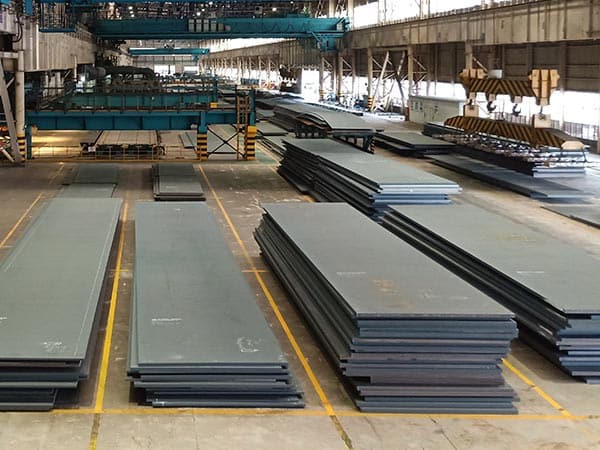
The Metallurgical Foundation of S355MC and Its Influence on Cutting Choice
S355MC is a high-strength, low-alloy (HSLA) steel specifically designed for cold-forming applications, governed by the EN 10149-2 standard. Its widespread use in automobile frames, chassis components, and cross members is attributed to its unique thermomechanically rolled (TMCP) microstructure. Unlike traditional hot-rolled steels, S355MC achieves its 355 MPa minimum yield strength through a combination of fine-grain practice and micro-alloying elements such as Niobium (Nb), Vanadium (V), and Titanium (Ti). These elements form stable carbonitrides that pin grain boundaries, preventing grain growth during processing.
When evaluating whether cutting methods are comparable, one must first understand that S355MC is sensitive to thermal cycles. The precision of the cut and the resulting Heat-Affected Zone (HAZ) directly impact the fatigue life of the vehicle frame. Because automobile frames are subject to dynamic loading and vibration, the edge quality is not merely an aesthetic concern but a structural imperative. The choice between laser, plasma, waterjet, or mechanical shearing involves balancing throughput against the preservation of the steel's engineered microstructure.
Laser Cutting: Precision and the Minimal Heat-Affected Zone
Laser cutting, particularly fiber laser technology, has become the benchmark for S355MC processing in modern automotive lines. The high power density of a focused laser beam allows for extremely high cutting speeds, which paradoxically reduces the total heat input into the material. For S355MC plates typically ranging from 3mm to 8mm in frame construction, laser cutting produces a HAZ that is often less than 0.2mm wide.
Key Advantages of Laser Cutting for S355MC:
- Edge Perpendicularity: Laser cutting achieves high-quality edges (ISO 9013 Range 2 or 3), ensuring that subsequent welding of frame brackets is precise.
- Minimal Hardening: Due to the rapid cooling rates, the edge hardness increase is localized, reducing the risk of hydrogen-induced cracking during assembly.
- Complex Geometries: Automobile frames require numerous weight-reduction holes and mounting points; lasers handle these with zero tool wear.
However, the use of oxygen as a cutting gas can lead to an oxide layer on the S355MC edge. For frames that require high-quality painting or coating, this oxide layer must be removed or nitrogen cutting must be employed to ensure coating adhesion. This nuance makes the "comparability" of laser cutting dependent on the specific gas chemistry used.
Plasma Cutting: Efficiency vs. Thermal Impact
Plasma cutting is often considered a competitor to laser cutting, especially for thicker sections of heavy-duty truck frames. Modern high-definition plasma systems have significantly narrowed the gap in quality. However, when processing S355MC, the thermal profile of plasma is fundamentally different from laser. The plasma arc is wider, resulting in a larger HAZ (typically 0.5mm to 1.2mm).
For S355MC, this extended HAZ can lead to a localized reduction in yield strength. The thermomechanical properties of the steel are partially predicated on the fine grain structure; excessive heat from plasma can cause localized annealing or grain coarsening. In structural frame components where the edge is a high-stress point, this softening can become a failure initiation site. Therefore, while plasma is comparable in terms of speed and cost-effectiveness for thicker S355MC plates, it requires stricter process control to maintain structural integrity.
Mechanical Shearing and Punching: The Cold Alternative
Mechanical methods like shearing and CNC punching represent a "cold" cutting approach. In high-volume production of standardized frame rails, these methods are often preferred for their speed and lack of thermal distortion. Since there is no heat involved, the metallurgical properties of the S355MC remain unchanged—except at the immediate shear plane.
Mechanical Processing Characteristics:
- Work Hardening: The shearing action induces significant plastic deformation at the edge, leading to localized work hardening. This can increase the hardness of S355MC at the edge by up to 30%.
- Micro-cracking Risk: If the punch-to-die clearance is not perfectly calibrated for the specific thickness of S355MC, micro-cracks can form. These cracks are particularly dangerous in automotive frames as they can propagate under cyclic stress.
- Burr Formation: Mechanical cutting inevitably produces a burr, which must be removed to prevent stress concentrations and ensure safety during manual assembly.
Comparative Analysis of Cutting Technologies
To determine if these methods are truly comparable, we must examine their performance across several critical metrics relevant to S355MC's application in the automotive sector.
| Feature | Laser Cutting (Fiber) | Plasma Cutting (HD) | Mechanical Punching | Waterjet Cutting |
|---|---|---|---|---|
| HAZ Width | 0.1 - 0.3 mm | 0.5 - 1.5 mm | None | None |
| Edge Hardness | Moderate Increase | Significant Increase | Work Hardened | Unchanged |
| Surface Roughness (Rz) | 10 - 30 μm | 30 - 60 μm | N/A (Sheared) | 5 - 20 μm |
| Production Speed | Very High | High | Ultra High (Mass) | Low |
| Geometric Flexibility | Excellent | Moderate | Limited by Dies | Excellent |
The Role of Waterjet Cutting in S355MC Prototypes
While rarely used in mass production due to cost and speed, abrasive waterjet cutting is the ultimate "neutral" method for S355MC. It is the only method that provides a completely cold cut with no metallurgical alteration and no work hardening. In the R&D phase of automobile frame design, waterjet cutting is used to create prototype components that reflect the base material's properties exactly. This allows engineers to test the frame's performance without the variables introduced by thermal or mechanical edge stresses. In this context, waterjet is not comparable to laser or plasma in terms of economics, but it is superior in terms of scientific accuracy for material testing.
Impact on Downstream Processes: Welding and Bending
The cutting method chosen for S355MC frames dictates the success of subsequent manufacturing steps. S355MC is prized for its excellent weldability, but the cut edge serves as the weld preparation surface. A laser-cut edge with a thin oxide layer may cause porosity in a robotic MIG/MAG welding process. Conversely, a plasma-cut edge with significant dross or nitride contamination can lead to brittle weld joints.
Bending is another critical factor. Automobile frames often feature complex U-channels or box sections. If the cutting method (like punching) has introduced micro-cracks or excessive work hardening at the edge, the S355MC may crack during the cold-forming or bending process. Engineers must ensure that the "comparable" cutting method does not compromise the steel's 19-23% elongation capability.
Optimizing Cutting Parameters for Automobile Frames
For manufacturers to make these methods truly comparable in terms of quality, specific optimization is required. For S355MC, this involves:
- Laser: Using high-pressure nitrogen to eliminate oxidation and maintaining a stable focal point to minimize the HAZ.
- Plasma: Utilizing specialized gas mixtures (like Ar/H2) to produce a cleaner, narrower arc and faster travel speeds to limit heat soak.
- Mechanical: Implementing regular tool maintenance and using specialized coatings on dies to reduce friction and edge tearing.
The comparability of cutting methods for S355MC automobile frame steel is a function of the final application's stress requirements. While laser cutting offers the best balance of precision and material integrity for passenger vehicles, high-definition plasma remains a viable, cost-effective alternative for heavy industrial frames, provided the thermal effects are accounted for in the design phase. Mechanical methods remain dominant for high-volume, low-complexity components where cold-work effects can be managed. Ultimately, the choice is dictated by the intersection of metallurgical stability, production volume, and the specific fatigue environment the frame will inhabit.
Leave a message