
Growth of en 10149-2 automotive steel grade s355mc equivalent exported to the Middle East
Explore the comprehensive technical properties, global equivalents, and growing demand for EN 10149-2 S355MC automotive steel in the Middle East market.
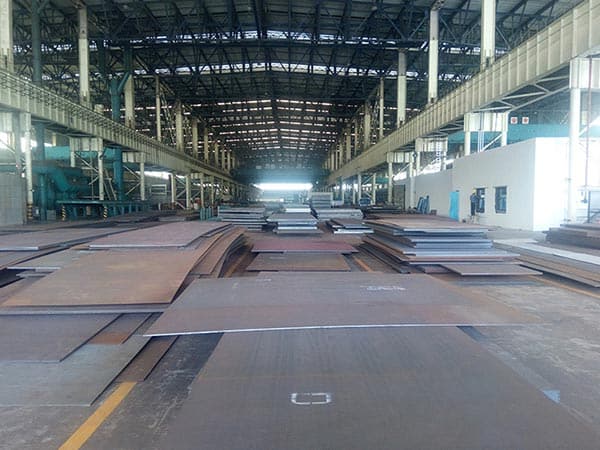
The Strategic Emergence of S355MC in the Middle East Industrial Landscape
The industrial sector in the Middle East is undergoing a profound transformation, shifting from an oil-dependent economy to a diversified manufacturing powerhouse. Central to this evolution is the increasing demand for high-performance materials like EN 10149-2 S355MC. This high-yield-strength steel, specifically designed for cold-forming applications, has become a cornerstone in the region's automotive, logistics, and renewable energy sectors. As Saudi Arabia's Vision 2030 and the UAE's industrial strategies gain momentum, the export of S355MC and its equivalents to these markets has seen exponential growth. This steel grade offers a unique balance of weight reduction and structural integrity, making it indispensable for modern engineering challenges in arid and demanding environments.
Metallurgical Excellence of EN 10149-2 S355MC
S355MC is a thermomechanically rolled steel that belongs to the family of High Strength Low Alloy (HSLA) steels. The "MC" designation indicates that the material is produced through a controlled rolling process followed by rapid cooling, which results in a fine-grained microstructure. This micro-alloying technique typically involves the addition of elements such as Niobium (Nb), Vanadium (V), and Titanium (Ti). These elements form stable carbides and nitrides that pin grain boundaries, preventing grain growth during processing and ensuring high strength without the need for excessive carbon content.
The low carbon content (typically below 0.12%) is a critical factor for its superior weldability and formability. Unlike traditional structural steels, S355MC maintains its toughness even at lower temperatures, which is essential for components that may experience thermal cycling. The fine grain structure also contributes to a high resistance against fatigue, a vital property for automotive chassis and heavy-duty trailer frames that endure constant vibration and stress during long-haul transport across the Arabian Peninsula.
Comprehensive Comparison of Global Equivalents
For procurement managers and engineers in the Middle East, understanding the global equivalent landscape is crucial for maintaining supply chain flexibility. While EN 10149-2 is the European standard, several other international standards offer comparable grades. However, it is essential to note that while they are "equivalent," subtle differences in chemical composition and mechanical requirements may exist.
| Standard | Equivalent Grade | Key Characteristics |
|---|---|---|
| EN 10149-2 | S355MC | Thermomechanically rolled, excellent cold forming |
| ASTM (USA) | A1011 HSLAS-F Grade 50 | High-strength low-alloy with improved formability |
| JIS (Japan) | SPFH 540 | Automotive structural steel for high-stress parts |
| GB/T (China) | Q355MC | High yield strength, widely used in heavy machinery |
| ISO | ISO 6930-2 HSLAS 355 | International standard for high yield strength flat products |
When substituting S355MC with an equivalent like ASTM A1011, engineers must verify the minimum yield strength and elongation values. S355MC guarantees a minimum yield strength of 355 MPa, which is slightly higher than the standard 345 MPa often found in basic structural grades. This 10 MPa difference, while seemingly small, allows for significant weight savings when calculated across an entire fleet of transport vehicles or a massive solar mounting array.
Mechanical Properties and Cold Forming Performance
The primary reason for the popularity of S355MC in the automotive sector is its exceptional cold-forming capability. The material is designed to be bent, flanged, and cold-pressed into complex shapes without the risk of cracking or edge tearing. This is particularly important for the manufacturing of truck longitudinal beams, cross members, and cold-pressed profiles used in the Middle Eastern transport industry.
- Yield Strength: Minimum 355 MPa, ensuring high load-bearing capacity.
- Tensile Strength: 430 to 550 MPa, providing a safe buffer before structural failure.
- Elongation: Minimum 19% to 23% (depending on thickness), allowing for significant deformation during manufacturing.
- Bending Radius: S355MC supports tight bending radii, often as low as 0.5 to 1.5 times the material thickness, which is superior to standard hot-rolled structural steels.
This high ductility is achieved through the strict control of non-metallic inclusions, particularly sulfur content. By keeping sulfur levels extremely low, the steel gains isotropic properties, meaning its strength and formability are consistent whether measured longitudinal or transverse to the rolling direction. This consistency is a major advantage for automated production lines where precision is paramount.
Welding Integrity and Processing Adaptability
In the harsh climatic conditions of the Middle East, where ambient temperatures can exceed 50°C, the thermal stability of welded joints is a critical concern. S355MC excels in this regard due to its low Carbon Equivalent Value (CEV). A lower CEV reduces the risk of cold cracking in the heat-affected zone (HAZ), allowing for welding without the need for extensive preheating, even in thicker sections.
Common welding techniques such as MAG (Metal Active Gas), MIG (Metal Inert Gas), and Laser Beam Welding are highly effective with S355MC. The fine-grained structure remains relatively stable during the welding process, preserving the mechanical integrity of the joint. For Middle Eastern manufacturers producing pressure vessels or heavy-duty tankers, this ease of welding translates to higher throughput and lower labor costs. Furthermore, the clean surface finish of S355MC, often achieved through pickling and oiling (P&O), ensures that laser cutting processes are fast and precise, with minimal dross and high edge quality.
Environmental Adaptability in Arid and Coastal Regions
Exporting steel to the Middle East requires a deep understanding of the environmental stressors present in the region. The combination of high UV radiation, extreme heat, and high salinity in coastal areas like Dubai, Doha, and Dammam creates a highly corrosive atmosphere. While S355MC is not a stainless steel, its fine-grained surface provides an excellent substrate for advanced coating systems.
Hot-dip galvanizing and high-performance epoxy coatings adhere exceptionally well to S355MC. In the solar energy sector, where S355MC is used for tracker components and mounting structures, the steel's ability to withstand sand abrasion is vital. The constant movement of sand in desert environments can act like a natural sandblasting process; therefore, the structural integrity of the underlying steel must be robust enough to support the protective coatings over a 25-year lifespan. S355MC’s consistent mechanical properties ensure that these structures remain stable despite the extreme thermal expansion and contraction cycles experienced between desert days and nights.
Growth Drivers in the Middle East Automotive and Logistics Sectors
The Middle East is no longer just a consumer of vehicles; it is becoming a hub for automotive assembly and component manufacturing. The push for localized production has led to a surge in demand for S355MC for the fabrication of commercial vehicle chassis. By using high-strength S355MC instead of traditional S235 or S275 grades, manufacturers can reduce the dead weight of trailers and trucks by up to 20%. This weight reduction directly translates to higher payloads and improved fuel efficiency, which is a key economic driver for logistics companies operating across the vast distances of the GCC.
Beyond the automotive industry, the expansion of the rail network, such as the Etihad Rail in the UAE, has created a need for specialized rolling stock components. S355MC is frequently specified for wagon frames and container supports due to its high strength-to-weight ratio. The ability to export these specialized grades from global mills to regional ports like Jebel Ali or King Abdullah Port has streamlined the supply chain, allowing for just-in-time manufacturing in the region's free zones.
Infrastructure and Renewable Energy Applications
The Middle East is currently home to some of the world's largest solar power projects. These installations require thousands of tons of structural steel that can be easily formed into complex profiles while maintaining high strength. S355MC is the material of choice for solar torque tubes and mounting brackets. Its high yield strength allows for longer spans between supports, reducing the total amount of steel required and lowering the overall project cost.
In urban infrastructure, the trend toward modular construction has also benefited the S355MC market. Cold-formed sections made from S355MC are used in the framework of modular buildings and temporary structures for mega-events. The ease with which this steel can be transported, cut, and assembled on-site makes it ideal for the rapid pace of construction seen in cities like Riyadh and Neom. The material's reliability ensures that these structures meet stringent safety standards while being cost-effective to produce and export.
Optimizing the Export Supply Chain for S355MC
Exporting S355MC to the Middle East involves more than just shipping raw material. It requires meticulous attention to packaging and logistics to prevent corrosion during sea transit. Most S355MC is exported in the form of hot-rolled pickled and oiled (HRPO) coils. These coils are typically wrapped in VCI (Volatile Corrosion Inhibitor) paper and protected by steel metal jackets to withstand the high humidity encountered during the voyage through the Indian Ocean and the Persian Gulf.
Strategic warehousing in regional hubs has also become a key factor in the growth of S355MC exports. By maintaining local stocks of S355MC and its equivalents, suppliers can respond quickly to the fluctuating demands of the construction and manufacturing sectors. This regional availability reduces lead times and mitigates the risks associated with global shipping disruptions. As the Middle East continues to invest in its domestic manufacturing capabilities, the partnership between global steel producers and regional fabricators will only strengthen, driven by the versatile and high-performing nature of S355MC steel.
Future Outlook for High-Strength Steel in the GCC
The trajectory for S355MC in the Middle East is clearly upward. As the region moves toward more sustainable industrial practices, the demand for materials that enable light-weighting and efficient resource use will intensify. S355MC, with its excellent recyclability and long service life, aligns perfectly with these sustainability goals. Future developments in micro-alloying may lead to even higher strength grades, such as S420MC or S700MC, gaining traction in the market, but S355MC remains the "sweet spot" for a wide range of applications due to its cost-effectiveness and ease of processing. The continued export and local adoption of this grade are fundamental to the structural integrity of the Middle East's future infrastructure and the efficiency of its growing automotive industry.
Leave a message