
Is the cutting method in S900MC high strength steel auto plate cutting comparable
Comprehensive analysis of cutting methods for S900MC high-strength steel, comparing laser, plasma, and waterjet techniques regarding microstructure, edge quality, and automotive application performance.
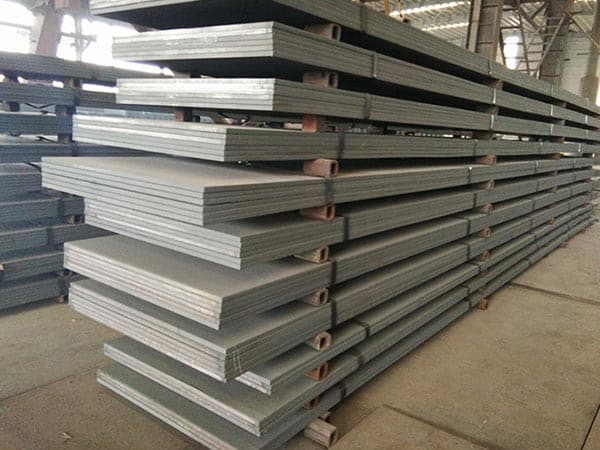
The Technical Core of S900MC High-Strength Steel
S900MC is a thermomechanically rolled, high-strength low-alloy (HSLA) steel governed by the EN 10149-2 standard. With a minimum yield strength of 900 MPa, this material represents the pinnacle of weight-reduction strategies in modern automotive engineering and heavy machinery. Unlike traditional structural steels, S900MC achieves its extreme strength through a combination of fine-grain refinement and precipitation hardening, often featuring a complex microstructure of tempered martensite or bainite. Because its properties are so closely tied to its thermal history, the choice of cutting method is not merely a matter of productivity; it is a critical factor that determines the structural integrity of the final component.
Comparing Thermal Cutting: Laser vs. Plasma for S900MC
When evaluating whether cutting methods are comparable, one must first look at the Heat Affected Zone (HAZ). For a material like S900MC, excessive heat can lead to localized softening, where the yield strength drops significantly below the 900 MPa threshold. Laser cutting stands out as the preferred thermal method for automotive plates. The high energy density of a fiber laser allows for extremely high cutting speeds, which minimizes the time the steel is exposed to high temperatures. This results in a very narrow HAZ, typically ranging from 0.1mm to 0.3mm. This precision ensures that the edge of the S900MC plate retains most of its original hardness and fatigue resistance.
Plasma cutting, while faster for thicker sections, introduces a much higher heat input. The HAZ in plasma-cut S900MC can extend up to 1.0mm or more. For automotive structural components like chassis rails or crane booms, this softened zone can become a point of premature failure under cyclic loading. Therefore, while both are thermal processes, they are not strictly comparable in terms of metallurgical impact. Laser cutting provides a superior edge that often requires no secondary grinding, whereas plasma cutting might necessitate the removal of the affected edge to meet safety standards.
Mechanical and Cold Cutting: The Waterjet Alternative
In scenarios where the absolute preservation of the S900MC microstructure is non-negotiable, Abrasive Waterjet Cutting is the benchmark. As a cold cutting process, it eliminates the HAZ entirely. This is particularly vital for research prototypes or ultra-critical safety components where the 900 MPa yield strength must be consistent right up to the very edge of the cut. However, the trade-off is speed and cost. Waterjet cutting is significantly slower than laser cutting, making it less viable for high-volume automotive production lines.
| Feature | Laser Cutting | Plasma Cutting | Waterjet Cutting | Mechanical Shearing |
|---|---|---|---|---|
| Heat Affected Zone (HAZ) | Very Low (0.1-0.3mm) | Moderate to High (0.5-1.5mm) | None (Cold Process) | None |
| Edge Precision | High (+/- 0.1mm) | Moderate (+/- 0.5mm) | Very High (+/- 0.05mm) | Low |
| Microstructure Integrity | Excellent | Risk of Softening | Perfect | Risk of Micro-cracking |
| Production Speed | Very High | High | Low | Instantaneous |
Impact of Cutting on S900MC Mechanical Properties
The mechanical performance of S900MC is characterized by its high yield-to-tensile ratio and decent elongation (typically around 8-10%). Thermal cutting methods can induce residual tensile stresses at the edge. If the cutting parameters are not optimized—for instance, using the wrong assist gas—the edge can become enriched with nitrogen or carbon, leading to embrittlement. Oxygen-assisted laser cutting can leave a thin oxide layer that must be removed before welding or painting, whereas Nitrogen-assisted cutting provides a clean, weld-ready edge that preserves the fatigue life of the S900MC component.
Mechanical shearing is another method often considered for thinner S900MC plates. However, due to the material's extreme hardness, shearing requires massive force and high-quality tool steel blades. The primary risk here is edge work-hardening and the formation of micro-cracks. S900MC is sensitive to edge quality during subsequent forming operations; a sheared edge with micro-cracks is far more likely to split during a 90-degree bend than a smooth, laser-cut edge.
Industry-Specific Applications and Cutting Selection
The automotive industry utilizes S900MC for cross-members, longitudinal beams, and bumper reinforcements. In these applications, the weight-to-strength ratio is the driving factor. High-speed fiber laser cutting is the industry standard because it aligns with the automated nature of vehicle assembly. The minimal HAZ ensures that the complex geometry of these parts does not compromise the vehicle's crashworthiness.
Beyond the automotive sector, S900MC is extensively used in the lifting and transportation industry. For mobile crane telescopic booms, the plate thickness might be higher. Here, the comparison between cutting methods shifts toward High-Definition Plasma vs. Laser. While plasma is more cost-effective for plates over 12mm, the requirement for high-tolerance fits often pushes manufacturers back toward laser cutting or even CNC milling of the edges to ensure the structural integrity of the boom under maximum load.
Environmental Adaptability and Processing Stability
S900MC exhibits good atmospheric corrosion resistance compared to standard carbon steels, but the cutting process can influence this. A rough edge produced by low-quality plasma cutting creates more surface area for oxidation to begin. Conversely, the smooth, polished edge of a laser-cut S900MC plate provides a better substrate for cathodic dip coating (KTL) or powder coating, which are standard in the automotive industry. The stability of the cutting process is also influenced by the material's flatness and surface scale. S900MC is usually supplied with a pickled and oiled surface to facilitate high-quality laser cutting, ensuring that the beam absorption is consistent and the kerf is clean.
Optimizing the Cutting Workflow for S900MC
To achieve the best results, the cutting method must be integrated into a holistic manufacturing chain. This includes:
- Pre-heating: Generally not required for S900MC due to its low carbon equivalent (CEV), but beneficial in extremely cold environments to prevent thermal shock.
- Gas Selection: Using high-purity Nitrogen for laser cutting to prevent oxidation and ensure the best paint adhesion.
- Lead-in/Lead-out Strategy: Carefully placing the start and end points of the cut to avoid heat accumulation in corners, which could lead to localized softening.
- Post-Cut Inspection: Utilizing hardness testing at the edge to verify that the thermal cycle has not degraded the 900 MPa yield strength.
The question of whether cutting methods for S900MC are comparable depends entirely on the performance requirements of the end product. While laser cutting offers the best balance of speed, precision, and metallurgical preservation for automotive use, waterjet remains the king of integrity, and plasma serves as a heavy-duty alternative for thicker sections. Understanding the microstructural sensitivity of S900MC is the key to choosing the right tool for the job, ensuring that the high-strength benefits of the steel are fully realized in the final assembly.
Leave a message