
What is the application scope of hot rolled automotive steel grade S960MC
Explore the technical properties, processing advantages, and diverse application scope of S960MC hot-rolled high-strength steel in modern automotive and heavy machinery manufacturing.
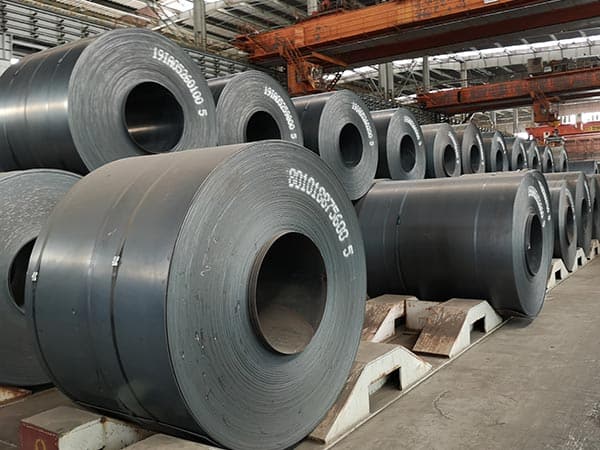
The Evolution of Ultra-High Strength Steel in Modern Engineering
The demand for higher efficiency, increased payload capacity, and reduced carbon emissions has driven the metallurgical industry to push the boundaries of steel performance. Among the most advanced materials available today, S960MC stands out as a premier hot-rolled high-yield strength steel designed specifically for cold forming. Governed by the EN 10149-2 standard, this grade represents the pinnacle of thermomechanically rolled steels, offering a minimum yield strength of 960 MPa. Unlike traditional structural steels, S960MC achieves its extraordinary properties through a precise combination of micro-alloying and controlled rolling processes, rather than through energy-intensive heat treatments like quenching and tempering.
The transition from standard structural grades like S355 to ultra-high-strength options like S960MC is not merely a material swap; it is a fundamental shift in design philosophy. By utilizing a material that is nearly three times stronger than conventional steel, engineers can significantly reduce plate thickness without compromising structural integrity. This capability is the cornerstone of modern lightweight construction, particularly in sectors where every kilogram of dead weight saved translates directly into increased operational efficiency or reduced fuel consumption.
Technical Specifications and Chemical Composition
Understanding the application scope of S960MC requires a deep dive into its metallurgical DNA. The "S" denotes structural steel, "960" indicates the minimum yield strength in megapascals, "M" signifies the thermomechanical rolling delivery condition, and "C" highlights its suitability for cold forming. The chemical composition is meticulously balanced to ensure that high strength does not come at the expense of weldability or toughness.
| Element | Maximum Content (%) |
|---|---|
| Carbon (C) | 0.20 |
| Manganese (Mn) | 2.20 |
| Silicon (Si) | 0.60 |
| Phosphorus (P) | 0.025 |
| Sulfur (S) | 0.010 |
| Aluminium (Al) | 0.015 |
| Niobium (Nb) + Titanium (Ti) + Vanadium (V) | 0.22 |
The low carbon equivalent (CEV) is a critical attribute. By keeping carbon levels low and utilizing micro-alloying elements like Niobium and Titanium, S960MC maintains excellent grain refinement. This fine-grained microstructure is what allows the steel to remain ductile and weldable despite its extreme hardness. The precise control of the rolling temperature and cooling rate during production ensures that the steel develops a consistent bainitic or martensitic-bainitic structure throughout its cross-section.
Mechanical Properties and Performance Benchmarks
The mechanical performance of S960MC is characterized by a high yield-to-tensile ratio. This means the material can withstand significant stress before undergoing permanent deformation. For designers, this allows for a much higher safety margin or, more commonly, the use of thinner sections to handle the same loads as thicker, lower-grade materials.
- Yield Strength (ReH): Minimum 960 MPa.
- Tensile Strength (Rm): 980 to 1250 MPa.
- Elongation (A5): Minimum 7% to 10% depending on thickness.
- Impact Toughness: Typically tested at -20°C or -40°C to ensure performance in arctic or high-altitude environments.
These properties make S960MC an ideal candidate for components subjected to extreme static and dynamic loads. The high fatigue resistance is particularly valuable in the automotive industry, where components must endure millions of cycles of stress over their operational lifespan. Furthermore, the material's consistency ensures that automated manufacturing processes, such as robotic welding and CNC bending, can be executed with high repeatability.
Primary Application: The Lifting and Transport Industry
The most prominent application scope for S960MC is found in the manufacturing of lifting equipment and mobile cranes. For telescopic crane booms, weight is the enemy of reach. By using S960MC, manufacturers can produce longer, lighter boom sections that allow cranes to lift heavier loads at greater radii. The high strength-to-weight ratio ensures that the crane remains stable while the overall vehicle weight stays within road-legal limits.
In the world of heavy-duty transport, S960MC is used extensively for trailer chassis and longitudinal beams. Modern semi-trailers, especially those designed for transporting heavy machinery or bulk materials, benefit from the reduced self-weight of the frame. A lighter trailer frame allows for a higher payload, which increases the profitability of each trip and reduces the number of journeys required for large-scale projects. This steel grade is also found in the construction of timber loaders and specialized forestry trailers, where the environment is harsh and the risk of impact damage is high.
Automotive Structural Components and Safety
Within the automotive sector, S960MC is increasingly utilized for chassis frames of commercial vehicles, trucks, and buses. The move toward electric heavy vehicles has intensified the need for lightweighting, as the weight of battery packs must be offset to maintain cargo capacity. S960MC provides the necessary structural rigidity to protect battery compartments while keeping the total vehicle weight optimized.
Safety-critical components, such as underrun protection barriers and cross-members, also leverage the energy-absorption capabilities of this steel. While S960MC is extremely strong, its controlled ductility allows it to absorb energy during a collision, protecting the vehicle's occupants and critical systems. The ability to cold-form complex shapes means that engineers can design integrated components that reduce the need for multiple welds, further enhancing the structural integrity of the vehicle frame.
Processing Advantages: Bending and Welding
One might assume that a steel with nearly 1000 MPa yield strength would be difficult to process, but S960MC is engineered for excellent cold formability. Despite its strength, it can be bent to tight radii, provided that the correct tools and parameters are used. For a plate thickness (t), the minimum recommended internal bending radius is typically around 3.0t to 4.0t, depending on the bending angle and direction relative to the rolling grain. This flexibility allows for the creation of complex profiles that are both strong and aesthetically pleasing.
Welding S960MC is straightforward due to its low carbon equivalent. It can be welded using all standard methods, such as MAG (Metal Active Gas), submerged arc welding, and laser welding. However, to maintain the properties of the thermomechanically rolled structure, it is crucial to control the heat input. Excessive heat can lead to grain growth in the heat-affected zone (HAZ), which may reduce the local strength. Using high-quality filler materials and following strict cooling time (t8/5) protocols ensures that the welded joint remains as robust as the base metal. Preheating is generally not required for thinner sections, which simplifies the production workflow and reduces costs.
Environmental Impact and Sustainability
The application of S960MC contributes significantly to environmental sustainability. The logic is simple: less steel used per vehicle means less energy consumed during the smelting and manufacturing process. Furthermore, the resulting lighter vehicles consume less fuel (or electricity) and produce fewer emissions over their entire lifecycle. In the context of global "Green Steel" initiatives, the use of ultra-high-strength grades is a primary strategy for reducing the carbon footprint of the transportation and construction sectors.
The durability of S960MC also plays a role in sustainability. Components made from this steel are less prone to wear and fatigue failure, leading to longer service lives for machinery and vehicles. This reduces the frequency of replacements and the associated demand for new raw materials. When a vehicle eventually reaches the end of its life, S960MC is 100% recyclable, fitting perfectly into a circular economy model.
Challenges and Considerations for Implementation
While the benefits are clear, implementing S960MC requires specialized knowledge. Designers must account for the material's higher elastic springback during bending operations. Tooling must be robust enough to handle the higher forces required to deform the steel. Additionally, because the material is thinner, global stability issues such as buckling become more critical in the design phase. Finite Element Analysis (FEA) is often employed to optimize the geometry of S960MC components to ensure that the strength of the material is fully utilized without falling victim to localized instability.
Storage and handling also require care. To prevent hydrogen-induced cracking, the steel should be kept dry and processed in environments with controlled humidity, especially during welding. However, these requirements are standard for modern high-tech fabrication shops and are a small price to pay for the massive performance gains offered by the material.
Expanding Horizons in Agricultural and Mining Equipment
Beyond the highway and the construction site, S960MC is finding a home in agricultural machinery and mining equipment. Large-scale seeders, plows, and harvesters require frames that can withstand the immense torque and vibration of field operations while remaining light enough to prevent soil compaction. S960MC allows for the design of wider, more productive implements that can be pulled by standard tractors.
In the mining sector, where equipment is subjected to some of the most abrasive and high-stress conditions on Earth, S960MC is used for the structural skeletons of underground mining vehicles and conveyor systems. Its ability to perform at low temperatures makes it suitable for mining operations in northern climates, where traditional steels might become brittle and prone to sudden failure. The versatility of S960MC ensures that it remains a critical material for any industry that demands the highest levels of structural performance and efficiency.
Leave a message