
What are the quality features of strenx 700MC steel
Discover the exceptional quality features of Strenx 700MC high-strength steel. Learn about its mechanical properties, weldability, cold forming, and industry-leading performance.
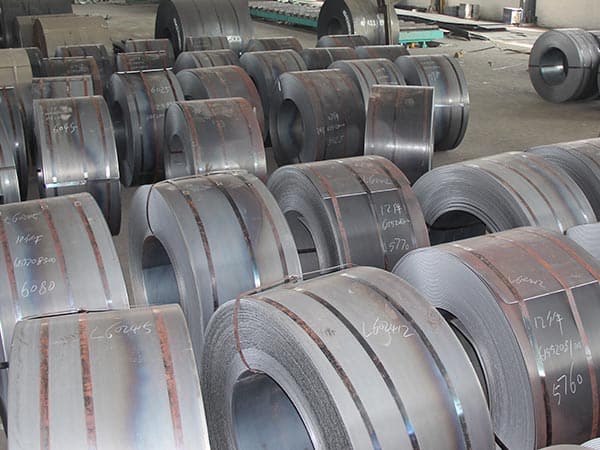
The Evolution of Structural Efficiency with Strenx 700MC
In the modern era of engineering, the demand for materials that offer both high strength and low weight has never been more critical. Strenx 700MC, a high-strength structural steel produced by SSAB, stands at the forefront of this material revolution. As a hot-rolled, thermomechanically rolled steel with a minimum yield strength of 700 MPa, it is designed to replace traditional S355 or other lower-strength grades, allowing for significant weight reductions without compromising structural integrity. The "MC" in its name signifies its thermomechanical rolling process, a sophisticated manufacturing technique that refines the grain structure to achieve a unique balance of strength, toughness, and workability.
The primary appeal of Strenx 700MC lies in its ability to push the boundaries of what is possible in mechanical design. By utilizing a material that is nearly twice as strong as standard structural steel, engineers can specify thinner plates, which leads to lighter components, higher payloads, and reduced fuel consumption in mobile equipment. This article explores the multifaceted quality features that make Strenx 700MC a preferred choice for high-performance applications.
Chemical Composition and the Science of Micro-alloying
The exceptional performance of Strenx 700MC is rooted in its precise chemical composition. Unlike traditional steels that rely on high carbon content for strength—which often leads to brittleness and poor weldability—Strenx 700MC utilizes a low-carbon, low-alloy approach. The strength is primarily derived from micro-alloying elements such as Niobium (Nb), Vanadium (V), and Titanium (Ti), combined with a meticulously controlled thermomechanical rolling process.
Low Carbon Content: With a typical carbon content significantly lower than standard structural steels, Strenx 700MC exhibits superior weldability and toughness. The low carbon equivalent (CEV) ensures that the steel is less susceptible to cold cracking during welding, a common issue with high-strength materials.
Grain Refinement: The micro-alloying elements facilitate grain refinement during the rolling process. Smaller grains provide more grain boundaries, which act as barriers to dislocation movement, thereby increasing both the yield strength and the impact toughness of the material. This fine-grained structure is also responsible for the steel's excellent surface quality and consistent mechanical properties across the entire plate.
| Element | Max Content (%) |
|---|---|
| Carbon (C) | 0.12 |
| Silicon (Si) | 0.21 |
| Manganese (Mn) | 2.10 |
| Phosphorus (P) | 0.020 |
| Sulfur (S) | 0.010 |
| Aluminum (Al) | 0.015 |
Mechanical Properties: Yield Strength and Beyond
The most defining feature of Strenx 700MC is its mechanical performance. It is categorized under the EN 10149-2 standard as S700MC, but it often exceeds these requirements through the "Strenx Guarantees." These guarantees ensure tighter tolerances and more consistent properties than standard industry norms.
- Yield Strength (ReH): Minimum 700 MPa. This allows for a much higher load-bearing capacity compared to standard S355 steel (355 MPa).
- Tensile Strength (Rm): Ranges between 750 and 950 MPa, providing a robust safety margin for structural components.
- Elongation (A5): Typically 10% to 13% depending on the thickness. Despite its high strength, the steel retains sufficient ductility for complex forming operations.
- Impact Toughness: Strenx 700MC is available in different grades (such as D and E) which specify impact energy at low temperatures (e.g., 40J at -20°C or -40°C). This makes it suitable for equipment operating in harsh, cold environments.
Superior Cold Forming and Bending Capabilities
One of the most significant advantages of Strenx 700MC for manufacturers is its exceptional cold forming behavior. High-strength steels are traditionally difficult to bend due to their high yield point and potential for cracking. However, the fine-grained structure and high purity of Strenx 700MC allow for tight bending radii.
The steel's consistency is a key quality feature. Manufacturers can rely on predictable springback and uniform bending forces, which is essential for automated production lines. The minimum recommended bending radius for Strenx 700MC is remarkably low, often ranging from 0.8 to 1.2 times the plate thickness, depending on the bending direction (transverse or longitudinal) and the specific plate thickness. This flexibility allows designers to create complex, streamlined shapes that reduce the number of welded joints, further enhancing structural integrity and reducing production costs.
Advanced Weldability and Heat-Affected Zone (HAZ) Management
Welding is a critical process in the fabrication of heavy machinery, and Strenx 700MC is engineered to be highly weldable. Due to its low carbon equivalent (CEV), it can be welded using all conventional methods, including MAG (GMAW), MMA (SMAW), and Laser welding. One of the standout features is that preheating is generally not required for thicknesses under 10mm, provided the environment is dry and the ambient temperature is above 5°C.
The heat-affected zone (HAZ) is a primary concern when welding high-strength steels, as excessive heat input can lead to softening of the material. Strenx 700MC's thermomechanically rolled structure is sensitive to heat, so it is recommended to maintain a low to medium heat input (typically between 0.5 and 1.5 kJ/mm). By controlling the cooling time (t8/5), fabricators can ensure that the weld joint maintains a strength level close to that of the base material. This weldability ensures that the final assembly performs as a cohesive, high-strength unit.
Weight Reduction and Structural Efficiency
The move toward Strenx 700MC is often driven by the "Strenx Effect"—the ability to reduce the weight of a structure by up to 40% compared to traditional steel. This is achieved through thickness reduction. For instance, a component originally designed with 10mm S355 steel can often be redesigned using 6mm or 7mm Strenx 700MC while maintaining the same load capacity.
Lighter structures translate into numerous benefits:
Surface Quality and Dimensional Tolerances
Strenx 700MC is known for its excellent surface finish. The hot-rolling process is followed by careful cooling and, in many cases, pickling and oiling. This results in a smooth, clean surface with minimal scale, which is ideal for high-quality painting and coating. Good surface integrity also reduces the risk of fatigue cracks initiating from surface defects.
Furthermore, Strenx 700MC comes with "Strenx Guarantees" for thickness and flatness. These tolerances are much tighter than the EN 10051 standards. For example, the thickness tolerance is often less than half of what is allowed by standard norms. Tight flatness tolerances ensure that the steel remains flat during laser or plasma cutting, preventing collisions with the cutting head and ensuring high precision in the final parts.
Applications Across Demanding Industries
The unique quality features of Strenx 700MC have led to its widespread adoption across several high-stakes industries. Its versatility makes it suitable for any application where strength-to-weight ratio is a critical performance metric.
Transport and Logistics: Used extensively in the manufacturing of trailers, semi-trailers, and truck chassis. It allows for the construction of lighter frames that can withstand the dynamic loads of long-haul transport.
Lifting and Cranes: Mobile cranes, loader cranes, and aerial work platforms benefit from the high yield strength, which enables the design of longer, lighter booms that maintain stability and safety.
Agriculture and Forestry: Harvesters, trailers, and forestry equipment operate in punishing environments. Strenx 700MC provides the impact toughness needed to survive shocks and the strength to handle heavy loads of timber or grain.
Construction and Mining: Used in the bodies of dump trucks, excavators, and concrete pumps. The steel's ability to be formed into complex shapes allows for optimized bucket and body designs that improve material flow and reduce wear.
Sustainability and Lifecycle Considerations
Beyond its mechanical and processing advantages, Strenx 700MC contributes significantly to environmental sustainability. By enabling the production of lighter equipment, it directly reduces the carbon footprint of the transport industry. Furthermore, the steel is 100% recyclable. The longevity and durability of components made from Strenx 700MC also mean that equipment needs to be replaced less frequently, reducing the overall consumption of raw materials over time.
The combination of high strength, excellent fabrication properties, and consistent quality makes Strenx 700MC a benchmark in the high-strength steel market. For engineers and manufacturers looking to innovate and stay competitive, understanding and leveraging these quality features is essential for building the next generation of high-performance machinery.
Leave a message