
What are the top ten en 10149-2 equivalent indian standard suppliers in Nigeria
Explore the comprehensive guide to EN 10149-2 equivalent Indian standard steel suppliers in Nigeria. Learn about mechanical properties, cold forming advantages, and sourcing high-strength steel.
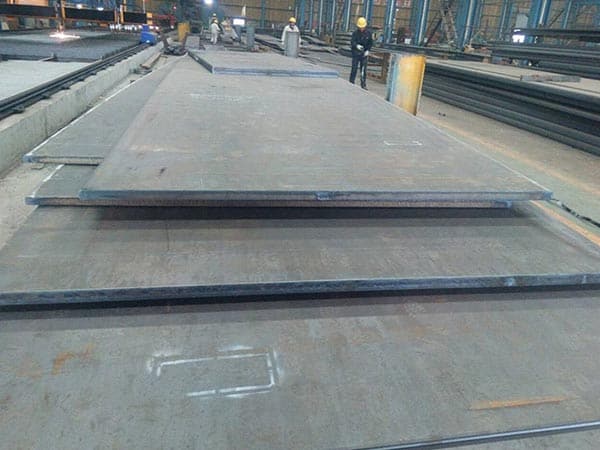
Understanding the Synergy Between EN 10149-2 and Indian Standards in the Nigerian Market
The Nigerian industrial landscape is undergoing a rapid transformation, particularly in the sectors of heavy infrastructure, automotive assembly, and agricultural machinery manufacturing. At the heart of this growth lies the demand for high-yield strength steels. EN 10149-2, a European standard for hot-rolled flat products made of high yield strength steels for cold forming, is frequently specified in international projects. However, for many Nigerian procurement officers, sourcing the exact European-origin material can be logistically challenging or cost-prohibitive. This has led to a significant shift toward Indian Standard (IS) equivalents, which offer comparable performance and better availability through established trade routes between India and West Africa.
EN 10149-2 grades like S315MC, S355MC, S420MC, and S700MC are characterized by their thermomechanically rolled (MC) state, ensuring excellent bendability and weldability. The primary Indian equivalents fall under IS 5986 (Hot Rolled Steel Flat Products for Structural Quality and Cold Forming) and IS 2062 (Hot Rolled Medium and High Tensile Structural Steel). Understanding the technical nuances between these standards is crucial for ensuring structural integrity in Nigerian engineering projects.
Technical Comparison: EN 10149-2 vs. Indian Standards (IS 5986 & IS 2062)
When searching for equivalent suppliers, it is essential to compare the chemical composition and mechanical properties. The EN 10149-2 standard emphasizes a low carbon equivalent (CEV) to facilitate superior welding, a feature mirrored in the higher grades of Indian standards. For instance, S355MC is often cross-referenced with IS 5986 Grade Fe 450 or IS 2062 E350. While IS 2062 is primarily a structural standard, the 'BR' or 'BO' variants provide the necessary impact toughness and forming capabilities required by Nigerian fabricators.
| EN 10149-2 Grade | Indian Standard Equivalent | Yield Strength (Min MPa) | Tensile Strength (MPa) | Key Application in Nigeria |
|---|---|---|---|---|
| S315MC | IS 5986 Grade 330 / IS 2062 E250 | 315 | 390-510 | Light truck frames, racking systems |
| S355MC | IS 5986 Grade 450 / IS 2062 E350 | 355 | 430-550 | Automotive chassis, crane arms |
| S420MC | IS 5986 Grade 490 / IS 2062 E410 | 420 | 480-620 | Heavy duty trailers, yellow goods |
| S700MC | IS 2062 E650 (Special High Strength) | 700 | 750-950 | High-load structural components |
Mechanical and Process Performance in Tropical Environments
Nigeria’s climate, characterized by high humidity and varying temperatures between the coastal south and the arid north, demands steel with robust environmental adaptability. The thermomechanical rolling process used in EN 10149-2 and its Indian counterparts ensures a fine-grained microstructure. This micro-alloying (typically with Niobium, Vanadium, or Titanium) provides high strength without increasing the carbon content, which is vital for maintaining ductility in high-heat Nigerian fabrication shops.
From a processing standpoint, these steels excel in cold forming. Nigerian manufacturers producing bus bodies or agricultural implements require steel that can be bent to tight radii without cracking. The Indian IS 5986 grades are specifically designed for this, offering a high 'n-value' (strain hardening exponent) and 'r-value' (plastic strain ratio), ensuring that the material thins uniformly during deep drawing or complex bending operations.
- Weldability: Low carbon levels mean that pre-heating is rarely required, reducing energy costs for Nigerian workshops.
- Surface Quality: The pickled and oiled finish available from top Indian mills ensures that the steel is ready for painting or galvanizing, essential for corrosion resistance in Lagos or Port Harcourt.
- Impact Resistance: Even at lower temperatures (though less critical in Nigeria), the fine-grain structure prevents brittle fracture under dynamic loads.
Top Indian Standard Steel Suppliers Servicing Nigeria
Identifying the top suppliers involves looking at those with a strong export footprint and the ability to provide Mill Test Certificates (MTC) that verify the equivalence to EN 10149-2. The following entities are the primary drivers of Indian steel supply into the Nigerian market, often working through local distributors in Lagos, Kano, and Abuja.
1. Tata Steel Limited: Known for their 'Tata Astrum' range, they provide high-precision hot rolled sheets that perfectly align with S355MC and S420MC requirements. Their supply chain to West Africa is highly optimized.
2. JSW Steel: As one of India's largest exporters, JSW offers specialized grades under IS 5986 that are frequently used in Nigerian automotive assembly plants. Their plates are known for consistent thickness tolerances.
3. Steel Authority of India Limited (SAIL): A public sector giant, SAIL provides the heavy-duty IS 2062 grades used in large-scale Nigerian infrastructure projects, such as bridge girders and railway components.
4. ArcelorMittal Nippon Steel (AM/NS) India: Their high-strength steel portfolio is specifically geared toward global standards, making their IS-certified products an easy substitute for European S-grades.
5. Jindal Steel & Power (JSPL): JSPL is a preferred supplier for heavy sections and plates where high yield strength is required for the Nigerian oil and gas auxiliary structures.
6. Essar Steel (Now part of AM/NS): Historically a major player in the Nigerian market, their legacy of supplying cold-forming grades continues under the new management.
7. Bhushan Steel (Tata Steel BSL): They specialize in thinner gauge high-strength sheets used in the Nigerian consumer goods and light packaging industries.
8. Electrosteel Steels: While focused on pipes, their flat product division provides the base material for structural hollow sections used in Nigerian construction.
9. Vizag Steel (RINL): Primarily known for long products, their structural flats are often utilized in Nigerian telecommunication tower fabrication.
10. Lloyd's Steels Industries: They cater to niche requirements where specific mechanical properties are needed for pressure vessels or specialized machinery in the Nigerian processing industry.
Strategic Sourcing and Quality Verification in Nigeria
For Nigerian businesses, the transition to Indian equivalent standards requires a rigorous quality assurance process. It is not enough to simply match the yield strength; the elongation values and bending diameters must be verified. When importing or buying from local stockists in the Alaba or Odun-Ade markets, buyers should insist on documentation that proves the material was produced via thermomechanical rolling if they are replacing an 'MC' grade.
Furthermore, the logistical advantage of sourcing from India cannot be overstated. Shipping routes from Mumbai or Mundra to Lagos (Apapa/Tin Can) are frequent, often resulting in lower freight costs compared to European ports. This economic efficiency, combined with the technical parity of IS 5986/2062 to EN 10149-2, makes Indian steel a dominant force in Nigeria’s industrial evolution.
As the Nigerian government continues to push for "Local Content" and "Made in Nigeria" initiatives, the ability to source high-performance materials like these equivalents will be the differentiator for local manufacturers. By leveraging the high strength-to-weight ratio of these steels, Nigerian engineers can design lighter, more fuel-efficient vehicles and more durable infrastructure, ultimately driving down the total cost of ownership for end-users across the continent.
Leave a message