
How about the cost performance of cold forming S355MC high-strength steel
Comprehensive analysis of S355MC high-strength steel's cost performance, focusing on its mechanical properties, cold forming capabilities, and industrial economic benefits.
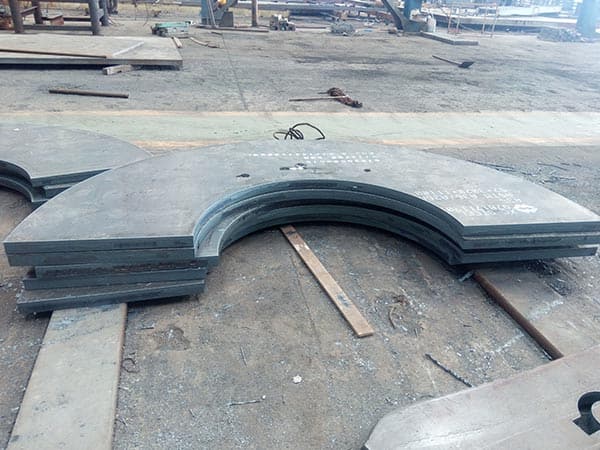
Defining the Economic and Technical Value of S355MC
In the modern manufacturing landscape, the pursuit of materials that balance structural integrity with cost efficiency is relentless. S355MC, a high-strength low-alloy (HSLA) steel grade governed by the EN 10149-2 standard, stands as a premier example of this balance. The 'S' denotes structural steel, '355' represents the minimum yield strength in MPa, and 'MC' signifies that the material is thermomechanically rolled (M) and intended for cold forming (C). Understanding its cost performance requires a deep dive into how its metallurgical design translates into manufacturing savings and long-term durability.
The Metallurgical Foundation of Cost Efficiency
The cost performance of S355MC begins at the microscopic level. Unlike traditional hot-rolled structural steels like s355jr, S355MC utilizes thermomechanical rolling. This process refines the grain size through controlled deformation and cooling rates. By incorporating micro-alloying elements such as Niobium (Nb), Vanadium (V), and Titanium (Ti), manufacturers achieve high strength without the need for high carbon content or expensive alloying additions like Nickel or Chromium.
Low carbon content (typically below 0.12%) is a critical factor in its economic profile. It ensures excellent weldability and reduces the risk of cold cracking, which eliminates the need for costly pre-heating or post-weld heat treatments. This directly lowers labor costs and speeds up production cycles in assembly lines.
Mechanical Properties and Material Optimization
When evaluating cost performance, the strength-to-weight ratio is the most significant metric. S355MC offers a significantly higher yield strength than standard mild steels, allowing engineers to use thinner sections to support the same loads. This 'down-gauging' reduces the total weight of the structure, leading to lower raw material costs and reduced shipping expenses.
| Property | Value (Thickness ≤ 3mm) | Value (Thickness > 3mm) |
|---|---|---|
| Minimum Yield Strength (MPa) | 355 | 355 |
| Tensile Strength (MPa) | 430 - 550 | 430 - 550 |
| Minimum Elongation (%) | 23 | 19 |
| Bending Radius (90°) | 0.5t | 0.5t to 1.5t |
The high elongation values indicated in the table highlight the material's ductility. For cold forming applications, this means the steel can undergo complex shaping without fracturing, reducing the scrap rate and improving the yield of the manufacturing process.
Cold Forming Performance: Reducing Tooling and Energy Costs
The 'C' in S355MC specifically targets cold forming processes such as bending, flanging, and cold-rolling. The material's fine-grained structure provides a very uniform deformation behavior. This predictability is vital for high-volume automated production. Springback, a common challenge in high-strength steels, is relatively manageable with S355MC compared to higher grades like S700MC, allowing for more precise tolerances with standard tooling.
- Minimal Bend Radii: S355MC allows for tight bending radii, which enables the design of more compact and complex components.
- Surface Quality: The thermomechanical process results in a clean surface with minimal scale, reducing the need for intensive pickling or surface preparation before painting or galvanizing.
- Tool Wear: Because it achieves strength through grain refinement rather than extreme hardness, it is less abrasive on cutting and forming tools compared to quenched and tempered steels.
Environmental Adaptability and Longevity
Cost performance isn't just about the purchase price; it's about the lifecycle of the product. S355MC exhibits good atmospheric corrosion resistance compared to standard carbon steels due to its refined microstructure. Furthermore, its excellent impact toughness at low temperatures (often tested at -20°C or -40°C) ensures that structures remain safe in harsh environments, preventing catastrophic brittle failures that could lead to massive insurance or replacement costs.
In the context of sustainability, the ability to reduce the weight of transport vehicles (trucks, trailers, rail cars) using S355MC directly translates to lower fuel consumption and carbon emissions. This makes it an ideal choice for companies aiming to meet 'green' manufacturing standards while maintaining profitability.
Expanding Application Horizons
The versatility of S355MC extends across various heavy-duty industries. Its cost performance is most evident where structural integrity and weight savings intersect.
Automotive and Transportation: Used extensively in truck chassis frames, cross members, and cold-pressed longitudinal beams. The weight reduction improves payload capacity, providing a direct economic benefit to the end-user.
Construction and Infrastructure: In the production of cold-formed sections, purlins, and cladding rails. The high strength allows for longer spans between supports, reducing the total number of structural elements required for a building.
Renewable Energy: Increasingly utilized in solar tracking systems and wind turbine internal components. These structures require high stiffness and resistance to wind loads, where S355MC provides a more affordable alternative to aluminum or specialized alloys.
Lifting and Handling: Crane arms and forklift components benefit from the material's toughness and fatigue resistance, ensuring a long service life under cyclic loading conditions.
Comparative Economic Analysis: S355MC vs. Alternatives
When compared to S355JR (a standard hot-rolled structural steel), S355MC usually carries a slight price premium per ton. However, the processed cost is often lower. Because S355MC is cleaner and more consistent, it reduces machine downtime and reject rates. When compared to ultra-high-strength steels like S700MC, S355MC is significantly cheaper and requires less specialized equipment to process, making it the "sweet spot" for many general engineering applications.
The real value lies in the Total Cost of Ownership (TCO). By utilizing the cold forming capabilities of S355MC, manufacturers can often replace multi-part welded assemblies with a single cold-formed component. This reduces the number of welds, inspection requirements, and potential points of failure, streamlining the entire supply chain.
Optimizing Processing for Maximum ROI
To fully realize the cost performance of S355MC, certain processing strategies should be employed. Laser cutting is highly effective due to the material's consistent thickness and flat surface. When welding, using low-hydrogen consumables ensures the integrity of the heat-affected zone (HAZ). Because the strength is derived from the thermomechanical process, it is crucial to avoid excessive heat input that could cause grain growth and localized softening.
Furthermore, selecting the right coil width and utilizing nesting software during the blanking process can minimize material waste. Given that S355MC is a high-demand grade, its widespread availability ensures competitive pricing from steel service centers, further enhancing its position as a cost-effective solution for modern engineering challenges.
Leave a message