
How to identify shoddy S355MC hot rolled automotive steel sheet
Expert guide on identifying high-quality S355MC hot rolled automotive steel. Learn to detect shoddy materials through chemical analysis, mechanical testing, and surface inspection.
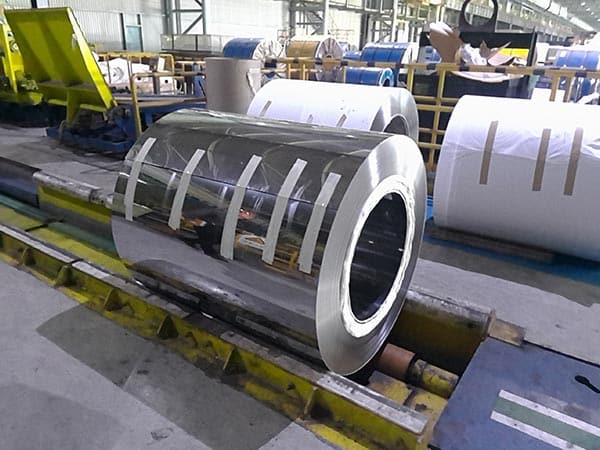
The Critical Importance of Material Integrity in S355MC Steel
S355MC is a high-yield-strength, cold-forming steel standardized under EN 10149-2. It is widely utilized in the automotive industry for structural components such as truck chassis, cross members, and longitudinal beams. The 'MC' designation indicates a thermomechanically rolled material with high ductility, making it ideal for complex bending and folding. However, the market is often flooded with substandard or 'shoddy' S355MC sheets that fail to meet these rigorous standards. Identifying these inferior products is not merely a matter of cost-saving; it is a critical safety requirement. Substandard steel can lead to structural failures, cracking during the stamping process, and poor weld integrity, all of which jeopardize the final vehicle's safety and longevity.
Chemical Composition: The Foundation of Quality
The first step in identifying genuine S355MC is verifying its chemical composition. Genuine S355MC relies on micro-alloying elements like Niobium (Nb), Titanium (Ti), and Vanadium (V) to achieve high strength without sacrificing weldability. Shoddy materials often cut corners by using higher Carbon (C) or Manganese (Mn) levels to reach the required yield strength, which negatively impacts the steel's toughness and weldability.
| Element | EN 10149-2 Standard (Max %) | Typical Shoddy Profile (Warning Signs) |
|---|---|---|
| Carbon (C) | 0.12 | > 0.15 (Increases brittleness) |
| Manganese (Mn) | 1.50 | Excessive levels to mask low micro-alloys |
| Silicon (Si) | 0.50 | Inconsistent levels affecting surface quality |
| Phosphorus (P) | 0.025 | High levels causing cold shortness |
| Sulfur (S) | 0.020 | High levels causing hot shortness and inclusions |
| Al (Total) | 0.015 (Min) | Lack of Aluminum killing leading to gas pores |
Professional buyers should demand a Mill Test Certificate (MTC) and cross-reference the heat number with a third-party Spectroscopic Analysis. If the Niobium or Titanium content is absent or below 0.01%, the material is likely a standard s355jr grade being passed off as the more expensive S355MC.
Mechanical Properties and Cold Forming Performance
S355MC is defined by its yield strength (minimum 355 MPa). However, shoddy steel often exhibits 'false' strength. It might pass a simple tensile test but fail during the complex stress-strain cycles of automotive stamping. High-quality S355MC must maintain a specific balance between strength and elongation.
- Yield Strength (ReH): Must be between 355 and 500 MPa. Shoddy steel often fluctuates wildly, leading to inconsistent springback during forming.
- Tensile Strength (Rm): Should be between 430 and 550 MPa. If the tensile strength is too high relative to the yield, the material lacks the necessary ductility.
- Elongation (A5): For thicknesses < 3mm, the minimum elongation should be 19-23%. Shoddy materials often drop below 15%, causing cracks at the corners of stamped parts.
A simple 'Shop Floor' test involves a 180-degree cold bend test. Genuine S355MC should bend over a specified mandrel diameter without any visible surface cracking. If the outer radius shows 'orange peel' texture or micro-cracks, the grain structure is likely coarse or contaminated with non-metallic inclusions.
Surface Quality and Visual Inspection Techniques
The surface of a hot-rolled S355MC sheet tells a story of its manufacturing process. Since these sheets are often used for structural parts that may be painted or coated, surface integrity is paramount. Shoddy steel often displays defects resulting from poor ingot casting or improper rolling temperatures.
- Scale Pits and Rolled-in Scale: While hot-rolled steel has a natural oxide layer, excessive pitting indicates poor descaling during the rolling process. This can hide deeper cracks.
- Laminations: These are internal voids that have been flattened. You can often spot them on the edges of the sheet. They are a death sentence for automotive safety parts.
- Scabs and Slivers: These look like loose pieces of metal rolled into the surface. They create stress concentrators that lead to fatigue failure.
- Edge Cracks: S355MC should have clean, trimmed, or mill edges. Jagged or cracked edges suggest the material was rolled at the wrong temperature (too cold), affecting the overall internal stress of the sheet.
Dimensional Accuracy and Shape Consistency
Automated automotive assembly lines require extremely tight tolerances. Shoddy S355MC often suffers from 'thickness wandering' and poor flatness (waves or buckles). When a sheet varies in thickness by more than the EN 10051 standard allows, the stamping dies will apply uneven pressure, leading to part distortion or tool damage.
Using a digital micrometer, measure the thickness at multiple points across the width and length. For a 3mm sheet, the tolerance should typically be within +/- 0.17mm. Shoddy manufacturers often produce 'under-tolerance' material (e.g., 2.75mm sold as 3.0mm) to save on weight and cost, which compromises the structural integrity of the vehicle frame.
Microstructure: The Invisible Quality Indicator
Under a microscope, genuine S355MC reveals a fine-grained ferrite-pearlite structure. The grain size is typically Grade 10 or finer according to ASTM E112. This fine grain is achieved through the thermomechanical rolling process (MC). Shoddy steel, often just standard hot-rolled steel that hasn't undergone controlled cooling, will show large, coarse grains. Coarse grains result in lower impact toughness, especially at low temperatures. In automotive applications, this means the part is more likely to shatter rather than deform during a collision.
How to Verify the Mill Test Certificate (MTC)
Fraudulent MTCs are a common issue in the secondary steel market. To identify a shoddy product, look for these red flags on the certificate:
- Inconsistent Heat Numbers: The heat number on the MTC must match the stencil or tag on the steel coil or sheet. If they are handwritten or altered, proceed with extreme caution.
- Missing Standards: The certificate must explicitly state 'EN 10149-2'. If it only says 'S355', it is likely the cheaper S355JR or S355J2, which have different forming properties.
- Missing Micro-alloy Data: If the Nb, V, and Ti columns are blank, the steel is not a true 'MC' grade.
- Physical Stamp: High-quality mills use embossed or high-security digital stamps. Faded photocopies with generic 'Passed' stamps are often indicators of redirected or downgraded material.
Environmental and Processing Adaptability
Genuine S355MC is designed to be 'forgiving' in a workshop environment. It should be easily weldable using standard MIG/MAG or spot welding without requiring pre-heating. Shoddy steel, due to higher carbon equivalents (Ceq), often develops a Heat Affected Zone (HAZ) that is brittle. If your welding tests show frequent cracking in the HAZ, the material chemistry is likely out of spec. Furthermore, S355MC should respond well to laser cutting. High impurity levels (Sulfur and Phosphorus) in shoddy steel will cause 'dross' and irregular cutting edges, significantly increasing post-processing costs.
Final Procurement Strategy
Identifying shoddy S355MC requires a multi-layered approach combining visual inspection, mechanical verification, and chemical validation. While the price is always a factor, the hidden costs of using inferior automotive steel—including tool wear, production downtime, and potential liability—far outweigh the initial savings. Always partner with reputable suppliers who provide full traceability and are willing to undergo third-party testing. By focusing on the micro-alloying content, grain structure, and dimensional precision, you can ensure that the S355MC you utilize meets the high-performance demands of the modern automotive industry.
Leave a message