
How is the performance of s420mc astm equivalent
A detailed technical analysis of S420MC steel and its ASTM equivalents, focusing on mechanical performance, chemical composition, and industrial processing advantages.
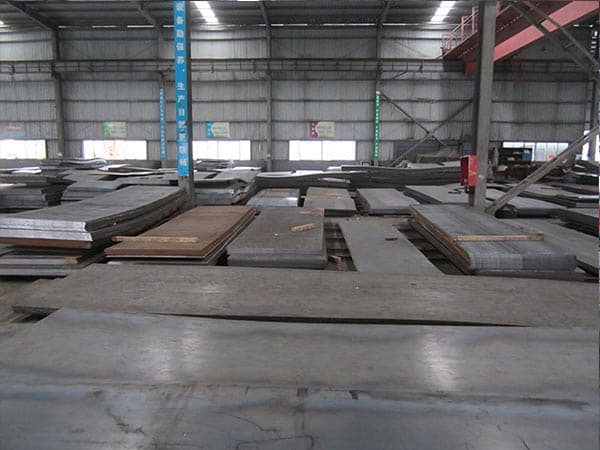
Understanding S420MC and the Quest for Global Equivalents
In the modern industrial landscape, the drive for efficiency and weight reduction has propelled high-strength low-alloy (HSLA) steels into the spotlight. S420MC, a grade defined by the European standard EN 10149-2, is a prime example of a material engineered for high performance through advanced thermomechanical rolling. For global manufacturers, particularly those operating across both European and North American markets, identifying the ASTM equivalent of S420MC is a common yet complex task. The performance of the ASTM equivalent, primarily ASTM A1011 Grade 60 HSLAS-F, must be scrutinized across several dimensions: chemistry, mechanical integrity, and processing behavior.
S420MC is characterized by its thermomechanically rolled state, denoted by the 'M' in its name, and its suitability for cold forming, denoted by 'C'. The yield strength of 420 MPa provides a robust foundation for structural components that must withstand significant loads while remaining lightweight. When searching for an ASTM equivalent, the most common match is ASTM A1011 Grade 60 HSLAS-F (High Strength Low Alloy Steel with improved formability) or ASTM A1018 Grade 60 for thicker sections. Understanding how these standards overlap and where they diverge is critical for engineers and procurement specialists alike.
Chemical Composition: The Foundation of Performance
The performance of S420MC and its ASTM equivalents is rooted in their precise chemical makeup. Both standards utilize micro-alloying elements to achieve high strength without the detrimental effects of high carbon content. This metallurgical approach ensures that the steel remains ductile and weldable despite its increased hardness.
| Element (Max %) | S420MC (EN 10149-2) | ASTM A1011 HSLAS-F Gr. 60 |
|---|---|---|
| Carbon (C) | 0.12 | 0.15 |
| Manganese (Mn) | 1.60 | 1.35 |
| Silicon (Si) | 0.50 | 0.60 |
| Phosphorus (P) | 0.025 | 0.020 |
| Sulfur (S) | 0.015 | 0.015 |
| Niobium (Nb) | 0.09 | 0.005 min |
| Vanadium (V) | 0.20 | 0.005 min |
| Titanium (Ti) | 0.15 | 0.005 min |
As shown in the comparison, S420MC typically has a lower maximum carbon content than its ASTM counterpart, which often translates to slightly better weldability and cold-forming properties. The use of Niobium (Nb), Vanadium (V), and Titanium (Ti) is essential for grain refinement. These elements form carbonitrides that pin grain boundaries during the rolling process, resulting in a fine-grained microstructure that enhances both strength and toughness. The ASTM A1011 HSLAS-F standard specifically emphasizes "improved formability" through sulfide inclusion control, often achieved by calcium treatment, which aligns closely with the "C" (cold forming) designation of the S420MC grade.
Mechanical Performance and Yield Strength Comparisons
The primary metric for comparing S420MC to an ASTM equivalent is yield strength. S420MC specifies a minimum yield strength of 420 MPa. The ASTM A1011 Grade 60 equivalent specifies a minimum yield strength of 60 ksi, which converts to approximately 415 MPa. While there is a slight 5 MPa difference, in most structural applications, this variance falls within the safety margins of engineering designs.
| Mechanical Property | S420MC (EN 10149-2) | ASTM A1011 HSLAS-F Gr. 60 |
|---|---|---|
| Yield Strength (min) | 420 MPa | 415 MPa (60 ksi) |
| Tensile Strength | 480 - 620 MPa | 520 MPa min (75 ksi) |
| Elongation (min) | 16% - 19% (varies by thickness) | 22% (in 2 inches) |
| Bending Radius (180°) | 0.5t to 1.5t | 1.5t |
Tensile strength ranges also show significant overlap. S420MC offers a controlled range between 480 and 620 MPa, ensuring consistency in manufacturing processes like stamping and roll forming. The ASTM equivalent typically has a higher minimum tensile strength requirement, which can be beneficial in applications where ultimate load-bearing capacity is prioritized over ductility. However, the elongation values of the ASTM equivalent are often higher when measured over a 2-inch gauge length, indicating excellent plastic deformation capabilities.
Processing Advantages: Cold Forming and Weldability
One of the standout features of S420MC and its ASTM equivalents is their exceptional processing performance. Unlike traditional structural steels, these grades are designed to be manipulated in a cold state. This capability is vital for industries that require complex geometries without the need for heat treatment.
- Cold Forming: The fine-grained structure allows for tight bending radii. S420MC can often be bent to a radius as small as 0.5 times its thickness (for thinner sheets), making it ideal for intricate chassis components.
- Weldability: Due to the low Carbon Equivalent Value (CEV), these steels can be welded using all standard methods (MIG, TIG, Laser, etc.) without the risk of cold cracking. No pre-heating is typically required for standard thicknesses.
- Surface Quality: Thermomechanical rolling produces a tight, consistent scale that is easily removed through pickling, providing an excellent surface for coating or painting.
- Edge Quality: The inclusion control in HSLAS-F grades ensures that edges remain stable during shearing and punching, reducing the likelihood of micro-cracks that could propagate under fatigue.
The thermomechanical rolling process (TMCP) is the secret behind this performance. By controlling the temperature and deformation during rolling, the steel achieves its strength through grain size reduction rather than through the addition of alloying elements that would otherwise make the steel brittle. This makes S420MC and its ASTM equivalents highly reliable for dynamic loads.
Industry-Specific Utility and Durability
The adoption of S420MC and ASTM A1011 Grade 60 is widespread across sectors that demand durability and weight optimization. In the automotive industry, these steels are used for truck frames, chassis members, and suspension parts. The high yield strength allows for thinner sections to be used, reducing the overall vehicle weight and improving fuel efficiency without compromising safety.
In the heavy machinery sector, these grades are found in crane booms, agricultural equipment, and trailers. The ability to withstand high stress while maintaining a degree of flexibility is crucial for equipment that operates in harsh environments. Furthermore, the environmental adaptability of these steels is noteworthy. While they are not "weathering steels" in the traditional sense (like Corten), their dense microstructure provides a baseline resistance to atmospheric corrosion that is superior to standard mild steels, especially when paired with modern galvanizing or E-coating techniques.
Strategic Material Selection and Technical Synthesis
When substituting S420MC with an ASTM equivalent, it is essential to verify the specific requirements of the project. While ASTM A1011 Grade 60 HSLAS-F is the closest match for sheet products, for plate products thicker than 6mm, ASTM A1018 Grade 60 may be more appropriate. Engineers should also consider the impact of the "Class" designation in ASTM standards; Class 1 typically offers higher strength, while Class 2 may provide different ductility profiles.
The performance of S420MC and its ASTM equivalent is a testament to the advancements in metallurgical engineering. By leveraging micro-alloying and controlled rolling, these materials bridge the gap between traditional structural steels and high-end specialty alloys. They offer a cost-effective solution for high-performance applications, ensuring that structures are not only strong but also manufacturable and long-lasting. For any global project, the interchangeability of these standards allows for a more resilient supply chain and consistent product quality across borders.
Leave a message