
How long will fe 420 steel equivalent last not rust outside?
Detailed analysis of Fe 420 steel and its equivalents' outdoor longevity. Explore corrosion rates, mechanical properties, and protection methods to maximize structural lifespan in various environments.
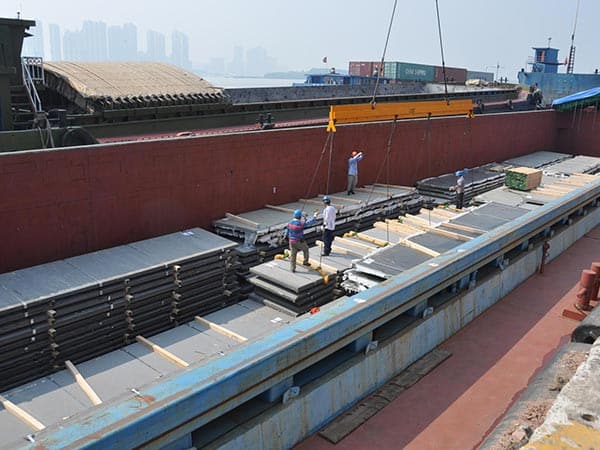
Understanding the Atmospheric Durability of Fe 420 Steel and Its Equivalents
Fe 420 steel, a high-strength structural grade widely utilized in infrastructure and heavy machinery, is prized for its balance of yield strength and ductility. When considering how long Fe 420 or its equivalents—such as the European S420, Chinese Q420, or American ASTM A572 Grade 60—will last outdoors before succumbing to rust, we must look beyond simple metallurgy into the complex interaction between the alloy and the atmosphere. Fe 420 is a carbon-manganese steel, not a corrosion-resistant alloy like stainless steel or weathering steel (Corten). Therefore, its natural state in an outdoor environment is one of progressive oxidation.
The term "rust" refers to the formation of iron oxide on the surface. For Fe 420, this process begins almost immediately upon exposure to moisture and oxygen. However, the transition from superficial "flash rust" to structural degradation is a journey that spans years, depending heavily on the specific environmental category. In dry, inland climates, a bare Fe 420 beam might maintain its structural integrity for decades despite a layer of surface rust. Conversely, in a salt-laden coastal environment, the same steel could see significant section loss within five to seven years if left unprotected.
Chemical Composition and Its Influence on Corrosion Resistance
The chemical makeup of Fe 420 plays a secondary but vital role in its environmental resilience. While it lacks the high Chromium or Nickel content of stainless steels, the controlled levels of Carbon and Manganese affect how the oxide layer forms. Typically, Fe 420 contains approximately 0.20% Carbon and up to 1.60% Manganese. These elements are optimized for a yield strength of 420 MPa rather than corrosion inhibition.
| Element | Typical Percentage (%) | Impact on Performance |
|---|---|---|
| Carbon (C) | 0.20 - 0.22 | Increases strength but can slightly accelerate localized pitting if not uniform. |
| Manganese (Mn) | 1.50 - 1.60 | Improves toughness and hardenability; provides minor resistance to atmospheric scaling. |
| Silicon (Si) | 0.40 - 0.45 | Deoxidizes the steel, ensuring a cleaner grain structure which slows uniform corrosion. |
| Sulfur (S) & Phosphorus (P) | < 0.040 | Kept low to prevent stress corrosion cracking and embrittlement. |
Because Fe 420 does not contain significant amounts of Copper or Chromium (unlike weathering steels), it does not form a protective "patina." Instead, the rust layer is porous, allowing moisture to penetrate deeper into the steel substrate over time. This makes the selection of equivalent grades and protective coatings the primary factor in determining longevity.
Comparing Fe 420 with Global Equivalents
Engineers often seek equivalents to Fe 420 to meet local availability or specific project standards. The most common equivalents include EN 10025-3 S420N, ASTM A572 Grade 60, and GB/T 1591 Q420. While their mechanical properties are nearly identical, their micro-alloying elements (like Vanadium or Niobium) can slightly alter their surface reactivity.
- S420JR/J0/J2 (EN 10025): These grades are classified by their impact energy at specific temperatures. The S420J2 variant, with its guaranteed toughness at -20°C, is better suited for outdoor structures in cold climates where brittle fracture is a risk alongside rust.
- ASTM A572 Grade 60: This American equivalent is frequently used in transmission towers. Its atmospheric corrosion resistance is considered "base," meaning it requires galvanization or painting for long-term outdoor exposure.
- Q420 (GB/T 1591): A high-strength low-alloy (HSLA) steel from China that often includes trace amounts of Ti or V, which refine the grain size and provide a slightly more uniform surface for coating adhesion.
Environmental Classification and Estimated Lifespan
The lifespan of Fe 420 steel without protection is measured by the "corrosion rate," typically expressed in micrometers per year (µm/year). The ISO 12944 standard provides a framework for understanding these rates across different environments.
- C1 (Very Low): Heated buildings with clean atmospheres. Fe 420 will last indefinitely here with no rust.
- C2 (Low): Rural areas with low pollution. Bare Fe 420 may lose 1.3 to 25 µm per year. It could take 40 years to lose 1mm of thickness.
- C3 (Medium): Urban and industrial atmospheres or moderate coastal influence. Corrosion rates jump to 25-50 µm per year. Surface rust is aggressive within 12 months.
- C4 (High): Industrial areas and coastal areas with moderate salinity. Rates of 50-80 µm per year mean structural thinning becomes a concern within 15 years.
- C5 (Very High): Offshore, coastal, and high-humidity industrial zones. Corrosion exceeds 80-200 µm per year. Bare Fe 420 is not recommended here as it may fail structurally within a decade.
Mechanical Performance Under Environmental Stress
The danger of rust on Fe 420 is not just aesthetic; it impacts the mechanical integrity of the component. As rust forms, the effective cross-sectional area of the steel decreases. For a high-strength steel like Fe 420, which is often used in load-bearing applications where weight optimization is key, even a 10% reduction in thickness can lead to catastrophic failure.
Furthermore, "pitting corrosion" can create stress concentrators. Fe 420 has a yield strength of 420 MPa and a tensile strength between 520 and 680 MPa. When a pit forms on the surface due to localized oxidation, it acts as a notch. Under cyclic loading—common in bridges or crane gantry girders—these pits become initiation points for fatigue cracks, significantly shortening the service life of the structure regardless of the overall thickness remaining.
Processing, Welding, and Corrosion Vulnerability
How Fe 420 is processed significantly affects its outdoor durability. Welding is the most critical phase. The Heat Affected Zone (HAZ) around a weld often has a different microstructure than the base metal. If the welding filler material is not compatible or if the cooling rate is too fast, the HAZ can become more susceptible to galvanic corrosion or stress corrosion cracking.
To ensure the longevity of Fe 420 equivalents in outdoor assemblies, it is essential to use low-hydrogen electrodes and maintain proper preheat temperatures. Post-weld cleaning is equally vital; slag and spatter left on the surface create crevices where moisture can sit, accelerating rust in the very spots where structural integrity is most critical. Machined surfaces or holes drilled for bolting also expose the "fresh" interior of the steel, requiring immediate sealing to prevent edge-creep corrosion.
Strategies to Extend the Outdoor Life of Fe 420
To make Fe 420 last 50 years or more outdoors, a proactive protection strategy is required. The most effective methods involve isolating the steel from the electrolyte (water).
1. Hot-Dip Galvanizing: This is the gold standard for Fe 420. By dipping the steel in molten zinc, a series of zinc-iron alloy layers form. Even if the coating is scratched, the zinc acts as a sacrificial anode, corroding instead of the steel. Galvanized Fe 420 can last 30-80 years in C3 environments.
2. High-Performance Coating Systems: A three-coat system consisting of a zinc-rich epoxy primer, an epoxy intermediate build coat, and a polyurethane topcoat provides excellent UV and moisture resistance. This is the preferred method for large structures like bridges where galvanizing baths are too small.
3. Duplex Systems: Combining galvanizing with painting. This provides a synergistic effect where the combined lifespan is 1.5 to 2.5 times the sum of the individual parts. This is the ultimate solution for C5 marine environments.
Application Scenarios and Real-World Longevity
In the renewable energy sector, Fe 420 equivalents are frequently used for wind turbine towers and solar racking systems. For solar racks in desert environments (C2), pre-galvanized Fe 420 components often reach a 25-year service life with zero maintenance. However, for offshore wind foundations, the Fe 420 steel is subjected to the splash zone—the most corrosive environment on earth. Here, the steel is protected by heavy-duty glass-flake epoxies and cathodic protection (sacrificial anodes). Without these, the steel would vanish at a rate of nearly 0.5mm per year.
In heavy machinery manufacturing, such as excavator frames or mining equipment, Fe 420 provides the necessary strength-to-weight ratio. Since these machines are often abraded by rocks and soil, paint is quickly stripped away. In these cases, the longevity is maintained by using thicker sections (corrosion allowance) and frequent repainting during maintenance cycles.
Final Assessment of Fe 420 Durability
The question of how long Fe 420 steel will last without rusting outdoors does not have a single answer, but rather a spectrum of outcomes based on geography and protection. In its bare form, Fe 420 is a temporary material outdoors, likely showing unsightly rust within weeks and structural decline within years. However, when integrated into a well-engineered system with appropriate surface treatments, Fe 420 equivalents are the backbone of modern infrastructure, capable of serving for a century. The key is recognizing that while the 420 MPa yield strength provides the power, the coating provides the persistence.
Leave a message