
What are the chemical compoments of s550mc steel equivalent astm
Explore the detailed chemical components of S550MC steel and its ASTM equivalents. This guide covers mechanical properties, processing advantages, and industrial applications for high-strength low-alloy steel.
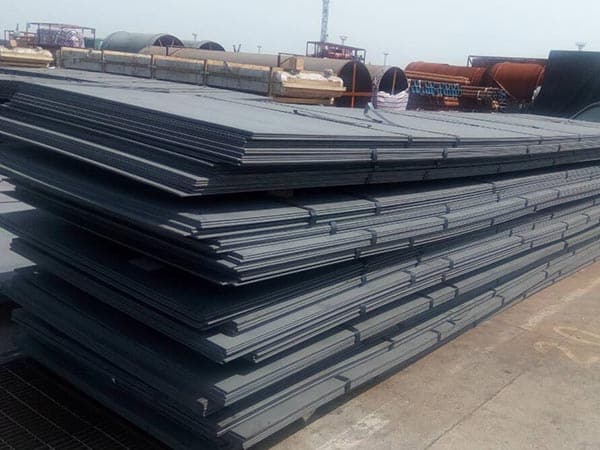
Understanding S550MC Steel and Its Metallurgical DNA
S550MC is a high-yield-strength, thermomechanically rolled steel specifically designed for cold forming. Governed by the European standard EN 10149-2, this grade represents a pinnacle of modern metallurgy, balancing extreme strength with exceptional ductility. When engineers ask about the chemical components of S550MC and its ASTM equivalents, they are typically looking for materials that can reduce weight without sacrificing structural integrity.
The "S" stands for structural steel, "550" denotes the minimum yield strength in Megapascals (MPa), and "MC" indicates that the material is thermomechanically rolled (M) and suitable for cold forming (C). The secret to its performance lies not just in the raw elements, but in the precision of the micro-alloying process. Unlike traditional hot-rolled steels, S550MC achieves its properties through a controlled cooling and rolling process that refines the grain structure to a microscopic level.
Chemical Composition Breakdown of S550MC
The chemical profile of S550MC is engineered to ensure high strength while maintaining excellent weldability. This is achieved by keeping the carbon content low and utilizing micro-alloying elements like Niobium, Vanadium, and Titanium. Below is the standard chemical composition according to EN 10149-2:
| Element | Maximum Content (%) |
|---|---|
| Carbon (C) | 0.12 |
| Manganese (Mn) | 1.80 |
| Silicon (Si) | 0.50 |
| Phosphorus (P) | 0.025 |
| Sulfur (S) | 0.015 |
| Aluminum (Al) | 0.015 (min) |
| Niobium (Nb) | 0.09 |
| Vanadium (V) | 0.20 |
| Titanium (Ti) | 0.15 |
The low Carbon (C) content is critical. It ensures that the steel remains ductile and easy to weld, avoiding the brittleness often associated with high-strength materials. Manganese (Mn) acts as a solid solution strengthener and improves hardenability. However, the true performance drivers are the micro-alloys: Niobium, Vanadium, and Titanium. These elements form fine carbides and nitrides that pin grain boundaries during the rolling process, preventing grain growth and resulting in a fine-grained ferrite-pearlite or bainitic microstructure.
ASTM Equivalents: Bridging the Standard Gap
When sourcing material in the North American market, finding a direct ASTM equivalent for S550MC is a common challenge. While there is no 1:1 perfect match due to differences in testing methodologies and chemistry ranges, two primary ASTM standards are frequently used as substitutes: ASTM A1011 HSLAS-F Grade 80 and ASTM A656 Grade 80.
- ASTM A1011 Grade 80 (HSLAS-F): This is a High-Strength Low-Alloy steel with improved formability (F). It is commonly used for sheet and strip applications. The yield strength is approximately 550 MPa (80 ksi), making it the closest functional equivalent for thinner sections.
- ASTM A656 Grade 80: This standard covers hot-rolled structural steel plates intended for use in truck frames, brackets, and crane booms. It emphasizes weldability and formability, aligning closely with the "MC" designation of the EN standard.
It is vital to note that while the yield strengths are comparable, the Carbon Equivalent (CEV) and specific micro-alloying limits may vary. Engineers should always verify the Charpy V-notch impact requirements, as S550MC often guarantees toughness at low temperatures (e.g., -20°C or -40°C), which might require specific "L" or "K" designations in the European system.
Mechanical Properties and Performance Dynamics
The mechanical prowess of S550MC goes beyond its 550 MPa yield point. Its tensile strength typically ranges between 600 and 760 MPa. The elongation properties are also impressive for such a high-strength material, usually requiring a minimum of 12% to 14% depending on the thickness.
| Property | Value (Metric) | Value (Imperial) |
|---|---|---|
| Yield Strength (min) | 550 MPa | ~80 ksi |
| Tensile Strength | 600 - 760 MPa | 87 - 110 ksi | 12% - 14% | 12% - 14% |
The cold forming capability of S550MC is one of its most marketable traits. Due to the fine grain structure, it can be bent to tight radii without cracking. For a thickness (t) of less than 3mm, a typical minimum bending radius is 1.0t, which is remarkably tight for steel with 80,000 psi yield strength. This allows manufacturers to design complex, lightweight components that would otherwise require heavy castings or multi-part weldments.
Processing Advantages: Welding and Cutting
From a fabrication perspective, S550MC offers significant cost-saving opportunities. Because the carbon content is kept below 0.12%, the steel has a very low carbon equivalent. This translates to excellent weldability. Preheating is generally unnecessary for standard thicknesses, and the risk of cold cracking in the heat-affected zone (HAZ) is minimal.
When using laser or plasma cutting, S550MC behaves predictably. The low impurity levels (low Phosphorus and Sulfur) ensure a clean edge with minimal dross. In welding, it is recommended to use consumables that match the strength of the base metal, such as ER80S-D2 or similar high-strength wires, to ensure the joint integrity matches the parent material's performance.
Expanding Applications: Where S550MC Shines
The drive for "lightweighting" in modern industry has propelled S550MC into several high-demand sectors. By replacing traditional S355 or A36 steel with S550MC, designers can reduce material thickness by up to 30-40% while maintaining the same load-bearing capacity. This reduction in weight directly translates to fuel efficiency in transport and lower material costs in construction.
- Automotive and Transportation: Used extensively in truck chassis frames, cross members, and cold-pressed parts where weight reduction is critical for increasing payload capacity.
- Lifting and Handling Equipment: Crane booms, telescopic arms, and forklift frames benefit from the high strength-to-weight ratio, allowing for longer reaches and higher lift capacities.
- Agricultural Machinery: Plow frames, trailers, and harvester components utilize the impact resistance and formability of S550MC to withstand harsh field conditions.
- Energy and Infrastructure: Support structures for solar panels and wind turbine internal components often specify S550MC for its durability and ease of assembly.
Environmental Adaptability and Sustainability
In the context of modern environmental standards, S550MC contributes to sustainability goals. The thermomechanical rolling process (TMCP) is more energy-efficient than traditional quenching and tempering. Furthermore, the ability to use less steel to achieve the same structural goal reduces the overall carbon footprint of the finished product. The high purity of the steel also makes it 100% recyclable, fitting perfectly into a circular economy model.
The material's resistance to atmospheric corrosion is standard for carbon steel, but its fine grain structure provides a slightly better substrate for galvanizing or sophisticated painting systems compared to coarser-grained hot-rolled steels. This ensures that structures built with S550MC have a long service life even in demanding environments.
Technical Selection Considerations
When choosing between S550MC and an ASTM equivalent, consider the impact toughness requirements. If the application involves dynamic loading at sub-zero temperatures, ensure the material meets the EN 10149-2 "L" requirements or the ASTM A656 supplemental requirements for Charpy testing. Additionally, thickness tolerances can vary between EN and ASTM standards, which may affect precision fit-up in automated welding cells.
For procurement teams, verifying the Mill Test Report (MTR) is the most reliable way to ensure the chemical components align with project specifications. A high-quality MTR for S550MC will not only list the primary elements but also the micro-alloying additions (Nb, V, Ti) and the thermomechanical processing history, providing full traceability for critical structural applications.
Leave a message