
What is s420mc density chrome
Discover the technical specifications of S420MC steel, focusing on its density (7.85g/cm³), chromium role, mechanical properties, and industrial applications. Learn how this thermomechanically rolled steel performs in demanding environments.
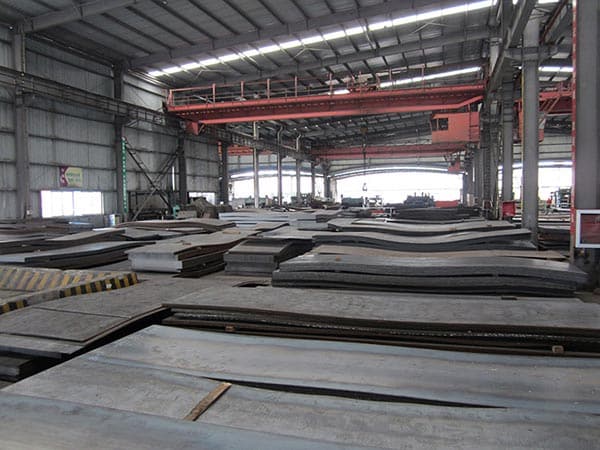
Understanding S420MC: The High-Strength Structural Solution
S420MC is a high-yield-strength, thermomechanically rolled steel specifically designed for cold forming. Governed by the EN 10149-2 standard, this material represents a pinnacle of metallurgical engineering, balancing extreme strength with exceptional ductility. When engineers ask about S420MC density chrome, they are typically investigating two critical aspects: the physical mass of the material for structural calculations and the chemical composition—specifically the presence or application of chromium for corrosion resistance or hardness.
The 'S' in S420MC denotes structural steel, while '420' indicates a minimum yield strength of 420 MPa. The 'M' signifies its thermomechanical rolling process, and 'C' confirms its suitability for cold forming. Unlike traditional hot-rolled steels, S420MC achieves its properties through a precise cooling and rolling regimen that refines the grain structure without the need for expensive alloying elements. This makes it an efficient choice for weight-sensitive applications where durability cannot be compromised.
The Precise Density of S420MC Steel
The density of S420MC steel is approximately 7.85 g/cm³ (or 7850 kg/m³). This value is a standard constant for most carbon and high-strength low-alloy (HSLA) steels. In the context of engineering design, knowing the exact density is paramount for calculating the total weight of a component, which directly influences fuel efficiency in automotive sectors and load-bearing requirements in construction.
Using the density of 7.85 g/cm³, the weight of an S420MC steel sheet can be calculated using the formula: Weight (kg) = Thickness (mm) × Width (m) × Length (m) × 7.85. For instance, a 5mm thick plate measuring 1 meter by 2 meters would weigh approximately 78.5 kg. This predictable density allows for high-precision modeling in CAD software, ensuring that structural integrity is maintained while optimizing for the lowest possible mass.
The Role of Chromium in S420MC Composition
Regarding the "chrome" aspect of S420MC, it is essential to distinguish between the alloying element within the steel and external chrome plating. S420MC is not a stainless steel; it is an HSLA steel. In its base chemical composition, chromium (Cr) is present in very small amounts, typically limited to a maximum of 0.15% or even less, depending on the specific mill certificate. Its primary role as a trace element is to slightly enhance hardenability and grain refinement.
If a project requires "chrome" in the sense of high corrosion resistance or a mirror-like finish, S420MC serves as an excellent substrate for hard chrome plating or decorative chrome finishing. Because of its fine-grained structure and smooth surface finish (often achieved through pickling and oiling), S420MC provides a stable base that adheres well to electrolytic coatings. This combination allows manufacturers to benefit from the high yield strength of the 420 MPa core while gaining the surface hardness and aesthetic appeal of a chromium exterior.
Chemical Composition Breakdown
The performance of S420MC is derived from its strictly controlled chemical limits. The low carbon content ensures superior weldability, while micro-alloying elements like niobium, vanadium, and titanium provide the necessary strength.
| Element | Maximum Percentage (%) |
|---|---|
| Carbon (C) | 0.12 | Manganese (Mn) | 1.60 | Silicon (Si) | 0.50 | Phosphorus (P) | 0.025 | Sulfur (S) | 0.015 | Aluminum (Al) | 0.015 | Niobium (Nb) | 0.09 | Chromium (Cr) | 0.15 (Residual) |
Mechanical Properties and Performance
The mechanical integrity of S420MC is what sets it apart from standard S355 grades. It offers a significant jump in load-bearing capacity without a proportional increase in weight. This allows for the thinning of components (down-gauging), which is a key strategy in modern green manufacturing.
| Property | Value |
|---|---|
| Yield Strength (Reh) | min. 420 MPa | Tensile Strength (Rm) | 480 - 620 MPa | Elongation (A80mm) | min. 16% (Thickness < 3mm) | Elongation (A5) | min. 19% (Thickness ≥ 3mm) |
Processing and Fabrication Advantages
One of the standout features of S420MC is its cold forming capability. Despite its high strength, it can be bent to tight radii without cracking, provided the minimum bending radius guidelines are followed. For thicknesses (t) up to 3mm, a 90-degree bend typically requires a radius of 0.5t, while thicker sections may require up to 1.5t depending on the orientation (transverse vs. longitudinal).
Welding is another area where S420MC excels. Due to its low carbon equivalent (CEV), it is not prone to cold cracking in the heat-affected zone (HAZ). It can be welded using all standard methods, including MIG/MAG, TIG, and laser welding. When welding S420MC, it is vital to use filler materials that match the strength of the base metal to ensure the entire assembly maintains the 420 MPa yield threshold.
Environmental Adaptability and Surface Treatments
In its raw state, S420MC has the same environmental vulnerability as standard carbon steel. However, its fine surface quality makes it highly adaptable to various protective strategies. Beyond the aforementioned chrome plating, S420MC is frequently hot-dip galvanized or powder coated. The low silicon content (typically <0.03% in certain specialized batches) can be requested to ensure a high-quality, uniform zinc coating during galvanization, preventing the "Sandelin Effect" which causes brittle, thick coatings.
For applications in mildly corrosive environments, S420MC is often supplied in a Pickled and Oiled (P&O) condition. This process removes mill scale, leaving a clean, grey surface that is temporarily protected from flash rusting and is ready for immediate laser cutting or robotic welding.
Industrial Applications of S420MC
The versatility of S420MC makes it a staple in industries that demand high performance and weight optimization. In automotive manufacturing, it is used for chassis parts, seat frames, and suspension components. The high yield strength allows these parts to absorb energy during impacts while remaining light enough to improve vehicle range.
In the heavy machinery and construction sector, S420MC is utilized for crane arms, telescopic booms, and cold-pressed profiles. Its ability to withstand high static and dynamic loads makes it ideal for structural members that must remain rigid under pressure. Additionally, the agricultural industry employs S420MC for plow frames and trailer components, where the balance of toughness and formability is essential for enduring harsh field conditions.
Optimizing S420MC for Long-Term Durability
To maximize the lifespan of S420MC components, engineers should focus on fatigue life and stress distribution. Because S420MC is a thermomechanically rolled steel, it possesses a very fine ferrite-pearlite microstructure. This grain refinement not only boosts strength but also improves fatigue resistance compared to traditional hot-rolled steels of similar strength levels. When designing parts subject to cyclic loading, the smooth surface finish of S420MC reduces stress concentrators, further extending the operational life of the machinery.
Selecting S420MC over lower grades like S355MC can lead to a weight reduction of up to 20% in certain structural applications. This "down-gauging" capability is a powerful tool for reducing material costs and environmental impact, as less steel is required to perform the same mechanical task. When combined with modern coating technologies, S420MC stands as one of the most cost-effective and reliable materials in the contemporary steel market.
Leave a message