
en 10149-2 pdf cutting is widely used in mechanical manufacturing
A comprehensive technical guide to EN 10149-2 high-yield strength steels, covering metallurgical properties, cutting performance, and strategic applications in mechanical manufacturing.
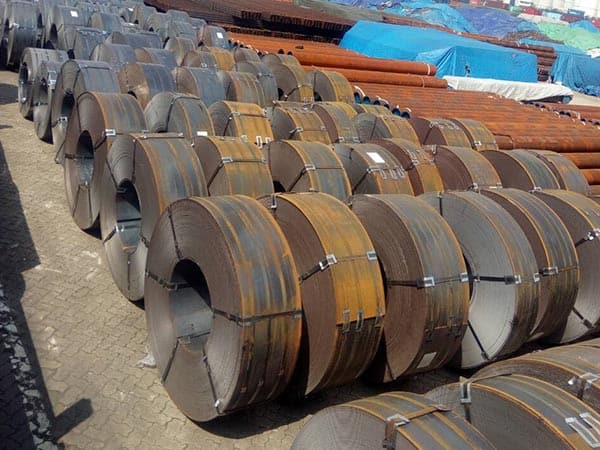
Understanding the Metallurgical Foundation of EN 10149-2 Steels
The landscape of mechanical manufacturing has been fundamentally altered by the introduction of high-strength low-alloy (HSLA) steels, specifically those governed by the EN 10149-2 standard. This European specification outlines the technical delivery conditions for flat products made of high yield strength steels for cold forming. Unlike traditional structural steels, EN 10149-2 grades, ranging from S315MC to S700MC, are produced through thermomechanical rolling (TMCP). This process involves precise control over the temperature and deformation during the rolling process, resulting in an exceptionally fine-grained microstructure that cannot be achieved through conventional heat treatment alone.
The "MC" designation in these grades is critical: "M" signifies the thermomechanical rolling process, while "C" indicates that the material is specifically designed for cold forming. The fine grain structure is the primary reason why these steels exhibit a unique combination of high yield strength, excellent toughness, and superior weldability. By refining the grain size, manufacturers can increase the strength of the steel without increasing the carbon content, which is the key to maintaining ductility and preventing brittle fractures during intensive cutting and forming operations.
Chemical Composition and the Role of Micro-alloying
The chemical composition of EN 10149-2 steels is characterized by low carbon and manganese levels, supplemented by micro-alloying elements such as Niobium (Nb), Vanadium (V), and Titanium (Ti). These elements play a vital role in grain refinement and precipitation hardening. Niobium, in particular, is used to raise the recrystallization temperature of austenite, allowing for effective grain refinement during the rolling process. Titanium is often added to protect the nitrogen from forming aluminum nitrides, instead forming stable titanium nitrides that further pin the grain boundaries.
| Grade | C % (max) | Mn % (max) | Si % (max) | P % (max) | S % (max) | Al % (min) |
|---|---|---|---|---|---|---|
| S315MC | 0.12 | 1.30 | 0.50 | 0.025 | 0.020 | 0.015 |
| S420MC | 0.12 | 1.60 | 0.50 | 0.025 | 0.015 | 0.015 |
| S500MC | 0.12 | 1.70 | 0.50 | 0.025 | 0.015 | 0.015 |
| S700MC | 0.12 | 2.10 | 0.60 | 0.025 | 0.015 | 0.015 |
This lean chemical profile ensures a low Carbon Equivalent (CEV), which is paramount for modern manufacturing. A low CEV means the steel is less susceptible to cold cracking in the heat-affected zone (HAZ) during thermal cutting or welding. For mechanical manufacturers, this translates to reduced pre-heating requirements and faster production cycles without compromising the structural integrity of the final component.
Mechanical Performance and Structural Integrity
The primary advantage of using EN 10149-2 steels in mechanical manufacturing is the ability to reduce weight while maintaining or increasing load-bearing capacity. S700MC, for instance, offers a minimum yield strength of 700 MPa, which is nearly double that of standard S355 structural steel. This allows engineers to design thinner sections that perform identically to thicker, heavier traditional steel parts.
| Grade | Yield Strength (MPa) min | Tensile Strength (MPa) | Elongation A80 % (min) | Elongation A5 % (min) |
|---|---|---|---|---|
| S315MC | 315 | 390-510 | 20 | 24 |
| S420MC | 420 | 480-620 | 16 | 19 |
| S500MC | 500 | 550-700 | 12 | 14 |
| S700MC | 700 | 750-950 | 10 | 12 |
Beyond yield strength, the impact toughness of these steels is noteworthy. Although EN 10149-2 primarily focuses on cold forming, many manufacturers specify additional longitudinal or transverse impact tests (often at -20°C or -40°C) to ensure the material can withstand dynamic loads in harsh environments. This makes the material ideal for mobile machinery operating in sub-zero temperatures.
Cutting Technologies for EN 10149-2 Steels
The efficiency of EN 10149-2 pdf cutting is a major factor in its widespread adoption. Because these steels are thermomechanically rolled, they possess low residual stresses compared to quenched and tempered steels. This stability is crucial during thermal cutting processes like laser, plasma, and flame cutting, as it prevents the plate from warping or "bowing" when the internal stresses are released by the cut.
- Laser Cutting: Fiber laser cutting is the gold standard for EN 10149-2 grades. The high power density allows for extremely narrow kerf widths and a minimal heat-affected zone. For S700MC, laser cutting preserves the fine grain structure right up to the edge of the cut, ensuring that the high-strength properties are not lost due to excessive heat input.
- Plasma Cutting: High-definition plasma cutting is frequently used for thicker plates. While the HAZ is larger than that of laser cutting, the low carbon content of EN 10149-2 prevents the cut edges from becoming excessively hard or brittle, which facilitates subsequent machining or welding.
- Waterjet Cutting: For applications where zero thermal influence is required, waterjet cutting is used. This cold cutting method is perfect for maintaining the exact metallurgical state of the TMCP steel, although it is slower and more costly than thermal methods.
When cutting these materials, the surface quality of the EN 10149-2 plate is a significant benefit. The controlled rolling process produces a thin, tightly adherent scale that is easily removed or even suitable for direct laser cutting, reducing the need for expensive shot-blasting or pickling before processing.
Cold Forming and Bending Characteristics
Despite their high strength, EN 10149-2 steels are specifically engineered for cold forming. The ability to bend S700MC or S500MC into complex shapes allows for the creation of seamless structural members, such as U-channels or telescopic crane booms, which are stronger and lighter than welded assemblies. The minimum bending radius is a critical parameter for manufacturers to follow to avoid cracking on the outer tension surface.
Success in bending these steels depends on the direction of the bend relative to the rolling direction. Bending transverse to the rolling direction generally allows for a tighter radius than bending parallel to it. Manufacturers must also account for springback, which is more pronounced in high-strength steels like S700MC than in mild steels. Advanced CNC press brakes with angle sensors are typically employed to compensate for this effect in real-time, ensuring high dimensional accuracy in mechanical manufacturing.
Strategic Applications in Mechanical Manufacturing
The versatility of EN 10149-2 has led to its integration across various heavy-duty sectors. In the automotive and transport industry, it is the material of choice for truck chassis, cross members, and side guards. By utilizing S700MC, manufacturers can reduce the weight of a trailer chassis by several hundred kilograms, directly increasing the payload capacity and fuel efficiency of the vehicle.
In the lifting and material handling sector, the high strength-to-weight ratio of these steels is indispensable. Crane booms, aerial work platforms, and forklift frames benefit from the reduced self-weight, which allows for greater reach and lifting capacity. The reliability of the material under fatigue loading is a key reason why it is trusted for these safety-critical components. Furthermore, agricultural machinery manufacturers use EN 10149-2 for plow frames and harvester components, where the steel's toughness provides resistance against impact with rocks and uneven terrain.
Environmental Adaptability and Fatigue Life
Mechanical components often operate in corrosive or high-stress environments. EN 10149-2 steels exhibit good atmospheric corrosion resistance due to their dense surface structure and homogeneous chemistry. When combined with modern coating technologies like galvanizing or high-performance painting, these steels provide long-term durability in offshore, mining, and construction settings.
Fatigue life is another area where these steels excel. The fine grain structure inhibits the initiation and propagation of fatigue cracks. In components subject to cyclic loading, such as axles or suspension parts, the high yield strength allows for higher stress ranges, which can be translated into either a longer service life or a more compact design. This fatigue resistance is further enhanced by the superior edge quality provided by modern laser cutting, which minimizes stress concentrators at the cut edges.
Implementation Strategies for Manufacturers
Transitioning to EN 10149-2 steels requires a holistic approach to the manufacturing process. Design engineers must move away from traditional "thick and heavy" mindsets and embrace the possibilities of thin-walled, high-strength designs. This involves sophisticated FEA (Finite Element Analysis) to optimize geometry and ensure that the material's properties are fully utilized.
On the shop floor, the focus must be on maintaining the integrity of the TMCP structure. This means strictly controlling heat input during welding and avoiding any post-work heat treatments that exceed the tempering temperature of the steel (typically around 580°C), as this could cause grain growth and a subsequent drop in strength. By following these technical guidelines, manufacturers can leverage the full potential of EN 10149-2 to produce world-class machinery that is lighter, stronger, and more efficient.
Leave a message