
How to improve toughness of s550mc equivalent
Comprehensive guide on enhancing the fracture toughness and impact resistance of S550MC equivalent steels through advanced metallurgy, processing control, and chemical optimization.
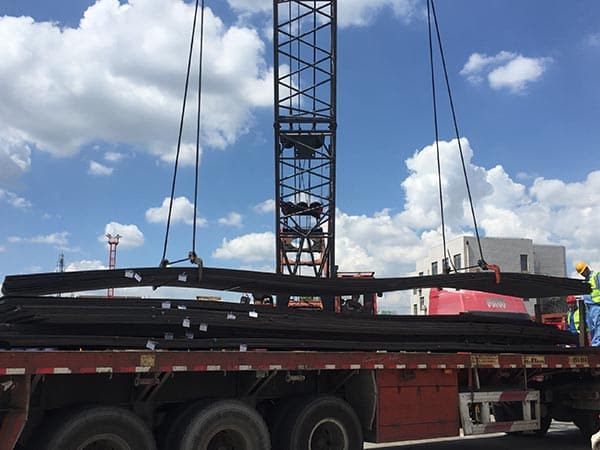
Understanding the Metallurgical Profile of S550MC Equivalents
S550MC is a high-yield-strength steel designed for cold-forming applications, governed by the EN 10149-2 standard. As a thermomechanically rolled (TMCP) steel, it balances a minimum yield strength of 550 MPa with excellent bendability. However, for equivalents such as ASTM A1011 HSLAS-F Grade 80 or GB/T 1591 Q550D, the critical performance bottleneck often shifts from pure strength to low-temperature toughness. Toughness, defined as the material's ability to absorb energy and resist crack propagation, is paramount in dynamic environments like heavy transport chassis, crane booms, and structural components subject to impact loads.
Chemical Composition Optimization for Enhanced Energy Absorption
The foundation of toughness in S550MC equivalents lies in a strictly controlled chemical balance. Unlike traditional carbon steels, HSLA steels rely on micro-alloying rather than high carbon content to achieve strength. Reducing the carbon content to below 0.10% is a primary strategy to improve weldability and toughness simultaneously. Carbon, while effective for strength, increases the volume fraction of brittle phases like pearlite or martensite-austenite (M-A) constituents, which act as crack initiation sites.
Manganese (Mn) is typically maintained between 1.2% and 1.7%. It acts as a solid solution strengthener and lowers the austenite-to-ferrite transformation temperature, which helps in refining the ferrite grain size. However, excessive Mn can lead to segregation, forming hard bands that reduce transverse toughness. Silicon (Si) is kept low (usually <0.10%) to prevent the formation of coarse inclusions and to improve the surface quality during galvanizing or painting.
- Niobium (Nb): The most critical element for grain refinement. It raises the non-recrystallization temperature (Tnr), allowing for effective strain accumulation during rolling.
- Titanium (Ti): Used for nitrogen fixing. TiN precipitates prevent austenite grain growth during reheating at high temperatures.
- Vanadium (V): Provides precipitation hardening in the ferrite phase, contributing to strength without severely compromising toughness if the particle size is kept sub-microscopic.
The Hall-Petch Relationship and Grain Refinement
Grain refinement is the only strengthening mechanism that simultaneously increases yield strength and improves toughness. According to the Hall-Petch relationship, smaller grain sizes reduce the stress concentration at grain boundaries, making it harder for cracks to propagate. For S550MC equivalents, achieving a ferrite grain size of 5-8 microns is the target. This is achieved through the synergy of micro-alloying and the TMCP process. By inhibiting recrystallization during the finishing stages of rolling, the austenite grains become pancaked, providing a high density of nucleation sites for the subsequent ferrite transformation.
Optimizing the Thermomechanical Control Process (TMCP)
The rolling schedule is the most influential factor in determining the final toughness of S550MC. The process is divided into two main stages: roughing and finishing. During roughing, the goal is to break down the as-cast structure. The real magic happens during the finishing stage, which must occur below the Tnr (non-recrystallization temperature).
Finishing Temperature (FT): If the finishing temperature is too high, the grains will recrystallize and grow, leading to a coarse structure. If it is too low, the steel may enter the dual-phase (austenite + ferrite) region, which can cause uneven deformation and
Leave a message