
What is the s420mc en 10149-2 normalizing process
Comprehensive guide to S420MC steel under EN 10149-2, detailing the thermomechanical rolling process, mechanical properties, weldability, and industrial applications.
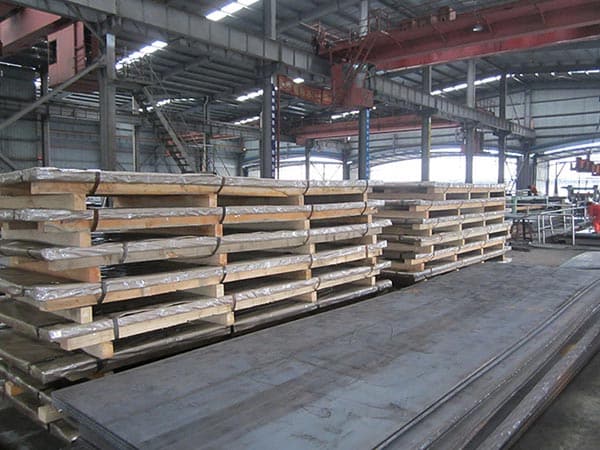
Understanding the Core of S420MC and EN 10149-2 Standards
When discussing high-strength steels for cold forming, S420MC stands out as a benchmark material. Defined by the European standard EN 10149-2, this steel grade is engineered to provide a minimum yield strength of 420 MPa. However, a common technical inquiry involves the "normalizing process" for this specific grade. To be technically precise, the 'M' in S420MC denotes thermomechanically rolled (TMCP), not normalized. While normalized steels (designated as 'N' or S420NC under EN 10149-3) exist, the S420MC variant utilizes a sophisticated rolling technique that achieves superior grain refinement and mechanical integrity without a separate post-rolling heat treatment.
The EN 10149-2 standard specifically covers hot-rolled flat products made of high yield strength steels for cold forming. The thermomechanical rolling process is a metallurgical masterpiece. It involves controlled deformation at specific temperature ranges, often below the recrystallization temperature of austenite. This results in a fine-grained ferrite-pearlite or bainitic microstructure that traditional normalizing—heating above the critical temperature followed by air cooling—cannot easily replicate in terms of cost-efficiency and strength-to-weight ratio.
The Thermomechanical Rolling Process vs. Traditional Normalizing
To understand why S420MC is rarely "normalized" in the traditional sense, one must look at the energy dynamics of the TMCP (Thermomechanical Control Process). In a standard normalizing cycle, the steel is reheated to approximately 900°C to 950°C. This allows the grains to reform, but it often leads to grain growth if not meticulously controlled. S420MC avoids this by integrating the thermal treatment into the rolling mill itself.
- Grain Refinement: The use of micro-alloying elements like Niobium (Nb), Vanadium (V), and Titanium (Ti) prevents grain boundary migration during rolling.
- Phase Transformation: By controlling the cooling rate after the final rolling pass, the steel achieves a highly uniform, ultra-fine grain structure.
- Energy Efficiency: Eliminating the need for a secondary furnace cycle reduces the carbon footprint and prevents the formation of thick mill scale.
For engineers seeking the properties of S420MC, it is vital to recognize that attempting to normalize this steel after delivery can actually degrade its mechanical properties. Reheating TMCP steel above its transformation temperature destroys the specialized microstructure created during rolling, potentially dropping the yield strength below the 420 MPa threshold.
Chemical Composition and Metallurgical Synergy
The performance of S420MC is rooted in its chemistry. Unlike standard structural steels, S420MC maintains a very low carbon content, which is the secret behind its exceptional weldability and ductility. The micro-alloying strategy is precise, ensuring that the material remains tough even at sub-zero temperatures.
| Element | Maximum Content (%) |
|---|---|
| Carbon (C) | 0.12 | Manganese (Mn) | 1.60 | Silicon (Si) | 0.50 | Phosphorus (P) | 0.025 | Sulfur (S) | 0.015 | Aluminium (Al) | 0.015 (min) | Nb + V + Ti | 0.22 |
The low sulfur and phosphorus levels are critical for cold forming operations. These impurities, if present in higher concentrations, create brittle inclusions that act as crack initiation sites during tight-radius bending or deep drawing. By keeping sulfur below 0.015%, S420MC ensures a clean internal structure capable of withstanding intense plastic deformation.
Mechanical Properties and Performance Benchmarks
The primary reason for selecting S420MC is its balance of strength and formability. Under EN 10149-2, the material must meet rigorous mechanical criteria. Because it is a thermomechanically rolled product, it exhibits a high yield-to-tensile ratio, which is advantageous for weight reduction in structural components.
- Yield Strength (ReH): Minimum 420 MPa for thicknesses ≤ 16mm.
- Tensile Strength (Rm): 480 to 620 MPa.
- Elongation (A80mm): Minimum 16% to 19% depending on thickness.
- Bending Radius: Can typically be bent 90 degrees with a very small internal radius (often 0.5 to 1.5 times the thickness), making it ideal for complex geometries.
These properties allow manufacturers to use thinner gauges of S420MC to replace thicker sections of standard S235 or S355 steels. This "down-gauging" is a cornerstone of modern automotive and transport engineering, directly contributing to fuel efficiency and payload capacity.
Superior Processing: Welding, Cutting, and Forming
One of the standout features of S420MC is its weldability. Due to the low Carbon Equivalent (CEV), the steel is not prone to cold cracking in the heat-affected zone (HAZ). Whether using MIG, MAG, or laser welding, S420MC retains its structural integrity. Unlike normalized steels which might have a larger HAZ, the fine-grained TMCP structure of S420MC responds predictably to thermal cycles.
When it comes to laser cutting, S420MC is highly regarded. Its clean chemical composition and uniform surface finish allow for high-speed cutting with minimal dross. This precision is essential for industries that rely on automated assembly lines where component tolerances are measured in fractions of a millimeter.
Cold forming is where S420MC truly shines. The material is designed to be bent, flanged, and cold-pressed. Its isotropic properties—meaning it behaves similarly whether stressed longitudinal or transverse to the rolling direction—ensure that complex parts do not fail during the manufacturing process. This consistency is a direct result of the controlled thermomechanical rolling process.
Environmental Adaptability and Longevity
While S420MC is not a weathering steel, its fine-grained structure provides a better substrate for protective coatings compared to coarser-grained normalized steels. Whether galvanized or powder-coated, the surface of S420MC offers excellent adhesion. Furthermore, its impact toughness is notable. Although EN 10149-2 does not always mandate impact testing unless specified (unlike the 'L' grades), the TMCP process inherently improves the ductile-to-brittle transition temperature.
In harsh environments, such as those faced by heavy-duty trucks or agricultural machinery, the vibration resistance of S420MC is a significant asset. The high yield strength ensures that components can withstand cyclic loading without undergoing permanent deformation or fatigue failure.
Strategic Applications Across Heavy Industries
The versatility of S420MC makes it a staple in sectors where "lightweighting" is a priority. It is not just about strength; it is about the ability to form that strength into functional shapes.
Automotive and Transportation: Used extensively for truck chassis frames, cross members, and reinforcement parts. The ability to save weight while maintaining crash safety is paramount.
Heavy Machinery: Crane booms, excavator arms, and agricultural equipment utilize S420MC for its high load-bearing capacity and resistance to the rigors of outdoor work.
Storage and Logistics: High-density racking systems and cold-formed profiles benefit from the consistency of S420MC, allowing for taller and safer warehouse structures.
By choosing S420MC produced via the thermomechanical process, engineers are opting for a material that represents the pinnacle of modern metallurgical efficiency. It bypasses the limitations of traditional normalizing, offering a leaner, stronger, and more workable solution for the challenges of 21st-century manufacturing.
Leave a message