
How long will BS700MC cold forming steel coil last not rust outside?
Explore the atmospheric corrosion resistance of BS700MC cold forming steel. Learn how environmental factors, surface treatments, and material properties influence rust formation and structural longevity.
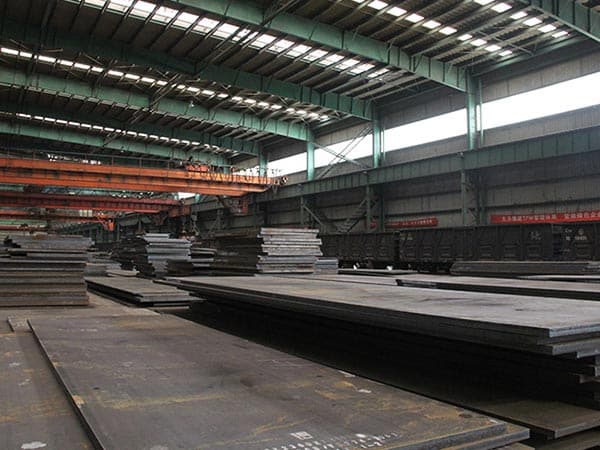
Understanding the Chemical Composition and Corrosion Susceptibility of BS700MC
BS700MC is a high-strength low-alloy (HSLA) steel grade produced through thermomechanically rolled processes, primarily adhering to the EN 10149-2 standard. While its mechanical properties are engineered for extreme load-bearing and cold-forming capabilities, its chemical composition is not inherently designed for corrosion resistance. Unlike stainless steels that contain high levels of chromium (typically above 10.5%), BS700MC relies on a delicate balance of carbon, manganese, and micro-alloying elements like niobium (Nb), vanadium (V), and titanium (Ti).
When we discuss how long BS700MC will last without rusting outside, we must first acknowledge that iron oxidation is an electrochemical process. In the presence of moisture and oxygen, the iron on the surface of the BS700MC coil reacts to form iron oxide, commonly known as red rust. Because BS700MC lacks a self-healing passive layer, the onset of surface oxidation can occur surprisingly quickly if the material is exposed to the elements without protection.
| Element | Max Percentage (%) | Role in Performance |
|---|---|---|
| Carbon (C) | 0.12 | Ensures strength while maintaining weldability. |
| Manganese (Mn) | 2.10 | Increases hardenability and tensile strength. |
| Silicon (Si) | 0.50 | Deoxidizer and strengthens the ferrite. |
| Niobium (Nb) | 0.09 | Grain refinement for high yield strength. |
The Impact of Environmental Variables on Oxidation Rates
The duration BS700MC can remain rust-free outdoors is heavily dependent on the ISO 12944 atmospheric corrosivity categories. There is no universal timeline; rather, a set of variables that accelerate or decelerate the oxidation process. If a bare BS700MC coil is placed in a C1 (Very Low) environment, such as a dry desert with negligible humidity, it may retain its metallic sheen for several weeks or even months. However, in a C5 (Very High) marine or industrial environment, visible red rust can appear within 24 to 48 hours.
Humidity is the primary catalyst. When relative humidity exceeds 60%, a thin film of moisture forms on the steel surface, acting as an electrolyte. In coastal regions, airborne chlorides (salts) penetrate this moisture film, significantly increasing the conductivity and accelerating the pitting process. Similarly, in industrial zones, sulfur dioxide (SO2) reacts with moisture to form weak sulfuric acid, which aggressively attacks the grain boundaries of the BS700MC matrix.
- Arid/Inland Environments: 2 to 4 weeks before light surface oxidation.
- Temperate/Urban Environments: 3 to 7 days before spotting occurs.
- Marine/Coastal Environments: 12 to 48 hours for visible red rust.
- High Industrial Zones: Rapid oxidation within hours during high humidity or rain.
Mechanical Integrity vs. Surface Aesthetics
It is vital to distinguish between aesthetic rust and structural degradation. For BS700MC, which is often used in truck frames, crane booms, and structural components where its 700 MPa yield strength is critical, surface rust is often the precursor to more serious issues. While a thin layer of rust (patina) does not immediately compromise the load-bearing capacity, prolonged exposure leads to pitting corrosion.
Pitting creates localized stress concentrators. For a high-strength steel like BS700MC, these pits can act as initiation points for fatigue cracks, especially in components subjected to cyclic loading. Therefore, while the steel might "last" for years before losing enough cross-sectional area to fail structurally, its functional life in high-performance applications is compromised much earlier if rust is allowed to progress.
The Role of Surface Treatments and Protective Coatings
To extend the outdoor life of BS700MC, surface protection is mandatory. Most BS700MC coils are delivered in a pickled and oiled (P&O) state or as hot-rolled black coil. The oil layer provides a temporary barrier, but it is easily washed away by rain or degraded by UV exposure. For long-term outdoor storage or use, secondary processes are required.
Hot-Dip Galvanizing: This is one of the most effective ways to protect BS700MC. The zinc coating provides sacrificial protection, meaning the zinc will corrode before the steel. However, the high-strength nature of BS700MC requires careful control during the pickling phase of galvanizing to avoid hydrogen embrittlement. A properly galvanized BS700MC component can last 20 to 50 years outdoors depending on the environment.
Industrial Painting and Powder Coating: Modern epoxy or polyurethane coating systems provide a physical barrier. When applied over a properly blasted surface (Sa 2.5), these systems can prevent rust for 10 to 15 years. The key is the adhesion; BS700MC's fine grain structure provides an excellent substrate for coating bond strength.
Processing Performance and Environmental Adaptation
BS700MC is prized for its cold forming properties. It can be bent to tight radii despite its high strength. However, if the material has already begun to rust, the friction coefficient during the forming process changes. Rust acts as an abrasive, increasing wear on tooling and dies. Furthermore, if rust is pressed into the steel surface during bending, it can create micro-fissures that reduce the fatigue life of the final part.
From a manufacturing standpoint, using rusted BS700MC requires an additional descaling or shot-blasting step, which adds cost and can alter the surface dimensions. This is why just-in-time delivery and climate-controlled warehousing are standard practices for high-grade HSLA steels. If outdoor storage is unavoidable, the coils should be covered with VCI (Vapor Corrosion Inhibitor) plastic wrap and elevated off the ground to prevent moisture wicking.
| Mechanical Property | Value (Metric) | Impact of Corrosion |
|---|---|---|
| Yield Strength (ReH) | Min. 700 MPa | Reduced effective cross-section over time. |
| Tensile Strength (Rm) | 750 - 950 MPa | Loss of ductility in pitted areas. |
| Elongation (A5) | Min. 12% | Surface cracks can lead to premature brittle fracture. |
Strategic Applications and Longevity Expectations
In the automotive and heavy machinery industries, BS700MC is used to reduce weight without sacrificing safety. For mobile crane telescopic booms, the material is exposed to varying outdoor climates. These components are never left bare; they are treated with high-performance primers and topcoats. In these controlled applications, the "rust-free" life is effectively the life of the coating system.
For agricultural equipment, which often faces harsher chemical exposure from fertilizers and manure, the corrosion rate of BS700MC can be significantly higher than in standard atmospheric conditions. In such cases, designers often specify a slightly thicker gauge (corrosion allowance) or utilize specialized cataphoretic painting (E-coating) to ensure the internal cavities of formed sections are protected from the inside out.
To maximize the lifespan of BS700MC steel coil, the focus should be on moisture management and surface sealing. Even the highest quality BS700MC will succumb to the laws of thermodynamics if left unprotected in a damp outdoor environment. By understanding the specific corrosivity of the installation site and applying appropriate barrier technologies, the exceptional mechanical benefits of BS700MC can be utilized for decades without the threat of structural failure due to rust.
Leave a message