
Is ZQS700L automotive steel sheet steel stainless?
Explore the technical specifications of ZQS700L automotive steel. Understand why it is not stainless steel, its mechanical properties, and its role in vehicle lightweighting.
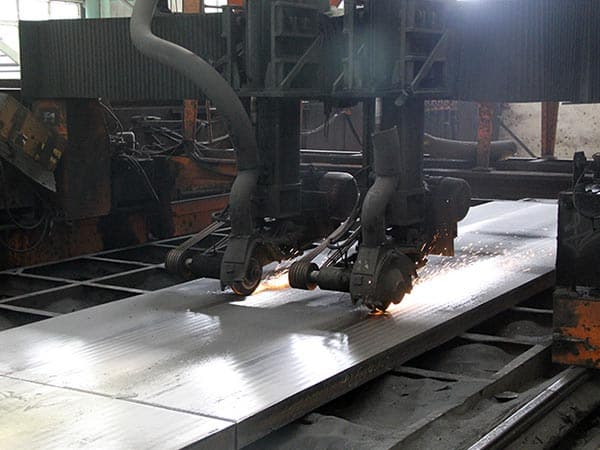
Defining ZQS700L: High-Strength Low-Alloy Automotive Steel
Understanding the classification of ZQS700L is essential for engineers and procurement specialists. To answer the primary question: No, ZQS700L is not a stainless steel. Instead, it belongs to the category of High-Strength Low-Alloy (HSLA) hot-rolled steel, specifically designed for automotive structural applications where weight reduction and high load-bearing capacity are paramount. The nomenclature 'ZQS' typically refers to automotive structural steel standards, '700' represents the minimum yield strength of 700 MPa, and 'L' signifies its suitability for cold forming and low-alloy composition.
Stainless steel requires a minimum chromium content of 10.5% to form a passive layer of chromium oxide that prevents corrosion. ZQS700L, however, relies on a precise balance of carbon, manganese, and micro-alloying elements like niobium, vanadium, and titanium to achieve its mechanical prowess. While it lacks the inherent corrosion resistance of stainless grades like 304 or 430, it offers far superior strength-to-weight ratios and cost-effectiveness for heavy-duty vehicle frames and chassis components.
Chemical Composition: The Science Behind the Strength
The performance of ZQS700L is rooted in its chemical architecture. Unlike stainless steels which are heavy on nickel and chromium, ZQS700L utilizes micro-alloying technology. These elements refine the grain structure during the rolling process, leading to a material that is both incredibly strong and surprisingly ductile. The low carbon content ensures that the material remains weldable, a critical factor in automated automotive assembly lines.
| Element | Carbon (C) | Manganese (Mn) | Silicon (Si) | Phosphorus (P) | Sulfur (S) | Aluminium (Al) | Nb/V/Ti |
|---|---|---|---|---|---|---|---|
| Content (%) | ≤ 0.12 | ≤ 2.10 | ≤ 0.50 | ≤ 0.025 | ≤ 0.015 | ≥ 0.015 | Micro-alloyed |
The inclusion of Niobium (Nb) and Titanium (Ti) is particularly noteworthy. These elements form carbides and nitrides that pin grain boundaries, preventing grain growth during heating. This results in a fine-grained ferrite-pearlite or bainitic microstructure, which is the secret to achieving a 700 MPa yield strength without making the steel brittle.
Mechanical Properties and Structural Integrity
The primary reason manufacturers opt for ZQS700L over stainless steel or standard carbon steel is its mechanical performance. In the automotive industry, the drive toward "lightweighting"—reducing vehicle mass to improve fuel efficiency or battery range—requires materials that can do more with less. ZQS700L allows for thinner gauges to be used without compromising the safety or durability of the vehicle's skeleton.
| Property | Yield Strength (ReH MPa) | Tensile Strength (Rm MPa) | Elongation (A80mm %) | 180° Cold Bend (d=a) |
|---|---|---|---|---|
| Specification | ≥ 700 | 750 - 950 | ≥ 10 | Pass (d=3a) |
With a yield strength of at least 700 MPa, this steel is nearly three times stronger than standard Q235 structural steel. This high yield point means the material can withstand significant stress before undergoing permanent deformation. For components like truck longitudinal beams, cross members, and crane arms, this strength is non-negotiable.
Processing Performance: Bending, Welding, and Cutting
A common misconception is that high-strength steel is difficult to process. ZQS700L is engineered to be "user-friendly" in a manufacturing environment. Its low carbon equivalent (Ceq) makes it highly compatible with standard welding techniques, including MAG (Metal Active Gas), MIG (Metal Inert Gas), and resistance spot welding. Unlike some stainless steels that suffer from sensitization or carbide precipitation during welding, ZQS700L maintains its structural integrity across the heat-affected zone (HAZ) when proper parameters are followed.
- Cold Forming: Despite its high strength, the 'L' designation ensures excellent cold-bending properties. Manufacturers can achieve tight radii without cracking, provided the bending direction is considered relative to the rolling grain.
- Laser Cutting: The clean chemical composition and controlled surface quality (often supplied as Pickled and Oiled - PO) allow for high-speed laser cutting with minimal dross and high dimensional accuracy.
- Fatigue Resistance: Automotive components are subject to constant vibration and cyclic loading. The fine-grained structure of ZQS700L provides superior fatigue life compared to traditional hot-rolled plates.
Environmental Adaptability and Surface Protection
Since ZQS700L is not stainless, it requires strategic surface management to thrive in harsh environments. In its raw hot-rolled state, it develops a mill scale. Most automotive applications utilize the "Pickled and Oiled" (PHO or PO) version. Pickling removes the dark oxide scale through an acid bath, leaving a smooth, silver-grey finish that is then coated with a thin layer of oil to prevent flash rusting during transport and storage.
For long-term environmental resistance, ZQS700L components are typically treated with E-coating (Electrophoretic deposition), powder coating, or hot-dip galvanizing. When combined with these modern coating technologies, ZQS700L offers a service life that rivals stainless steel in chassis applications but at a fraction of the material cost. This synergy between high-strength substrate and advanced coating is the standard for the global transport industry.
Strategic Applications in the Transport Sector
The adoption of ZQS700L has revolutionized the design of commercial vehicles. By replacing thicker, lower-grade steels with ZQS700L, fleet operators can reduce the curb weight of a trailer by several hundred kilograms, directly translating into increased payload capacity and reduced carbon emissions.
- Heavy Truck Chassis: Longitudinal beams made of ZQS700L provide the rigidity needed for heavy hauling while remaining flexible enough to handle uneven terrain.
- Bus Frames: Safety is paramount in passenger transport. The high energy absorption capacity of ZQS700L makes it ideal for roll-over protection structures (ROPS).
- Specialized Machinery: Concrete pump trucks, crane booms, and refuse collectors utilize ZQS700L to achieve the reach and lift capacity required for modern infrastructure projects.
- Automotive Seat Frames: In passenger cars, this steel is used in seat rails and internal reinforcements where high strength is needed in a very compact space.
Comparative Analysis: ZQS700L vs. Stainless Steel
When deciding between ZQS700L and a stainless steel grade, the decision usually comes down to the specific requirements of the application. Stainless steel (such as Grade 304) is chosen for its aesthetic appeal and extreme corrosion resistance in chemical or food-processing environments. However, for structural automotive engineering, ZQS700L is often the superior choice for several reasons.
Firstly, the yield strength of annealed 304 stainless steel is roughly 200-250 MPa, which is significantly lower than the 700 MPa offered by ZQS700L. To match the strength of ZQS700L, a stainless steel would need to be work-hardened or specifically alloyed, which drastically increases costs and reduces formability. Secondly, the density of both steels is similar, but the ability to use thinner sections of ZQS700L provides a clear weight advantage. Finally, the market price of ZQS700L is generally more stable and significantly lower than nickel-heavy stainless steels, making it the economically viable choice for mass production.
Technical Summary for Procurement and Engineering
Selecting ZQS700L involves understanding that you are choosing a high-performance structural tool rather than a corrosion-resistant decorative material. Its value lies in its ability to be formed into complex shapes, welded into robust assemblies, and subjected to extreme mechanical loads. For projects requiring the 'stainless' look or extreme rust prevention without coatings, stainless steel remains the standard. However, for the backbone of the automotive and transportation industry, ZQS700L stands as a pinnacle of metallurgical engineering, balancing strength, weight, and processability.
Leave a message