
Why the use of S460MC cold rolled steel for construction machinery is more cost-effective
Explore why S460MC high-strength steel is the superior choice for construction machinery. Learn about its mechanical properties, welding benefits, and how it reduces total manufacturing costs.
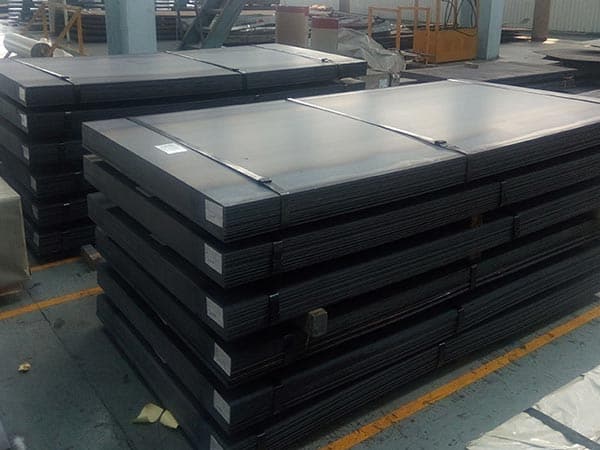
The Paradigm Shift to High-Strength S460MC in Heavy Equipment
The global construction machinery industry is undergoing a significant transformation driven by the demand for higher efficiency, lower fuel consumption, and increased payload capacity. In this context, S460MC, a high-strength low-alloy (HSLA) steel, has emerged as a cornerstone material. While traditionally categorized under the EN 10149-2 standard for hot-rolled products intended for cold forming, its application in thin-gauge, high-precision components often mirrors the requirements of cold-rolled precision. Choosing S460MC is not merely a material swap; it is a strategic economic decision that impacts the entire lifecycle of the machinery.
Superior Mechanical Properties: The Foundation of Downsizing
The primary appeal of S460MC lies in its impressive yield strength of at least 460 MPa. Compared to the conventional S355 grade, S460MC offers a nearly 30% increase in load-bearing capacity. This strength-to-weight advantage allows engineers to design thinner structural components without compromising safety or structural integrity.
| Property | S355MC | S460MC | Benefit |
|---|---|---|---|
| Yield Strength (MPa) | 355 min | 460 min | Higher load capacity |
| Tensile Strength (MPa) | 430-550 | 520-670 | Greater structural safety |
| Elongation (%) | 19 min | 14-17 min | Excellent formability |
By utilizing the higher yield strength, manufacturers can reduce the thickness of crane booms, excavator arms, and truck chassis. This process, known as "lightweighting," directly translates to reduced material volume, which is the first step in achieving cost-effectiveness.
Exceptional Cold Forming and Processing Efficiency
Despite its high strength, S460MC exhibits remarkable ductility. The steel is produced using thermomechanically controlled processing (TMCP), which results in a fine-grained microstructure. This fine grain size is critical for cold forming operations. Manufacturers can achieve tight bending radii without the risk of cracking or surface defects, which is often a challenge with lower-quality high-strength steels.
- Bending: S460MC allows for complex geometries in chassis rails, reducing the need for multi-part assemblies and heavy welds.
- Laser Cutting: The clean chemical composition and consistent flatness of S460MC ensure high-speed laser cutting with minimal dross, reducing post-processing time.
- Tool Wear: While harder than mild steel, the optimized microstructure of S460MC is designed to be "friendly" to cutting and punching tools, extending the life of expensive workshop equipment.
Welding Performance and Structural Integrity
In the construction machinery sector, welding is the most common joining method. S460MC is characterized by a very low carbon equivalent (CEV), typically significantly lower than traditional structural steels of similar strength. This low CEV ensures excellent weldability, minimizing the risk of cold cracking in the heat-affected zone (HAZ).
Cost savings in welding are realized through several avenues. First, the need for preheating is often eliminated for standard thicknesses, saving energy and labor time. Second, the ability to use thinner plates means fewer weld passes are required to fill joints, reducing the consumption of welding consumables (wire and gas) and shortening the production cycle.
Economic Impact: Beyond the Price per Ton
A common misconception is that S460MC is more expensive because its price per ton is higher than S355. However, a holistic cost analysis reveals a different story. When a designer reduces the plate thickness from 8mm (S355) to 6mm (S460MC) while maintaining the same strength, the total weight of the material purchased drops by 25%. This weight reduction often offsets the higher price per ton, leading to a lower total material cost per unit.
Furthermore, the benefits extend to the logistics and operational phases:
- Transport Costs: Lighter components mean more units can be shipped per truckload, reducing logistics expenses.
- Fuel Efficiency: For mobile machinery like truck-mounted cranes or trailers, a lighter self-weight increases the legal payload and reduces fuel consumption during operation.
- Environmental GEO Compliance: Reducing steel usage lowers the carbon footprint of the manufacturing process, aligning with modern "Green Engineering" standards and carbon tax regulations.
Environmental Adaptability and Fatigue Resistance
Construction machinery operates in some of the harshest environments on earth, from sub-zero arctic temperatures to humid tropical sites. S460MC is designed to maintain its toughness even at low temperatures (often tested at -20°C or -40°C). This ensures that the equipment does not suffer from brittle fracture under sudden impact loads.
Moreover, the fine-grained structure of S460MC provides superior fatigue resistance. In machinery subjected to cyclic loading, such as excavator buckets or vibratory rollers, S460MC resists the initiation and propagation of fatigue cracks. This extends the service life of the machine, reducing warranty claims for the manufacturer and increasing the resale value for the end-user.
Strategic Application in Modern Engineering
The implementation of S460MC is particularly effective in components where weight and space are at a premium. In the design of telescopic crane booms, for instance, the use of S460MC allows for longer reach and higher lift capacities without increasing the overall weight of the vehicle. Similarly, in the agricultural sector, lighter implements made from S460MC reduce soil compaction while maintaining the durability needed for heavy tilling.
By integrating S460MC into the design phase, companies can innovate faster, creating machines that are not only stronger but also more agile and cost-efficient. The transition to S460MC is a move toward high-performance engineering where every gram of steel is optimized for maximum utility.
Leave a message