
How to protect the S960MC high strength alloy steel
Discover professional strategies for protecting S960MC high-strength alloy steel. This guide covers mechanical properties, welding heat control, surface treatments, and environmental adaptation for heavy-duty applications.
Understanding the Core Characteristics of S960MC High Strength Steel
S960MC is a thermomechanically rolled (TMCP) high-strength structural steel with a minimum yield strength of 960 MPa. Unlike traditional quenched and tempered steels, S960MC achieves its extraordinary mechanical properties through a precise combination of micro-alloying and controlled rolling processes. The protection of this material is not merely about preventing rust; it involves preserving the delicate microstructure created during its manufacturing. Because the strength is derived from grain refinement and precipitation hardening, any improper handling or thermal exposure can lead to irreversible degradation of its performance.
The chemical composition of S960MC typically involves low carbon content (usually below 0.12%) and micro-alloying elements such as Niobium (Nb), Vanadium (V), and Titanium (Ti). This specific chemistry ensures excellent weldability and cold forming capabilities while maintaining a high strength-to-weight ratio. Protecting this alloy requires a multi-dimensional approach that spans from storage and cutting to welding and final surface finishing.
Mechanical and Chemical Property Profile
To effectively protect S960MC, one must first understand what makes it vulnerable. Below is a detailed breakdown of its typical properties:
| Property | Value / Description |
|---|---|
| Yield Strength (ReH) | Min. 960 MPa |
| Tensile Strength (Rm) | 980 - 1250 MPa |
| Elongation (A5) | Min. 7% |
| Impact Energy (Charpy-V) | Typically 27J at -20°C or -40°C |
| Delivery Condition | Thermomechanically Rolled (M) |
The high yield strength allows for significant weight reduction in structural components, such as crane booms, chassis, and heavy-duty machinery. However, this high strength makes the material more sensitive to hydrogen-induced cracking and localized softening if subjected to excessive heat.
Protecting the Microstructure During Thermal Processing
Thermal protection is the most critical aspect of maintaining S960MC’s integrity. Since the steel is thermomechanically processed, excessive heat input during welding or cutting can cause grain growth in the Heat Affected Zone (HAZ), leading to a significant drop in yield strength and toughness.
- Low Heat Input Welding: It is vital to use low heat input (typically between 0.5 to 1.5 kJ/mm) to minimize the width of the softened zone. Using multi-pass welding with small bead sizes is preferable over single-pass high-heat welding.
- Interpass Temperature Control: Maintaining a low interpass temperature (usually below 150°C to 200°C) is essential. This prevents the accumulation of heat that could anneal the micro-alloyed structure.
- Preheating Requirements: While S960MC has low carbon equivalent (CEV) and often does not require preheating for thin sections, thicker plates may need moderate preheating to eliminate moisture and reduce the cooling rate just enough to prevent martensite brittleness, without softening the base metal.
- Avoiding Post-Weld Heat Treatment (PWHT): S960MC should generally not undergo stress-relief annealing or any PWHT above 580°C, as this will drastically reduce its strength.
Surface Protection and Corrosion Resistance Strategies
S960MC is often used in harsh outdoor environments where moisture, salt, and industrial pollutants can trigger oxidation. Because the material is often used in thinner gauges to save weight, even minor surface corrosion can represent a significant percentage of the cross-sectional area, compromising structural safety.
Protective Coating Systems: High-performance paint systems are the primary defense. Zinc-rich epoxy primers are highly recommended as they provide cathodic protection. For extreme environments, a three-coat system (zinc primer, epoxy intermediate, and polyurethane topcoat) ensures UV resistance and chemical durability.
Galvanization Considerations: Hot-dip galvanizing S960MC requires caution. The high strength of the steel increases the risk of Liquid Metal Embrittlement (LME) and hydrogen embrittlement during the pickling process. If galvanizing is necessary, acid pickling times must be strictly controlled, and baking the steel after pickling to remove hydrogen is a standard protective measure. Alternatively, thermal spraying (zinc or aluminum) provides excellent protection without the risks associated with the galvanizing bath.
Mechanical Protection: Handling and Forming
Physical damage to the surface of S960MC can act as a stress concentrator, leading to fatigue failure. Protecting the surface during fabrication is a technical necessity.
- Cold Forming Protection: S960MC has excellent cold forming properties, but the minimum bending radius must be strictly followed (typically 3 to 4 times the thickness). Using polished bending tools and ensuring the plate surface is free of scratches or grinding marks prevents cracking during the process.
- Edge Preparation: After flame or plasma cutting, the edges should be ground to remove the hardened layer and any micro-cracks. A smooth edge profile significantly improves the fatigue life of the component.
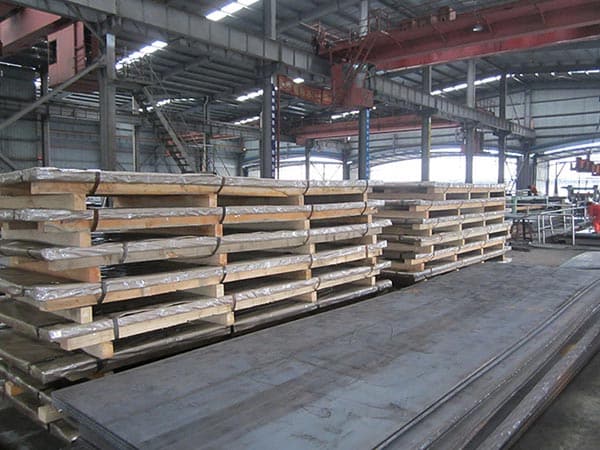
- Storage Best Practices: Plates should be stored in a dry, covered environment. If stored outdoors, they should be tilted to allow water runoff and kept off the ground using wooden dunnage to prevent soil-contact corrosion.
Environmental Adaptability and Long-term Maintenance
S960MC is designed to perform in demanding climates, including sub-zero temperatures. Its impact toughness at low temperatures makes it suitable for polar or high-altitude applications. However, long-term protection requires regular inspection cycles.
Fatigue Monitoring: In dynamic applications like crane arms, the welded joints are the most vulnerable points. Regular Non-Destructive Testing (NDT), such as Ultrasonic Testing (UT) or Magnetic Particle Inspection (MPI), should be performed to detect any fatigue cracks early. Protecting these joints involves ensuring they are ground flush and coated properly to prevent localized pitting which could initiate cracks.
Environmental Stress Cracking: In environments containing H2S or high chlorides, S960MC may be susceptible to stress corrosion cracking. In such cases, specialized barrier coatings or even the selection of a different alloy might be necessary, though S960MC can often be protected through rigorous seal-coating of all joints and edges.
Optimizing Performance Through Advanced Protection
The longevity of S960MC structures depends on the synergy between design, fabrication, and surface treatment. Designers should avoid sharp corners and abrupt changes in section thickness to reduce stress peaks. Fabricators must treat the steel as a high-precision engineered product rather than ordinary mild steel. By implementing strict heat input controls, utilizing advanced coating technologies, and adhering to proper cold-forming radii, the superior properties of S960MC can be preserved for decades. This proactive protection strategy ensures that the weight-saving benefits of high-strength steel do not come at the cost of durability or safety.
Leave a message