
How to choose the S 460 MC thickness
Master the art of selecting the optimal S460MC steel thickness. This expert guide explores mechanical properties, cold forming limits, and weight-saving strategies for heavy-duty engineering and automotive applications.
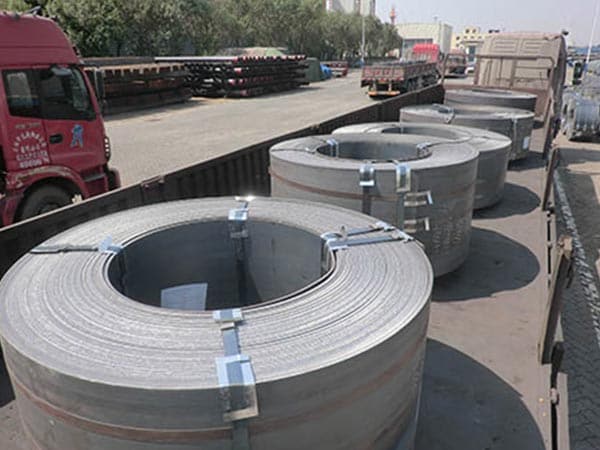
Understanding S460MC: The Backbone of Modern Structural Engineering
S460MC is a thermomechanically rolled, high-yield strength steel designated under the EN 10149-2 standard. When determining how to choose the S 460 MC thickness, one must first recognize that this material is engineered for cold forming and high-load environments. Unlike standard structural steels, S460MC offers a yield strength of at least 460 MPa, which allows engineers to significantly reduce the cross-sectional thickness of components without compromising structural integrity.
The decision-making process for thickness selection involves a multi-dimensional analysis of mechanical stress, manufacturing feasibility, and environmental stressors. S460MC is particularly valued for its fine-grained microstructure, which is achieved through precise temperature control during the rolling process. This unique structure ensures that even at lower thicknesses, the material retains exceptional toughness and fatigue resistance.
The Relationship Between Yield Strength and Thickness Optimization
The primary motivation for choosing S460MC is often weight reduction. In industries like commercial vehicle manufacturing and crane construction, reducing the dead weight of a structure directly translates to higher payloads and improved fuel efficiency. When calculating the required thickness, the high yield strength (ReH) of 460 MPa serves as the baseline.
For example, replacing a traditional s355jr steel (355 MPa yield) with S460MC allows for a theoretical thickness reduction of approximately 20-25% while maintaining the same safety factor against plastic deformation. However, thickness selection must also account for the Modulus of Elasticity. Since the Young's modulus remains constant across steel grades (~210 GPa), a thinner S460MC plate will have higher deflection under the same load compared to a thicker S355 plate. Therefore, if structural stiffness is the governing design criterion, simply reducing thickness based on yield strength may lead to excessive vibration or deformation.
Mechanical and Chemical Specification Overview
To accurately choose the S 460 MC thickness, it is essential to understand the material's performance limits across different gauges. Below is a technical breakdown of its core properties:
| Property Type | Specification Detail | Value / Requirement |
|---|---|---|
| Yield Strength (ReH) | Minimum yield for all thicknesses | 460 MPa |
| Tensile Strength (Rm) | Standard range | 520 - 670 MPa |
| Elongation (A80mm) | Thickness < 3mm | Min 14% |
| Elongation (A5) | Thickness ≥ 3mm | Min 17% |
| Bending Radius (90°) | t ≤ 3mm up to t > 6mm | 0.5t to 1.1t |
| Carbon Content (C) | Maximum limit | 0.12% |
Cold Forming Constraints and Minimum Bending Radii
A critical factor in choosing the S 460 MC thickness is the formability limit. S460MC is specifically designed for cold bending and folding. As the thickness increases, the internal stresses during the bending process also increase. To prevent micro-cracking at the outer tension zone of a bend, the minimum bending radius must be strictly followed.
- For thicknesses under 3mm: S460MC allows for extremely tight bends (often 0.5 times the thickness), making it ideal for complex bracketry and compact automotive components.
- For thicknesses between 3mm and 6mm: The radius should be increased to approximately 0.9 times the thickness to ensure the integrity of the grain structure.
- For thicknesses exceeding 6mm: A radius of 1.1 to 1.5 times the thickness is recommended to accommodate the increased volume of material undergoing plastic flow.
If your design requires a very sharp bend in a high-stress area, you may need to opt for a slightly thinner S460MC plate and compensate for strength through structural geometry (such as adding ribs or flanges) rather than increasing the bulk thickness.
Welding Performance and Thickness Considerations
S460MC possesses excellent weldability due to its low carbon equivalent (CEV). However, when selecting thickness, one must consider the Heat Affected Zone (HAZ). In very thin sections (e.g., 2.0mm), the heat input from welding can lead to more significant thermal distortion. Conversely, in thicker sections (e.g., 10mm or 12mm), the cooling rate is faster, which could potentially affect the hardness of the HAZ.
When choosing a thickness for welded assemblies, ensure that the joint design accounts for the high-strength nature of the base metal. Using matching consumables that provide 460 MPa yield strength in the weld metal is vital. If the thickness is optimized to the limit, the weld quality becomes the single most important factor in the structural safety of the entire assembly.
Environmental Adaptability and Fatigue Life
The thickness of S460MC also dictates its performance in dynamic environments. High-strength steels are often more sensitive to surface defects and stress concentrations than milder steels. In applications subject to cyclic loading, such as truck chassis or agricultural machinery, the fatigue life is a function of both thickness and surface condition.
Thicker plates provide a larger cross-section to distribute stress, but they also carry a higher probability of containing microscopic inclusions. S460MC's thermomechanical processing minimizes these risks, but for components operating in sub-zero temperatures, the impact energy absorption must be verified. While S460MC is generally reliable, if the application involves extreme arctic conditions, checking the "L" designation (e.g., S460ML) for low-temperature impact testing might be necessary regardless of the chosen thickness.
Industry-Specific Thickness Benchmarks
In practice, the choice of S 460 MC thickness often follows established industry trends based on the balance of cost and performance:
- Automotive Chassis: Typically utilizes thicknesses between 2.5mm and 6.0mm for side members and cross-bracing to achieve lightweighting goals.
- Lifting Equipment: Crane booms and telescopic arms often use 4.0mm to 10.0mm S460MC to maintain high lifting capacities with low self-weight.
- Storage Systems: High-bay racking systems utilize thinner gauges (2.0mm - 4.0mm) of S460MC to support massive vertical loads while minimizing the footprint of the steel structure.
When selecting the final gauge, always consult with your steel supplier regarding rolling tolerances. For S460MC, which is often supplied as hot-rolled strip (EN 10051), the thickness tolerance can impact the final weight calculation and the fitment of precision-machined parts.
Strategic Sourcing and Cost Efficiency
The final step in deciding how to choose the S 460 MC thickness involves economic considerations. Thinner, high-strength steel is often more expensive per ton but cheaper per component because less material is used. Additionally, thinner gauges are easier to laser cut and require less welding filler material, further reducing the Total Cost of Ownership (TCO).
By leveraging the 460 MPa yield strength effectively, engineers can move away from "over-designing" with thick, heavy plates of S235 or S355 and instead embrace the precision and efficiency of S460MC. Always perform a Finite Element Analysis (FEA) to simulate how different thicknesses of S460MC will behave under peak loads to find the "sweet spot" between material mass and structural safety.
Leave a message