
What is the available size of S 550 MC Steel?
Explore the extensive range of available sizes for S 550 MC high-strength steel. This guide covers thickness, width, and length specifications, alongside mechanical properties and industrial applications for EN 10149-2 standards.
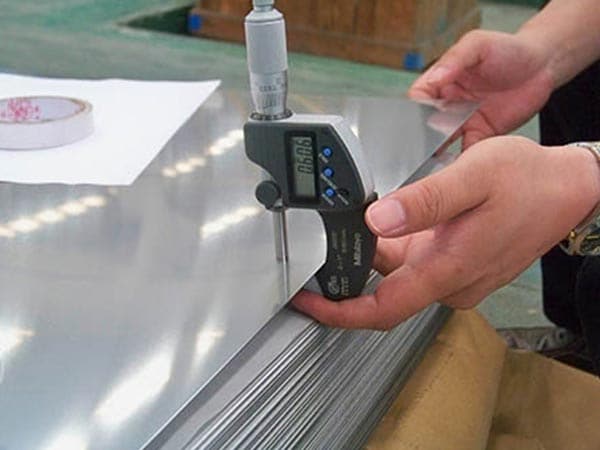
Understanding the Dimensional Versatility of S 550 MC Steel
S 550 MC is a high-strength, thermomechanically rolled steel designed for cold forming, governed by the EN 10149-2 standard. When engineers and procurement specialists ask about the available size of S 550 MC, they are typically looking for the intersection of structural efficiency and manufacturing feasibility. Because this material is produced via a specialized thermomechanical rolling process (TMCP), its size range is more optimized for weight reduction compared to traditional structural steels. This grade is primarily available in hot-rolled strips, which can be delivered as wide coils, slit strips, or sheets cut to specific lengths.
Standard Thickness, Width, and Length Ranges
The available size of S 550 MC varies slightly depending on the mill's capabilities, but industry standards follow a consistent pattern. The thermomechanical rolling process allows for a fine-grained microstructure, which maintains high strength even in relatively thin gauges. This makes it a favorite for sectors where every kilogram of weight saved translates into increased payload or fuel efficiency.
| Product Form | Thickness Range (mm) | Width Range (mm) | Length Range (mm) |
|---|---|---|---|
| Hot Rolled Sheets | 2.0 – 16.0 | 1000 – 2000 | 2000 – 12000 |
| Hot Rolled Coils | 1.5 – 20.0 | 900 – 1850 | Coil Form |
| Slit Strips | 2.0 – 12.0 | 20 – 900 | Coil Form |
Thickness: Most steel service centers stock S 550 MC in thicknesses ranging from 3mm to 12mm. However, specialized mills can produce gauges as thin as 1.5mm for lightweight automotive components or as thick as 20mm for heavy-duty crane booms. It is important to note that as thickness increases, the minimum bending radius and elongation properties may shift slightly.
Width: Standard widths include 1000mm, 1250mm, and 1500mm. Some high-end European mills offer widths up to 2000mm, which is particularly useful for manufacturing large-scale trailer chassis without the need for longitudinal welding, thereby increasing structural integrity.
Length: For sheets cut from coils, the standard lengths are 2000mm, 2500mm, 3000mm, and 6000mm. Custom lengths up to 16000mm can be ordered for specific projects like bridge girders or telescopic crane arms to minimize transverse joints.
Tolerances and Surface Quality
Size is not just about the nominal dimensions; it is also about the precision of those dimensions. S 550 MC is typically supplied with tolerances according to EN 10051. This standard ensures that the deviation in thickness, width, and flatness is kept within strict limits, which is critical for automated processes like laser cutting and robotic welding.
- Thickness Tolerance: Category A (standard) or Category B (restricted) tolerances are available, with the latter providing more consistency for high-precision machining.
- Flatness: High-strength steels can sometimes exhibit internal stresses. S 550 MC produced via TMCP generally offers excellent flatness, but for laser cutting applications, "extra-flat" sheets can be specified to prevent "bowing" after the stress is released during cutting.
- Surface Finish: The material is usually supplied in a black (as-rolled) condition or pickled and oiled (P&O). Pickled surfaces are preferred for parts requiring immediate painting or powder coating.
Mechanical Properties and Material Composition
The "550" in S 550 MC refers to its minimum yield strength of 550 MPa. This high strength-to-weight ratio is achieved through a carefully controlled chemical composition that utilizes micro-alloying elements like Niobium (Nb), Vanadium (V), and Titanium (Ti). These elements facilitate grain refinement during the rolling process.
- Elongation (A5)
| Property | Value (Metric) |
|---|---|
| Yield Strength (ReH) | Min. 550 MPa |
| Tensile Strength (Rm) | 600 – 760 MPa |
| Min. 12% (t < 3mm) / 14% (t ≥ 3mm) | |
| Min. Bending Radius (90°) | 1.0t to 1.5t (depending on orientation) |
The chemical composition is designed for excellent weldability. With a low carbon equivalent (CEV), S 550 MC can be welded using standard methods such as MAG, TIG, and laser welding without the need for preheating in most thickness ranges. This drastically reduces production time and costs in assembly lines.
Cold Forming and Processing Performance
The "MC" designation indicates that this steel is specifically intended for cold forming. Unlike standard S355 grades, S 550 MC retains its ductility despite its high strength. This allows for complex bending and flanging operations. Manufacturers must account for the springback effect, which is more pronounced in S 550 MC than in lower-strength steels. Utilizing precision CNC press brakes with compensated crowning is recommended for maintaining tight dimensional tolerances in finished parts.
When laser cutting S 550 MC, the small grain size and low impurity content (low Sulfur and Phosphorus) result in clean edges with minimal dross. This reduces the need for secondary grinding operations, making it a highly cost-effective material for intricate structural components.
Strategic Applications Across Industries
The availability of S 550 MC in diverse sizes has led to its widespread adoption in sectors where performance and weight are critical. By replacing traditional S355 steel with S 550 MC, engineers can often reduce the thickness of components by 20% to 30% without sacrificing load-bearing capacity.
- Transportation and Logistics: Truck chassis, trailer frames, and side panels. The use of thinner, higher-strength sheets reduces the tare weight of the vehicle, directly increasing the payload capacity.
- Lifting and Handling: Crane booms, forklift masts, and aerial work platforms. The material's high yield strength is essential for components that must withstand high stress while remaining lightweight for stability.
- Agricultural Machinery: Plow frames, harvester components, and seeders. S 550 MC provides the necessary durability to handle abrasive soil conditions and heavy mechanical loads.
- Automotive Engineering: Cross members, bumper brackets, and seat frames. The excellent cold-forming properties allow for the creation of complex geometries that absorb energy effectively during impacts.
Environmental Adaptability and Sustainability
While S 550 MC is not a weathering steel like Corten, its refined microstructure provides a consistent substrate for modern protective coatings. In corrosive environments, hot-dip galvanizing or high-performance epoxy coatings are recommended. Furthermore, the ability to use less steel to achieve the same structural performance contributes to a lower carbon footprint for the end product. Less material means less energy consumed in melting, rolling, and transportation, aligning with global green manufacturing trends.
Specifying the right size of S 550 MC involves more than just checking a stock list. It requires an understanding of how the material's thickness affects its forming limits and how its width can optimize nesting during the cutting process. By leveraging the full dimensional range and superior mechanical properties of S 550 MC, manufacturers can produce more efficient, durable, and competitive products for the global market.
Leave a message