
What are the precautions during the processing of S700MC?
Explore the essential precautions for processing S700MC high-strength steel. This guide covers technical insights on cutting, bending, welding, and material properties to ensure structural integrity and performance in heavy-duty applications.
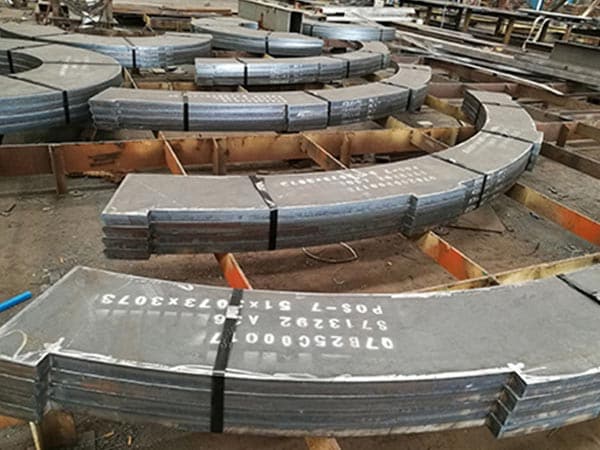
The Evolution of High-Strength Structural Steel: Understanding S700MC
S700MC is a high-yield-strength, thermomechanically rolled steel specifically designed for cold forming. Governed by the EN 10149-2 standard, this material represents a pinnacle of metallurgical engineering, offering a minimum yield strength of 700 MPa while maintaining remarkable ductility. The 'MC' suffix denotes its thermomechanical rolling process, which creates a fine-grained microstructure that is essential for its superior mechanical properties. Unlike traditional quenched and tempered steels, S700MC achieves its strength through controlled rolling and cooling, making it highly suitable for weight-sensitive applications such as truck chassis, crane booms, and complex structural components.
Chemical Composition and Mechanical Integrity
The performance of S700MC during processing is dictated by its chemical makeup. It is a low-carbon steel, typically containing micro-alloying elements like Niobium (Nb), Vanadium (V), and Titanium (Ti). These elements facilitate grain refinement and precipitation hardening without compromising weldability.
| Element | C (max) | Si (max) | Mn (max) | P (max) | S (max) | Al (min) | Nb (max) | V (max) | Ti (max) |
|---|---|---|---|---|---|---|---|---|---|
| Percentage (%) | 0.12 | 0.50 | 2.10 | 0.025 | 0.015 | 0.015 | 0.09 | 0.20 | 0.22 |
Mechanically, S700MC offers a balance between high load-bearing capacity and formability. The following table outlines the typical mechanical requirements for this grade:
| Property | Yield Strength (MPa) | Tensile Strength (MPa) | Elongation A80 (%) | Min. Bend Radius (90°) |
|---|---|---|---|---|
| Value | Min. 700 | 750 - 950 | Min. 10 - 12 | 1.5t to 2.0t |
Precautions for Thermal and Mechanical Cutting
Cutting S700MC requires precision to avoid altering the micro-alloyed structure near the edges. Laser cutting is the preferred method for S700MC due to its narrow Heat Affected Zone (HAZ) and high accuracy. However, several precautions must be observed:
- Heat Management: Excessive heat during plasma or oxy-fuel cutting can lead to local softening of the material. For thicknesses above 8mm, plasma cutting with high-speed parameters is recommended to minimize thermal input.
- Edge Quality: Hardened edges from thermal cutting can initiate cracks during subsequent bending operations. It is often necessary to grind the cut edges, especially if the part will undergo severe cold forming.
- Mechanical Shearing: While S700MC can be sheared, the high yield strength requires significantly more force compared to standard S355 steel. Ensure that the shearing blades are sharp and the clearance is adjusted correctly (typically 10-15% of the plate thickness) to prevent edge tearing.
Mastering Cold Bending and Forming
Cold forming is one of the most common processing steps for S700MC, yet it presents challenges due to the material's high strength and springback characteristics. To achieve successful results, fabricators must adhere to strict geometric constraints.
Minimum Bending Radius: The bending radius (Ri) is critical. For S700MC, the recommended minimum radius depends on the orientation of the bend relative to the rolling direction. Bending transverse to the rolling direction is generally safer than longitudinal bending. A typical rule of thumb is Ri ≥ 1.5 times the thickness (t) for transverse bends and Ri ≥ 2.0t for longitudinal bends.
Springback Compensation: Because S700MC is much stronger than conventional steels, it exhibits significant elastic recovery after the load is removed. Operators must over-bend the material. The degree of springback can be 2 to 3 times higher than that of S355, requiring advanced CNC press brakes with angle sensors for consistent production.
Surface Condition: Before bending, ensure the material surface is free from deep scratches or rust, as these can act as stress concentrators and lead to cracking on the outer tension zone of the bend.
Advanced Welding Strategies for S700MC
Welding S700MC is highly efficient due to its low carbon equivalent (CEV), but maintaining the strength of the joint requires careful control of the cooling rate, often referred to as the t8/5 time (the time taken to cool from 800°C to 500°C).
- Filler Metal Selection: Use filler metals that match the yield strength of the base material, such as those classified under ISO 18276-A (e.g., T 69 or T 79). For non-load-bearing welds, under-matching filler metals can be used to reduce the risk of cold cracking.
- Heat Input Control: High heat input can coarsen the grain structure in the HAZ, leading to a significant drop in toughness and strength. It is recommended to keep the heat input between 0.5 and 1.5 kJ/mm.
- Preheating: Generally, S700MC does not require preheating for thicknesses up to 10-12mm due to its low carbon content. However, if welding in cold environments or on very thick sections, a modest preheat (75°C - 100°C) may be beneficial to remove moisture and slow the cooling rate slightly.
- Interpass Temperature: Keep the interpass temperature below 200°C to prevent overheating the joint area, which preserves the fine-grained structure provided by the thermomechanical rolling.
Environmental Adaptability and Surface Treatment
S700MC is frequently used in outdoor and harsh environments. While it has good atmospheric corrosion resistance compared to standard carbon steels, it is not a weathering steel. Surface protection is vital for longevity.
Hot-dip galvanizing is possible, but precautions must be taken regarding Hydrogen Embrittlement and the 'Sandelin effect.' S700MC's silicon and phosphorus content are usually controlled to be within the ranges that allow for a high-quality galvanized coating. If painting or powder coating, the surface should be grit-blasted to Sa 2.5 cleanliness to ensure maximum adhesion, especially since the mill scale on thermomechanically rolled steel can be very tenacious.
Industry-Specific Application Nuances
In the heavy transportation sector, S700MC is used to reduce the dead weight of trailers. When processing these long, thin sections, flatness control is essential. Tension leveling or precision leveling might be required after cutting to ensure the chassis rails remain straight.
In lifting equipment, such as mobile cranes, the fatigue strength of S700MC is a primary concern. Processing must ensure that weld toes are smooth and free from undercuts. Post-weld treatments like TIG-dressing or ultrasonic impact treatment (UIT) can significantly improve the fatigue life of S700MC welded structures by reducing local stress concentrations.
Optimizing Tooling and Equipment for High-Strength Steel
Processing S700MC is not just about the steel; it is about the equipment. Standard tools designed for mild steel will wear out prematurely. Hardened tool steel or carbide-tipped drills are necessary for hole making. When drilling, use lower speeds and higher feed rates compared to S355 to prevent work hardening in the hole. Proper lubrication is mandatory to dissipate heat and extend tool life. For punching operations, ensure the die clearance is optimized to prevent excessive burr formation, which can lead to fatigue cracks in service.
By respecting the unique metallurgical properties of S700MC and implementing these processing precautions, manufacturers can fully leverage the weight-saving and strength advantages of this advanced material, ensuring both safety and economic efficiency in high-performance engineering projects.
Leave a message