
At what humidity does S315MC auto steel flat rust?
Detailed analysis of S315MC automotive steel's corrosion behavior, focusing on the critical humidity levels that trigger oxidation, mechanical properties, and industrial applications.
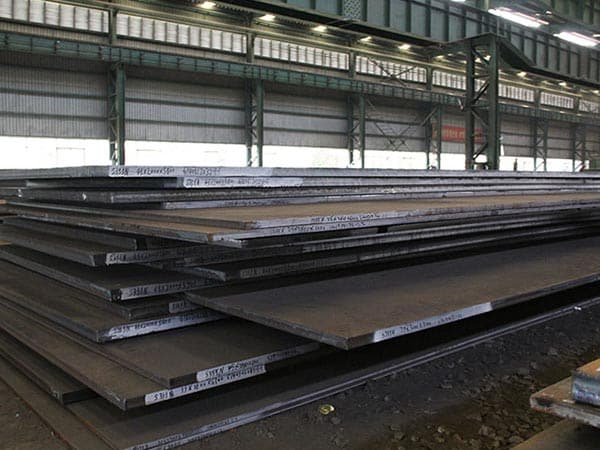
The Critical Humidity Threshold for S315MC Steel Oxidation
For procurement managers and automotive engineers, understanding the environmental limits of S315MC high-strength low-alloy (HSLA) steel is vital for maintaining structural integrity. S315MC, governed by the EN 10149-2 standard, is a thermomechanically rolled steel designed for cold forming. Like most carbon steels, its susceptibility to rust is primarily dictated by the Relative Humidity (RH) of its storage or operating environment.
Scientific research into atmospheric corrosion indicates that the "critical relative humidity" for S315MC is approximately 60% to 70%. Below this threshold, the rate of oxidation is remarkably slow because the thin film of moisture on the steel surface is insufficient to act as an electrolyte for electrochemical reactions. However, once the ambient humidity exceeds 70%, a visible layer of hydrated iron oxide—commonly known as red rust—begins to form rapidly. If the environment reaches the dew point, where moisture condenses directly onto the steel flats, corrosion accelerates exponentially regardless of the base material's yield strength.
It is important to note that S315MC does not contain significant amounts of chromium or nickel, which are found in stainless steels to provide a passive protective layer. Instead, it relies on its refined microstructure and, often, secondary surface treatments to combat environmental degradation.
Chemical Composition and Its Influence on Corrosion Resistance
The chemical makeup of S315MC is optimized for weldability and formability rather than inherent corrosion resistance. However, the controlled levels of carbon and manganese play a subtle role in how the material interacts with moisture.
| Element | Maximum Content (%) | Impact on Performance |
|---|---|---|
| Carbon (C) | 0.12 | Ensures excellent weldability and reduces brittle fracture risks. |
| Manganese (Mn) | 1.30 | Increases strength and improves hardenability. |
| Silicon (Si) | 0.50 | Acts as a deoxidizer during the steelmaking process. |
| Phosphorus (P) | 0.025 | Low levels are maintained to prevent cold shortness. |
| Sulfur (S) | 0.020 | Minimized to improve ductility and prevent lamellar tearing. |
The low carbon content (max 0.12%) makes S315MC highly ductile but also means it lacks the dense carbide structures that might slightly slow down uniform corrosion in higher-carbon variants. The presence of trace micro-alloying elements like Niobium (Nb) or Titanium (Ti) helps in grain refinement, which indirectly affects the uniformity of the oxide layer that forms on the surface.
Mechanical Properties and Structural Reliability
S315MC is prized in the automotive sector for its balance of strength and weight-saving potential. While humidity affects the surface, the mechanical properties define the material's utility in chassis and structural components.
- Yield Strength: Minimum 315 MPa, providing robust support for heavy-duty vehicle frames.
- Tensile Strength: 390 to 510 MPa, ensuring the material can withstand significant stress before failure.
- Elongation: Minimum 20-24% (depending on thickness), allowing for complex bending without cracking.
- Impact Strength: Excellent low-temperature toughness, which is critical for vehicles operating in arctic or high-altitude climates.
When rust occurs due to high humidity, the effective cross-sectional area of the S315MC flat can decrease over time. For thin-gauge automotive parts, even minor surface pitting can lead to stress concentration points, potentially compromising the fatigue life of the component. Therefore, maintaining the material's mechanical integrity requires strict control over the storage environment.
Process Performance: Cold Forming and Welding
The "MC" in S315MC stands for thermomechanically rolled (M) and cold forming (C). This steel is specifically engineered to be bent, pressed, and folded into intricate shapes without losing its structural properties. This makes it a staple for manufacturing cross members, side rails, and suspension parts.
During the welding process, S315MC exhibits superior performance due to its low carbon equivalent (CEV). However, the heat-affected zone (HAZ) created during welding can sometimes be more susceptible to localized corrosion if the protective mill scale is damaged. In high-humidity environments, these welded joints are often the first areas to show signs of rust. Utilizing proper post-weld cleaning and immediate priming is a standard industry practice to mitigate this risk.
Environmental Factors Beyond Relative Humidity
While 70% RH is the general trigger point, other environmental factors can lower this threshold or increase the severity of the rust on S315MC flats:
- Pollutants (SO2 and NOx): In industrial areas, sulfur dioxide reacts with moisture to form weak acids, which can trigger corrosion at humidity levels as low as 50%.
- Chloride Ions: In coastal regions or areas where road salt is used, chlorides penetrate the oxide layer, causing aggressive pitting corrosion.
- Temperature Fluctuations: Rapid cooling causes the air to reach its saturation point, leading to condensation (sweating) on the steel surface, even if the average daily humidity seems safe.
- Surface Contamination: Dust, oil, or iron filings on the surface of the S315MC flat can trap moisture and create micro-galvanic cells, accelerating rust.
Industrial Applications and Strategic Use
The automotive industry utilizes S315MC extensively for components where weight reduction is necessary but the extreme strength of S500MC or S700MC is not required. Common applications include:
1. Truck Chassis and Frames: The high yield strength allows for thinner sections, reducing the overall vehicle weight and improving fuel efficiency.
2. Seat Frames and Brackets: The excellent cold forming properties allow manufacturers to stamp complex shapes for interior safety components.
3. Cargo Van Flooring: S315MC flats are often used for large, flat surfaces where stiffness and weldability are paramount.
In these applications, the steel is rarely used in its bare state. To combat the humidity issues mentioned earlier, S315MC is typically processed through E-coating (electrophoretic painting), galvanizing, or powder coating. These barriers prevent moisture from reaching the steel surface, effectively pushing the "rusting humidity" to near 100% until the coating is breached.
Best Practices for Storing and Handling S315MC Flats
To prevent premature rusting of S315MC during the supply chain phase, specific logistical protocols must be followed. Storing steel flats in a temperature-controlled warehouse where the RH is kept below 50% is the gold standard. If climate control is not feasible, the use of Vapor Corrosion Inhibitor (VCI) packaging or a light coating of protective oil is essential.
When transporting S315MC, ensuring that the material is not in direct contact with wooden pallets (which can hold moisture) and using waterproof tarpaulins can prevent the "greenhouse effect" inside shipping containers. By understanding the relationship between S315MC and its environment, manufacturers can ensure that the steel maintains its high-performance characteristics from the mill to the final assembly line.
Leave a message