
What are the S420MC steel for automotive industry advantages
Explore the critical advantages of S420MC high-yield-strength steel in automotive manufacturing, focusing on its mechanical properties, weldability, and role in vehicle weight reduction.
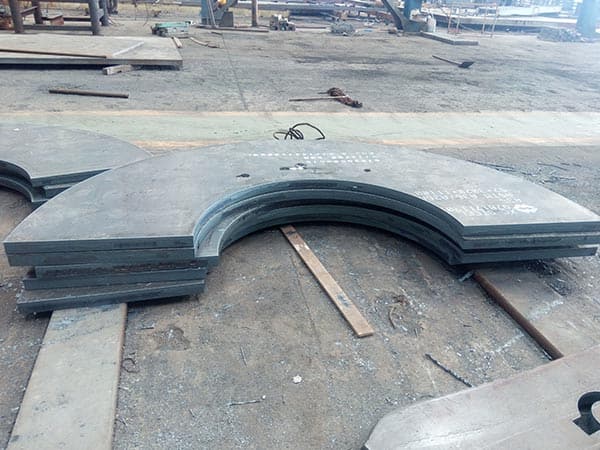
Evolution of High-Yield Strength Steel in Modern Vehicle Architecture
The global automotive industry faces an unprecedented challenge: balancing the demand for increased safety and structural integrity with the urgent need for weight reduction to meet stringent emission standards. S420MC steel, a thermomechanically rolled high-yield-strength steel governed by the EN 10149-2 standard, has emerged as a cornerstone material in solving this paradox. Unlike traditional structural steels, S420MC is engineered specifically for cold forming, offering a unique combination of high load-bearing capacity and exceptional ductility.
Manufacturers are moving away from heavy, thick-gauge carbon steels toward micro-alloyed grades. S420MC represents a sweet spot in the performance-to-cost ratio, providing significantly higher yield strength than standard S355 grades while maintaining the workability required for complex automotive geometries. This shift is not merely about replacing one material with another; it is about re-engineering the vehicle's DNA to be leaner, faster, and more efficient.
Chemical Composition and the Science of Micro-Alloying
The superior performance of S420MC is rooted in its precise chemical makeup. By utilizing thermomechanical rolling (the 'MC' designation), the grain structure of the steel is refined to a degree that is impossible with traditional hot rolling. This process allows for a lower carbon content, which directly enhances weldability and toughness.
The inclusion of micro-alloying elements such as Niobium (Nb), Vanadium (V), and Titanium (Ti) is what gives S420MC its edge. These elements form fine precipitates that pin grain boundaries during processing, preventing grain growth and ensuring a fine-grained ferritic-pearlitic structure. This translates to a material that can withstand high stress without brittle failure.
| Element | C (max %) | Mn (max %) | Si (max %) | P (max %) | S (max %) | Al (min %) |
|---|---|---|---|---|---|---|
| S420MC Value | 0.12 | 1.60 | 0.50 | 0.025 | 0.015 | 0.015 |
Low carbon levels (typically below 0.12%) ensure that the Heat Affected Zone (HAZ) during welding does not become excessively brittle, a critical factor for the safety-critical components of a vehicle's chassis.
Mechanical Properties: Strength Meets Formability
The primary advantage of S420MC lies in its mechanical profile. With a minimum yield strength of 420 MPa, it allows engineers to reduce the thickness of structural parts without compromising the overall stiffness or safety of the vehicle. This "down-gauging" is the most effective way to achieve lightweighting goals.
| Property | Yield Strength (ReH MPa) | Tensile Strength (Rm MPa) | Elongation (A80 % min) | Bending Radius (180°) |
|---|---|---|---|---|
| S420MC Specification | min 420 | 480 - 620 | 16 - 19 (varies by thickness) | 0.5t to 1.5t |
While strength is vital, cold formability is what makes S420MC practical for the factory floor. It exhibits excellent bending properties, allowing for tight radii without cracking. This is essential for components like longitudinal beams and cross members that require complex folds to fit within the tight packaging of a modern truck or passenger car chassis.
Superior Weldability for Automated Production Lines
In the automotive sector, production speed and joint reliability are paramount. S420MC is designed for high-efficiency welding processes, including MAG (Metal Active Gas), MIG (Metal Inert Gas), and laser welding. Because of its low Carbon Equivalent (CEV), the steel is less prone to cold cracking, even when welded at high speeds.
- Reduced Pre-heating: Unlike higher carbon steels, S420MC generally does not require pre-heating, which slashes energy costs and cycle times.
- Consistent Joint Quality: The fine-grained structure ensures that the weld seam maintains high impact strength, which is vital for crash-relevant parts.
- Compatibility: It can be easily welded to other grades of steel, facilitating multi-material vehicle designs.
Enhanced Fatigue Resistance and Durability
Automotive components, particularly in heavy-duty trucks and trailers, are subjected to constant cyclic loading. Fatigue failure is a major concern for chassis longevity. S420MC’s refined grain structure provides a higher fatigue limit compared to standard structural steels. This means that parts can endure millions of stress cycles over the lifespan of the vehicle without developing microscopic cracks that lead to structural failure.
Furthermore, the material's impact toughness at low temperatures (often tested at -20°C or -40°C upon request) ensures that vehicles remain safe in arctic or high-altitude environments. This environmental adaptability makes S420MC a global standard for international logistics fleets.
Strategic Weight Reduction and Economic Efficiency
The transition to S420MC offers a clear economic advantage through mass reduction. By upgrading from a standard S355 grade to S420MC, manufacturers can typically achieve a 15% to 25% reduction in component weight. This has a ripple effect on the entire vehicle ecosystem:
- Fuel Economy: Lighter vehicles consume less fuel and produce fewer CO2 emissions, helping manufacturers meet regulatory targets.
- Payload Capacity: For commercial vehicles, every kilogram saved in the chassis is an extra kilogram of payload, directly increasing the operator's profitability.
- Material Savings: Using thinner sheets reduces the total tonnage of steel required per vehicle, which can offset the higher cost per ton of micro-alloyed steel.
- Lower Shipping Costs: Lighter components reduce logistics costs throughout the supply chain.
Diverse Applications Across the Automotive Sector
The versatility of S420MC allows it to be utilized in a wide array of demanding applications. It is particularly dominant in the heavy vehicle segment but is increasingly finding its way into passenger car structural reinforcements.
Truck Chassis and Frames: The longitudinal beams of heavy-duty trucks are the primary application. These parts must be incredibly strong to support the engine and cargo while being flexible enough to handle road vibrations. S420MC provides the perfect balance.
Cold-Pressed Parts: Components such as brackets, suspension arms, and seat frames benefit from the steel's ability to be formed into intricate shapes without losing its structural integrity. The high yield strength ensures these parts do not deform under sudden impacts.
Crane and Lifting Equipment: For truck-mounted cranes and telescopic booms, S420MC offers the necessary strength to lift heavy loads while keeping the equipment's self-weight low, preventing the vehicle from becoming top-heavy.
Environmental Sustainability and Recyclability
Sustainability is no longer optional in automotive manufacturing. S420MC is 100% recyclable. Because it achieves its strength through thermomechanical processing and micro-alloying rather than heavy alloying with rare or toxic elements, it can be easily integrated into existing steel recycling streams. The energy saved through vehicle lightweighting over the life of the car far outweighs the energy used in the production of the steel, making it a net-positive choice for the environment.
The longevity of S420MC components also means fewer replacements and less waste over the vehicle's lifecycle. Its resistance to atmospheric corrosion, especially when combined with modern coating technologies like galvanization or KTL (cathodic dip painting), ensures that the structural integrity remains intact for decades.
Choosing S420MC for Future-Proof Engineering
As the industry moves toward electrification, the role of high-strength steels like S420MC becomes even more critical. Electric vehicles (EVs) carry heavy battery packs, requiring stronger chassis structures to maintain safety. Simultaneously, the need to offset battery weight makes every gram of steel saved elsewhere vital for extending driving range. S420MC provides the structural foundation required for this next generation of mobility, proving that traditional materials, when advanced through modern metallurgy, remain the most reliable and cost-effective solution for the automotive future.
Leave a message