
What are the common types of S315MC truck chassis assemblies steel cutting
Comprehensive guide to S315MC truck chassis steel cutting methods, covering laser, plasma, and mechanical techniques, material properties, and industrial applications.
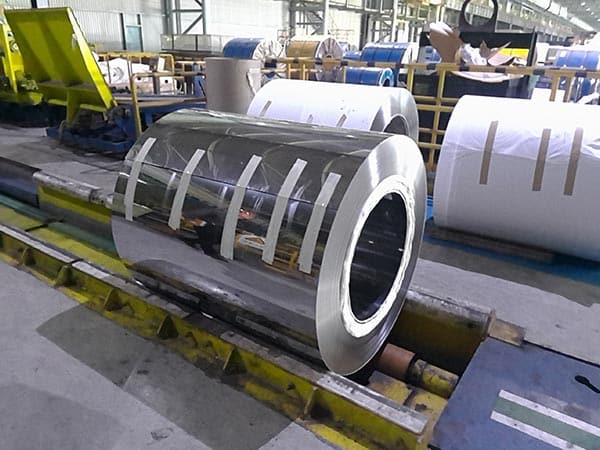
The Fundamental Role of S315MC in Modern Truck Chassis Engineering
S315MC is a high-strength, cold-forming steel produced through thermomechanical rolling, primarily governed by the EN 10149-2 standard. In the automotive and heavy machinery sectors, particularly for truck chassis assemblies, this material is prized for its unique balance of weight reduction and structural integrity. The 'S' denotes structural steel, '315' indicates a minimum yield strength of 315 MPa, and 'MC' signifies its thermomechanically rolled condition, optimized for cold forming and welding.
Truck chassis serve as the backbone of the vehicle, bearing the weight of the engine, cabin, cargo, and the dynamic stresses of road vibration. Using S315MC allows manufacturers to utilize thinner gauges without sacrificing safety, directly contributing to fuel efficiency and payload capacity. However, the integrity of these chassis components depends heavily on the precision and quality of the cutting process. Selecting the right cutting method is not merely a matter of speed; it influences the material's microstructure, the Heat Affected Zone (HAZ), and the subsequent performance in bending and welding operations.
Chemical Composition and Mechanical Synergy
To understand why specific cutting techniques are preferred for S315MC, one must analyze its metallurgical makeup. Unlike traditional carbon steels, S315MC utilizes micro-alloying elements such as Niobium (Nb), Vanadium (V), and Titanium (Ti). These elements refine the grain structure, providing high strength even in a relatively low-carbon matrix.
| Element | Maximum Content (%) | Mechanical Property | Value |
|---|---|---|---|
| Carbon (C) | 0.12 | Yield Strength (ReH) | Min 315 MPa |
| Manganese (Mn) | 1.30 | Tensile Strength (Rm) | 390 - 510 MPa |
| Silicon (Si) | 0.50 | Elongation (A80mm) | Min 20% |
| Phosphorus (P) | 0.025 | Cold Bending (180°) | 0.5t (t=thickness) |
The low carbon content ensures excellent weldability and reduces the risk of cold cracking during thermal cutting. However, the grain-refined structure is sensitive to excessive heat input, which can lead to localized softening in the HAZ if the cutting parameters are not strictly controlled.
High-Precision Fiber Laser Cutting
Fiber laser cutting has become the industry standard for S315MC truck chassis components, especially for thicknesses ranging from 2mm to 8mm. This method utilizes a high-density light beam to melt the material, which is then blown away by a high-pressure assist gas (usually Nitrogen or Oxygen).
- Precision and Edge Quality: Laser cutting offers tolerances within ±0.1mm, which is critical for the interlocking tabs and slots used in modern chassis assembly.
- Minimal Heat Input: The concentrated energy of the fiber laser results in a very narrow HAZ. This preserves the thermomechanical properties of S315MC, ensuring that the edges do not become overly brittle before the chassis rails are bent into shape.
- Complex Geometries: Chassis assemblies often require intricate weight-reduction holes and mounting points. Laser systems can execute these patterns at high speeds without the need for expensive hard tooling.
When cutting S315MC with Oxygen as an assist gas, a thin oxide layer forms on the edge. For chassis that require high-quality painting or powder coating, Nitrogen is often preferred to maintain a clean, metallic edge that promotes better coating adhesion.
Industrial Plasma Cutting for Thick Sections
For heavy-duty truck chassis where S315MC plates might exceed 10mm, High-Definition (HD) Plasma Cutting offers a cost-effective alternative to laser cutting. Plasma cutting uses an ionized gas to conduct electricity from the torch to the workpiece, generating intense heat to melt the steel.
While plasma cutting typically results in a larger HAZ compared to laser, modern HD plasma systems have significantly narrowed this gap. The use of secondary gases like Oxygen or specialized water-injection torches helps in achieving a squarer edge and reducing dross. For S315MC, it is vital to monitor the cutting speed; if the torch moves too slowly, the heat accumulation can degrade the fine-grained structure, potentially leading to fatigue issues in the chassis frame over long-term use.
Mechanical Shearing and Punching
In high-volume production environments where the chassis design is standardized, mechanical shearing and punching remain highly efficient. Unlike thermal methods, these are "cold" processes that do not alter the metallurgical properties of the S315MC steel.
- Shearing: Best suited for straight-line cuts on long chassis rails. It is extremely fast but limited to simple geometries.
- Punching: Ideal for creating bolt holes and standard cut-outs. Since S315MC has excellent cold-forming properties, it responds well to punching without significant edge cracking.
The primary drawback of mechanical cutting is the "work hardening" that occurs at the sheared edge. For S315MC, which is often subjected to subsequent bending, the burr side of a sheared edge should be placed on the inside of the bend to prevent micro-cracks from propagating during the forming process.
Waterjet Cutting: The Cold Alternative
Although less common in mass automotive production due to its slower speed, abrasive waterjet cutting is utilized for specialized chassis components or prototyping. Because it uses a high-pressure stream of water mixed with garnet abrasive, there is zero thermal distortion.
For S315MC, waterjet cutting ensures that the mechanical properties of the thermomechanically rolled steel are 100% preserved from the edge to the core. This is particularly beneficial for components that will undergo extreme fatigue cycles, as there is no risk of thermal micro-fractures or phase transformations at the cut surface.
Impact of Cutting Methods on Post-Processing
The choice of cutting technology directly impacts the subsequent manufacturing steps of a truck chassis. S315MC is specifically designed for cold bending and welding. If a thermal cutting method leaves a hardened edge or a significant burr, the bending process may result in "orange peel" effects or visible cracking on the outer radius.
Furthermore, the edge preparation for welding is paramount. Laser-cut edges are usually clean enough for direct robotic welding. In contrast, plasma-cut edges might require light grinding to remove the oxide layer or dross to ensure a high-quality weld bead. Given that S315MC is often used in automated assembly lines, the consistency of the cut edge is a major factor in maintaining the integrity of the structural welds.
Environmental Adaptability and Longevity
Truck chassis operate in harsh environments, exposed to road salt, moisture, and varying temperatures. S315MC provides a degree of atmospheric corrosion resistance due to its refined composition, but the cutting process can influence this. A rough, jagged edge produced by poor-quality flame cutting can act as a site for moisture retention and accelerated corrosion.
By utilizing high-precision cutting like fiber laser or HD plasma, the smooth surface finish reduces the surface area available for corrosive agents and ensures that protective coatings (like E-coating or galvanization) can be applied uniformly. This synergy between material choice and processing precision extends the service life of the vehicle and reduces maintenance costs for fleet operators.
Technical Comparison of Cutting Technologies for S315MC
| Feature | Fiber Laser | HD Plasma | Waterjet | Mechanical Punching |
|---|---|---|---|---|
| Precision | Excellent | Good | Excellent | Fair |
| Heat Affected Zone | Very Small | Moderate | None | None (Work Hardens) |
| Cutting Speed (5mm) | Very High | High | Low | Instantaneous |
| Edge Smoothness | High | Medium | Very High | Medium |
| Setup Cost | High | Moderate | Moderate | High (Tooling) |
Expanding Applications Beyond Chassis Rails
While the main frame rails are the most visible use of S315MC, the versatility of this steel—and the precision of modern cutting—allows it to be used in various chassis assemblies. These include cross-members, suspension brackets, and bumper reinforcements. The ability to cut S315MC into complex, weight-optimized shapes means that engineers can design components that distribute stress more evenly, further enhancing the durability of the truck.
In the transition toward electric trucks, where battery weight is a significant concern, the role of S315MC becomes even more critical. Cutting technologies must evolve to handle the integration of battery housing mounts directly into the chassis structure, requiring even tighter tolerances and cleaner edges to accommodate the sensitive electronics and cooling systems associated with EV platforms.
Optimizing the S315MC Cutting Workflow
To achieve the best results when processing S315MC for truck chassis, manufacturers should focus on several key parameters. First, the nesting software should be optimized to account for the grain direction of the steel, as S315MC's properties can vary slightly between the longitudinal and transverse directions relative to the rolling mill. Second, maintaining the cutting nozzles and optics is essential to prevent irregularities that could lead to stress concentrations.
Finally, a rigorous inspection of the cut edges—looking for micro-cracks or excessive hardening—ensures that the S315MC maintains its superior cold-forming characteristics. By aligning the cutting technology with the specific metallurgical strengths of S315MC, the automotive industry can continue to push the boundaries of vehicle efficiency, safety, and performance.
Leave a message