
How to distinguish authenticity of S700MC oiled steel coil plate
This professional guide provides an in-depth analysis of S700MC oiled steel coil plates, detailing mechanical properties, chemical composition, and practical verification methods to ensure material authenticity and quality for industrial applications.
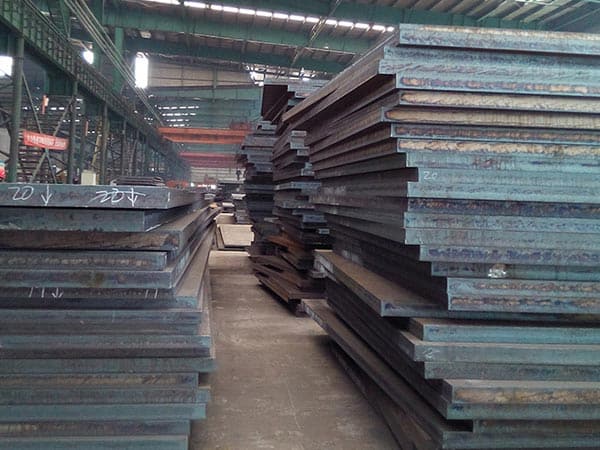
Understanding the Technical Foundation of S700MC High-Strength Steel
S700MC is a high-yield-strength, cold-forming steel produced through a meticulous thermomechanical rolling process (TMCP). Governed by the EN 10149-2 standard, this material is designed to offer an exceptional strength-to-weight ratio, making it indispensable for modern engineering where weight reduction is paramount. The 'S' stands for structural steel, '700' denotes a minimum yield strength of 700 MPa, and 'MC' indicates the thermomechanically rolled condition. Distinguishing the authenticity of S700MC oiled steel coil plate requires a multifaceted approach that combines document verification, physical inspection, and laboratory analysis.
Mechanical Property Benchmarks for S700MC Verification
The primary indicator of genuine S700MC is its mechanical performance. Any material claiming to be S700MC must meet strict thresholds. If the testing results fall outside these ranges, the material's authenticity is highly suspect. Authentic S700MC exhibits high yield strength while maintaining sufficient ductility for complex forming operations.
| Property | Requirement (EN 10149-2) | Typical Values for Genuine S700MC |
|---|---|---|
| Yield Strength (ReH MPa) | Min 700 MPa | 710 - 820 MPa |
| Tensile Strength (Rm MPa) | 750 - 950 MPa | 780 - 920 MPa |
| Elongation A80mm (%) | Min 10% (t < 3mm) | 12% - 15% |
| Elongation A5.65 (%) | Min 12% (t >= 3mm) | 14% - 18% |
When verifying authenticity, a tensile test is the most direct method. Genuine S700MC shows a characteristic stress-strain curve typical of fine-grained steels, with a clear yield point and significant work hardening before reaching the ultimate tensile strength. If the material exhibits brittle behavior or fails to reach the 700 MPa threshold, it is likely a lower-grade material being passed off as S700MC.
Chemical Composition and Micro-Alloying Fingerprints
The secret to S700MC’s strength lies in its chemical composition, specifically the use of micro-alloying elements like Niobium (Nb), Vanadium (V), and Titanium (Ti). These elements facilitate grain refinement during the TMCP process. Authentic S700MC maintains a very low carbon content to ensure excellent weldability and toughness.
| Element | Max % (Ladle Analysis) | Role in Authenticity |
|---|---|---|
| Carbon (C) | 0.12 | Ensures weldability; high C suggests fake grade |
| Manganese (Mn) | 2.10 | Solid solution strengthening |
| Silicon (Si) | 0.60 | Deoxidation and strengthening |
| Niobium (Nb) | 0.09 | Grain refinement; critical marker |
| Titanium (Ti) | 0.22 | Prevents grain growth during heating |
| Phosphorus (P) / Sulfur (S) | 0.025 / 0.015 | Impurity control; low levels indicate high-quality melt |
A chemical analysis using Optical Emission Spectroscopy (OES) or X-ray Fluorescence (XRF) can quickly identify if the micro-alloying elements are present in the correct proportions. The absence of Niobium or Titanium is a definitive sign that the steel is not genuine S700MC, as these elements are essential for achieving the 700 MPa yield strength without excessive carbon.
Surface Quality and the Importance of the Oiled Finish
S700MC is frequently supplied in a pickled and oiled (P&O) state. The oiling process is not merely a cosmetic choice; it serves a vital functional role in protecting the high-purity surface from oxidation and providing lubrication for initial processing steps. Distinguishing authenticity involves inspecting the uniformity and quality of this oiled surface.
- Oil Film Uniformity: Genuine S700MC oiled coils feature a consistent, thin film of electrostatic oil. There should be no dry patches where rust could initiate, nor should there be excessive pooling that hides surface defects.
- Surface Texture: Underneath the oil, the steel should have a smooth, matte finish resulting from the pickling process. Any signs of heavy mill scale, deep pitting, or longitudinal cracks indicate poor manufacturing quality or a substitute material.
- Edge Condition: Authentic coils from reputable mills like ThyssenKrupp, SSAB, or Baosteel will have cleanly trimmed edges. Excessive burrs or irregular edges often point to secondary-tier production or downgraded material.
Verification via Mill Test Certificates (MTC)
The Mill Test Certificate is the "identity card" of the steel coil. For S700MC, the MTC must be issued according to EN 10204 3.1 or 3.2. To verify authenticity through documentation, focus on the following details:
- Heat Number Matching: The heat number and coil number on the MTC must exactly match the physical markings (stencils or tags) on the steel coil.
- Standard Reference: The MTC must explicitly state compliance with EN 10149-2.
- TMCP Indicators: Look for notes regarding the thermomechanical rolling process. Genuine S700MC is not produced via traditional quenching and tempering.
- Issuer Credibility: Verify that the producing mill has the technological capability to manufacture S700MC. Not all mills can achieve the precise temperature controls required for TMCP at 700 MPa.
Practical Processing Tests: Bending and Welding
High-strength steel must perform predictably during fabrication. S700MC is prized for its cold-forming capabilities. A simple way to distinguish authentic material is to perform a bend test. For a thickness (t) of less than 3mm, the minimum recommended bending radius is typically 1.0t or 1.5t. If the material cracks at these radii, it lacks the fine-grained structure characteristic of genuine S700MC.
Weldability is another critical marker. Because of its low carbon equivalent (CEV), S700MC is easy to weld using standard methods like MAG or laser welding. If the steel exhibits excessive hardening in the Heat Affected Zone (HAZ) or develops cold cracks easily, it likely contains high levels of carbon or tramp elements, signaling it is not true S700MC.
Applications and Environmental Adaptability
Authentic S700MC is engineered for durability in demanding environments. Its low-temperature toughness is a key feature; many grades are tested for impact strength at -20°C or -40°C. This makes it ideal for heavy-duty transportation, such as truck chassis, crane booms, and agricultural machinery, where the material must withstand dynamic loads in cold climates without brittle failure.
The oiled surface provides significant protection during sea freight and warehouse storage. In high-humidity environments, a genuine oiled S700MC coil can remain rust-free for 3 to 6 months if stored correctly. If a "new" coil shows significant red rust despite being oiled, the oil quality or the underlying pickling process may be substandard, suggesting a compromise in material integrity.
Strategic Procurement to Avoid Counterfeit Material
To ensure the authenticity of S700MC oiled steel coil plates, procurement teams should establish a rigorous supplier audit process. Working directly with authorized distributors or reputable mills is the most effective safeguard. Always request third-party inspections (such as SGS or BV) if the material source is unverified. These inspectors can perform on-site hardness testing and thickness measurements (complying with EN 10051 tolerances) to confirm the material meets the ordered specifications before it leaves the warehouse.
By combining visual inspection of the oiled surface, rigorous MTC verification, and laboratory testing of mechanical and chemical properties, industrial buyers can confidently distinguish genuine S700MC. This ensures the safety, longevity, and performance of the final engineered products, protecting both brand reputation and operational efficiency.
Leave a message