
Why is EN10149-2 S700MC so popular
Explore the comprehensive advantages of EN10149-2 S700MC steel. This technical guide analyzes its mechanical properties, superior weldability, cold forming capabilities, and why it has become the gold standard for lightweighting in heavy machinery and aut
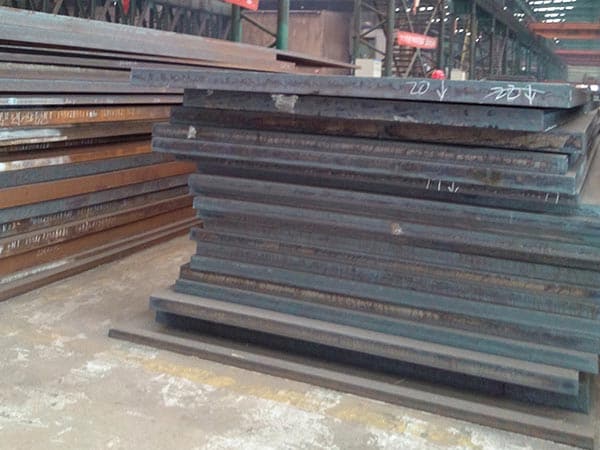
Redefining Structural Efficiency with EN10149-2 S700MC
In the modern era of industrial design, the demand for materials that offer higher strength without increasing weight has never been more critical. EN10149-2 S700MC has emerged as a frontrunner in this evolution. As a thermomechanically rolled, high-yield strength steel, S700MC represents the pinnacle of metallurgical engineering, balancing extreme load-bearing capacity with remarkable ductility. The 'S' denotes structural steel, '700' signifies its minimum yield strength of 700 MPa, and 'MC' indicates it is thermomechanically rolled (M) and intended for cold forming (C). Its popularity stems from a unique ability to reduce structural weight by up to 40% compared to traditional S355 grades while maintaining safety and durability.
The Secret of Thermomechanical Rolling (TMCP)
The exceptional properties of S700MC are not merely a result of its chemical recipe but the sophisticated Thermomechanical Controlled Process (TMCP) used during production. Unlike conventional normalizing, TMCP involves precise temperature control and specific rolling reduction ratios. This process creates a fine-grained microstructure that is far superior to standard hot-rolled steels. By refining the grain size at a microscopic level, the steel achieves high strength and high toughness simultaneously—a combination often difficult to reach. This fine-grain structure is the primary reason why S700MC remains popular among engineers who require materials that do not crack under high stress or low-temperature environments.
Mechanical Superiority and Weight Reduction Logic
The most compelling reason for the popularity of S700MC is its strength-to-weight ratio. When designing heavy-duty equipment like crane booms, trailer chassis, or refuse trucks, every kilogram saved in the structure translates directly into increased payload capacity or reduced fuel consumption. By utilizing a yield strength of 700 MPa, designers can use thinner plates to achieve the same structural integrity as thicker, lower-grade steels. This 'lightweighting' logic is a driving force in global sustainability efforts and operational cost reduction.
| Mechanical Property | Value (Thickness ≤ 8mm) |
|---|---|
| Minimum Yield Strength (MPa) | 700 |
| Tensile Strength (MPa) | 750 - 950 |
| Minimum Elongation (A80mm %) | 10 |
| Minimum Elongation (A5 %) | 12 |
Chemical Composition and Micro-Alloying Excellence
S700MC achieves its high performance through a low-carbon approach supplemented by micro-alloying elements such as Niobium (Nb), Vanadium (V), and Titanium (Ti). The low carbon content (typically ≤ 0.12%) is crucial because it ensures that the steel remains highly weldable and resistant to brittle fracture. The micro-alloys act as grain refiners and precipitation hardeners, allowing the steel to reach 700 MPa without the need for high levels of Manganese or Chromium, which can complicate the welding process. This clean chemistry also contributes to the steel's excellent surface quality, which is vital for subsequent coating and painting processes.
Processing Performance: Bending and Cutting
A common misconception is that high-strength steel is difficult to work with. On the contrary, S700MC is specifically designed for cold forming. Because of its fine-grain structure and controlled inclusion morphology (often achieved through calcium treatment), it exhibits excellent bending properties. Manufacturers can achieve tight bending radii without the risk of surface cracking, provided they follow the recommended minimum mandrel diameters. Furthermore, S700MC is exceptionally well-suited for laser, plasma, and waterjet cutting. Its consistent flatness and uniform internal stress levels ensure that parts remain stable after cutting, reducing the need for secondary straightening operations.
- Bending Radius: Typically 1.5 to 2.0 times the thickness for 90-degree bends.
- Edge Quality: High-purity steel ensures clean cuts with minimal heat-affected zones.
- Consistency: Tight tolerances in thickness and flatness improve automated assembly line efficiency.
Weldability: A Major Competitive Advantage
In heavy fabrication, welding time and quality are significant cost drivers. S700MC is popular because it offers superior weldability compared to quenched and tempered steels of similar strength. Due to its low Carbon Equivalent Value (CEV), S700MC generally does not require preheating for standard thicknesses. This significantly speeds up production cycles and reduces energy costs. Whether using MIG/MAG, submerged arc, or laser welding, the heat-affected zone (HAZ) of S700MC maintains sufficient toughness, ensuring that the welded joint does not become a point of failure in the overall structure.
Environmental Adaptation and Fatigue Resistance
Modern infrastructure and machinery often operate in harsh environments, from sub-zero arctic temperatures to high-vibration mining sites. S700MC provides reliable impact toughness, often specified at -20°C or even -40°C in certain variations. Beyond static strength, its fatigue resistance is a critical factor for its popularity. In dynamic structures like truck frames that undergo millions of stress cycles, the fine-grain structure of S700MC slows down the initiation and propagation of fatigue cracks, extending the service life of the equipment and reducing maintenance overhead.
Diverse Industry Applications
The versatility of EN10149-2 S700MC has led to its adoption across a wide spectrum of industries. In the transportation sector, it is used for longitudinal beams in trailers and chassis for heavy-duty trucks. In lifting equipment, it is the standard material for telescopic crane booms and aerial work platforms. The agricultural sector utilizes S700MC for high-stress components in plows and harvesters. Even in the renewable energy sector, it finds use in support structures where high strength and low weight are required to minimize foundation costs. This cross-industry utility ensures a stable supply chain and continuous technological support from global steel mills.
Economic Value Analysis
While the price per ton of S700MC may be higher than standard S355 steel, the total cost of ownership is frequently lower. The math is simple: using S700MC allows for thinner sections, which means fewer tons of steel purchased for the same project. Additionally, thinner plates require less welding consumable material and shorter welding times. When you factor in the long-term fuel savings for the end-user due to a lighter vehicle, the economic argument for S700MC becomes undeniable. It is a material that pays for itself through performance and efficiency, cementing its status as a cornerstone of modern high-performance engineering.
Leave a message