
What are the uses of S650MC automotive steel sheet
Explore the comprehensive uses of S650MC automotive steel sheet. This guide covers mechanical properties, processing advantages, and industrial applications in vehicle manufacturing and heavy machinery.
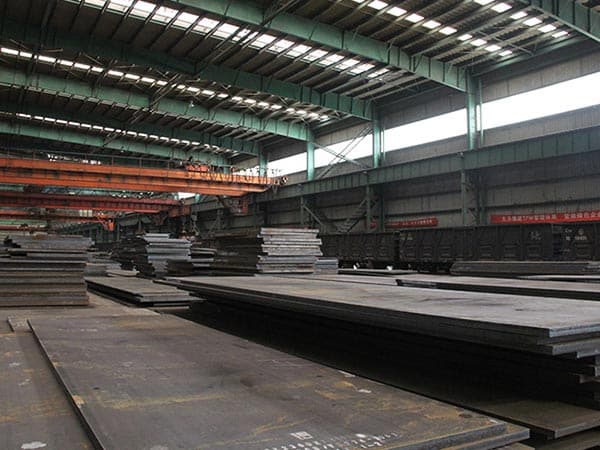
Understanding the Essence of S650MC Automotive Steel
S650MC is a high-strength, hot-rolled structural steel specifically engineered for cold forming. It belongs to the thermomechanically rolled (MC) category under the European standard EN 10149-2. This material represents a pinnacle of metallurgical engineering, balancing extreme yield strength with the ductility required for complex shaping. Manufacturers increasingly turn to S650MC to meet the dual demands of structural integrity and weight reduction, particularly in the automotive and heavy transport sectors.
The Role of Thermomechanical Rolling in Performance
The "MC" suffix in S650MC denotes thermomechanical rolling, a process that carefully controls the temperature and deformation during the rolling stage. Unlike traditional heat treatment, this process refines the grain structure of the steel at a microscopic level. This fine-grained microstructure is the primary reason why S650MC achieves a minimum yield strength of 650 MPa without requiring high levels of alloying elements. This refinement improves toughness and resistance to brittle fracture, making it an ideal candidate for components subjected to dynamic loads and harsh operating environments.
Core Mechanical Properties and Structural Advantages
The primary appeal of S650MC lies in its mechanical profile. With a tensile strength ranging between 700 and 880 MPa, it provides a significantly higher load-bearing capacity compared to standard structural steels like S355. This allows engineers to use thinner sheets to achieve the same structural performance, leading to a substantial reduction in the overall weight of the vehicle or machine. The elongation properties, typically around 10% to 12% depending on thickness, ensure that the material can undergo significant deformation before failure, which is a critical safety factor in crash-relevant automotive parts.
| Property | Value / Specification |
|---|---|
| Yield Strength (ReH) | Min. 650 MPa |
| Tensile Strength (Rm) | 700 - 880 MPa |
| Minimum Elongation (A80mm) | 10% - 12% |
| Bending Radius (90°) | 1.5t to 2.0t (depending on thickness) |
Chemical Composition and Micro-Alloying Strategy
S650MC utilizes a low-carbon chemistry combined with micro-alloying elements such as Niobium (Nb), Vanadium (V), and Titanium (Ti). These elements form carbonitrides that pin grain boundaries during the rolling process, preventing grain growth. The low carbon content (typically ≤0.12%) is essential for maintaining excellent weldability. By keeping the carbon equivalent (Ceq) low, the steel avoids the formation of brittle martensite in the heat-affected zone (HAZ) during welding, which is a common issue with higher carbon steels.
Exceptional Processing Performance: Bending and Cutting
Despite its high strength, S650MC exhibits remarkable cold-forming characteristics. It can be bent to tight radii without cracking, provided the grain direction and bending parameters are respected. This makes it suitable for producing complex profiles, such as C-channels and U-beams, which are essential for vehicle chassis. Furthermore, its clean internal structure and low impurity levels (low Sulfur and Phosphorus) make it highly compatible with modern fabrication techniques. It responds exceptionally well to laser cutting, plasma cutting, and waterjet cutting, producing clean edges with minimal thermal distortion.
Primary Uses in the Automotive Industry
The automotive sector is the largest consumer of S650MC, driven by the global push for lightweighting (mass reduction) to improve fuel efficiency and reduce emissions. For commercial vehicles, weight reduction directly translates to increased payload capacity. S650MC is extensively used in the fabrication of longitudinal beams and cross members for truck chassis. These components must withstand massive static loads and constant vibration. By switching from S355 to S650MC, manufacturers can reduce the weight of a truck frame by up to 30% while maintaining the same stiffness and durability.
- Truck Chassis Frames: High yield strength allows for thinner, lighter frames that handle heavy payloads.
- Cross Members: Provides structural rigidity and torsion resistance between chassis rails.
- Bumper Brackets: Absorbs energy during impacts while maintaining structural integrity.
- Fifth Wheel Couplings: Supports the critical connection between a tractor and trailer.
Applications in Heavy Machinery and Lifting Equipment
Beyond passenger and commercial vehicles, S650MC is a staple in the heavy machinery industry. Mobile cranes, for instance, benefit immensely from high-strength steel. The telescopic booms of cranes require materials that can support heavy loads at great heights without buckling. S650MC provides the necessary strength-to-weight ratio to extend the reach of these machines. Similarly, in the agricultural sector, S650MC is used for the frames of large spreaders, trailers, and tilling equipment, where durability in abrasive and high-stress environments is paramount.
Environmental Adaptation and Fatigue Resistance
Components made from S650MC are often exposed to cyclical loading, which can lead to fatigue failure. The fine-grained structure of thermomechanically rolled steel offers superior fatigue resistance compared to traditional hot-rolled steels. This makes it ideal for parts that experience constant stress fluctuations, such as trailer suspension components and axle housings. Additionally, when properly coated or galvanized, S650MC demonstrates excellent environmental adaptability, resisting corrosion in the harsh conditions found on winter roads or construction sites.
Economic Impact and Manufacturing Efficiency
The adoption of S650MC offers a clear economic advantage. Although the cost per ton may be higher than standard mild steel, the total cost of the finished product often decreases. This is due to the "material saving effect"—using less steel to achieve the same result. Reduced material usage leads to lower transportation costs, less welding filler metal required, and faster processing times. For high-volume automotive production lines, these incremental savings result in significant bottom-line improvements. Moreover, the enhanced durability of the final parts reduces warranty claims and extends the service life of the vehicle.
Strategic Implementation in Modern Design
Integrating S650MC into a design requires a holistic approach. Engineers must account for the material's springback during bending, which is more pronounced than in lower-strength steels. Advanced CAD/CAM modeling and precision tooling are typically employed to ensure dimensional accuracy. When welding S650MC, using the correct filler metals and controlling heat input is vital to preserve the mechanical properties of the thermomechanically treated base metal. By mastering these processing nuances, manufacturers can fully leverage the potential of S650MC to create next-generation vehicles that are safer, lighter, and more efficient.
Leave a message