
What is the 1.0972 automobile structure steel sheet tests BBN Steel offer
Explore the rigorous testing protocols for 1.0972 (S315MC) automotive structural steel sheet offered by BBN Steel. Learn about its mechanical properties, chemical composition, and industrial applications.
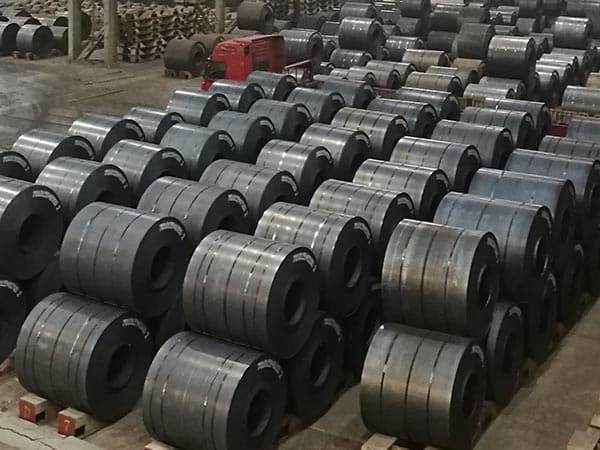
The Essence of 1.0972 Automotive Structural Steel
The 1.0972 steel grade, widely recognized under the EN 10149-2 standard as S315MC, is a high-yield strength, thermomechanically rolled steel designed specifically for cold forming. In the modern automotive manufacturing landscape, the demand for materials that balance weight reduction with structural integrity has never been higher. 1.0972 serves as a cornerstone material for components that require both toughness and the ability to be shaped into complex geometries without cracking. BBN Steel, as a leading global supplier, provides not just the raw material but a comprehensive suite of testing and validation services to ensure every sheet meets the exacting safety and performance standards of the automotive industry.
Chemical Composition and Its Impact on Performance
The performance of 1.0972 is rooted in its precise chemical metallurgy. Unlike traditional carbon steels, 1.0972 utilizes micro-alloying elements to achieve its strength without sacrificing ductility. The low carbon content is critical for maintaining excellent weldability, a non-negotiable requirement for vehicle assembly lines.
| Element | Max Content (%) | Role in 1.0972 Steel |
|---|---|---|
| Carbon (C) | 0.12 | Ensures weldability and prevents brittleness. |
| Manganese (Mn) | 1.30 | Increases strength and hardness through solid solution strengthening. |
| Silicon (Si) | 0.50 | Acts as a deoxidizer and contributes to yield strength. |
| Phosphorus (P) | 0.025 | Kept low to prevent cold shortness and improve toughness. |
| Sulfur (S) | 0.020 | Minimized to reduce non-metallic inclusions and improve surface quality. |
| Al (Total) | 0.015 (Min) | Used for grain refinement and deoxidation. |
| Nb/Ti/V | Trace | Micro-alloying for grain size control and precipitation hardening. |
The inclusion of Niobium (Nb) and Titanium (Ti) is particularly significant. These elements form fine carbides and nitrides that pin grain boundaries during the rolling process, resulting in a fine-grained microstructure. This fine grain size is the primary reason why 1.0972 can offer a yield strength of at least 315 MPa while remaining highly formable.
Mechanical Properties: The Foundation of Structural Integrity
For automotive structural parts like chassis members, cross-beams, and reinforcement brackets, the mechanical properties of the steel sheet determine the vehicle's crashworthiness and longevity. BBN Steel subjects every batch of 1.0972 to rigorous mechanical testing to verify compliance with EN 10149-2.
- Yield Strength (ReH): Minimum 315 MPa. This is the stress level at which the steel begins to plastically deform. High yield strength allows for thinner sections to carry the same load, reducing overall vehicle weight.
- Tensile Strength (Rm): 390 to 510 MPa. This represents the maximum stress the material can withstand before necking and failure.
- Elongation (A80mm): Minimum 20% (for thicknesses < 3mm). High elongation ensures the material can undergo significant stretching during deep drawing or stamping without fracturing.
These properties are not just numbers; they represent the material's ability to absorb energy during an impact, protecting passengers while maintaining the vehicle's structural frame.
Comprehensive Testing Protocols Offered by BBN Steel
What sets BBN Steel apart is the depth of the testing offered to automotive clients. We understand that a failure in a structural component can have catastrophic consequences. Therefore, our testing regime for 1.0972 goes beyond the basic requirements of the standard.
1. Tensile and Ductility Testing
Using state-of-the-art universal testing machines, BBN Steel performs tensile tests according to ISO 6892-1. We measure the yield point, ultimate tensile strength, and total elongation. For automotive applications, we often provide the n-value (strain hardening exponent) and r-value (plastic strain ratio), which are critical for predicting how the steel will behave in a complex stamping die.
2. Cold Bending Tests
Since 1.0972 is a "MC" grade (Thermomechanically rolled for Cold forming), its ability to be bent without cracking is paramount. BBN Steel conducts 180-degree bend tests over a specified mandrel radius. This ensures that the material can handle the tight radii often found in modern automotive chassis designs.
3. Metallographic Microstructure Analysis
Using high-resolution microscopy, our technicians examine the grain size and phase distribution of the 1.0972 steel. We look for a uniform ferrite-pearlite structure with fine grain size (typically Grade 10 or finer according to ASTM E112). We also perform non-metallic inclusion rating (ASTM E45) to ensure the steel is "clean," which is vital for fatigue resistance.
4. Impact Toughness Testing
While 1.0972 is primarily used for cold forming, its performance at low temperatures is vital for vehicles operating in cold climates. BBN Steel offers Charpy V-notch impact testing at temperatures down to -20°C or -40°C to ensure the material does not undergo a ductile-to-brittle transition.
5. Dimensional and Surface Inspection
Automotive automated assembly lines require extremely tight tolerances. BBN Steel utilizes laser measurement systems to verify thickness, width, and flatness. Surface quality is inspected according to EN 10163-2 Class B, ensuring no slivers, cracks, or heavy scale that could interfere with painting or coating processes.
6. Ultrasonic Testing (UT)
For critical structural applications, BBN Steel provides Ultrasonic Testing to detect internal defects like laminations or voids. This non-destructive testing ensures that the internal integrity of the 1.0972 sheet is as perfect as its surface.
Advanced Processing and Weldability
1.0972 steel is prized for its exceptional weldability. Due to its low carbon equivalent (CEV), it can be welded using all standard methods, including MAG (Metal Active Gas), Laser Welding, and Resistance Spot Welding. BBN Steel provides welding procedure specifications (WPS) and can conduct weld-joint testing to prove that the heat-affected zone (HAZ) retains sufficient strength and toughness.
In terms of cold forming, 1.0972 exhibits minimal springback compared to higher-strength grades like S700MC. This makes it an ideal choice for manufacturers looking to maintain high dimensional accuracy in their parts without investing in extremely expensive tooling.
Environmental Adaptability and Corrosion Protection
Automotive structural components are often exposed to harsh environments, including road salt, moisture, and temperature fluctuations. While 1.0972 is not inherently corrosion-resistant like stainless steel, its surface is perfectly suited for various protective coatings. BBN Steel offers 1.0972 in several finishes:
- As Rolled: Suitable for parts that will be heavy-duty blasted and painted.
- Pickled and Oiled (P&O): Removes mill scale to provide a clean surface for immediate welding or e-coating.
- Galvanized/Galvannealed: For components requiring superior rust protection, we provide the base 1.0972 material to specialized coating lines.
Expanding Applications: Beyond the Passenger Car
While the primary focus of 1.0972 is the automotive sector, its unique property profile makes it suitable for a variety of other industries. BBN Steel has successfully supplied this grade for:
- Heavy Truck Manufacturing: Used in frame rails and cross members where weight savings translate directly into higher payload capacity.
- Agricultural Machinery: For structural parts of tractors and harvesters that require high strength and the ability to withstand vibration.
- Construction Equipment: Used in the booms and frames of cranes and excavators where high yield strength is necessary to prevent structural deformation under load.
- Railway Wagons: For structural sections that need to be lightweight yet durable enough for decades of service.
BBN Steel’s Commitment to Quality Assurance
Choosing BBN Steel for 1.0972 material means more than just buying steel; it means partnering with a technical expert. We provide full traceability with EN 10204 3.1 Mill Test Certificates and can facilitate 3.2 certification through third-party agencies like SGS, BV, or TUV. Our logistics team ensures that the material is packaged to prevent edge damage and moisture ingress during transit, so it arrives at your facility ready for the press shop.
The testing protocols we offer are designed to mitigate risk for the manufacturer. By verifying every aspect of the 1.0972 steel sheet—from its atomic composition to its macroscopic dimensions—we ensure that your automotive structural components will perform exactly as designed, every single time.
Leave a message