
What is the plate automobile frame steel S355MC beveling
Comprehensive guide to S355MC automobile frame steel beveling. Learn about mechanical properties, chemical composition, welding techniques, and industrial applications.
The Essence of S355MC Steel in Modern Automotive Engineering
S355MC is a high-yield strength, thermomechanically rolled steel specifically designed for cold forming. As a cornerstone of the EN 10149-2 standard, this material has revolutionized the way heavy-duty vehicle frames and structural components are manufactured. The 'S' stands for structural steel, '355' indicates a minimum yield strength of 355 MPa, and 'MC' signifies its suitability for cold forming and its thermomechanical rolling process. Understanding the nuances of this steel is essential for engineers aiming to reduce vehicle weight while maintaining structural integrity.
Decoding the Beveling Process for S355MC Plate
Beveling, or edge preparation, is the process of creating an angled surface at the edge of a steel plate before welding. For S355MC automobile frames, beveling is not merely a preparation step but a critical factor in ensuring full penetration and high-fatigue resistance. Because vehicle frames are subjected to constant dynamic loads, vibrations, and torsion, the weld joint must be as strong as the base metal itself.
Common bevel types for S355MC include V-grooves, X-grooves, and U-grooves. The choice depends on the plate thickness, which typically ranges from 3mm to 20mm for automotive applications. A precise bevel angle, usually between 30 and 45 degrees, allows the welding arc to reach the root of the joint, preventing defects like lack of fusion or slag inclusion.
Chemical Composition and Grain Refinement
The superior performance of S355MC stems from its low carbon content and micro-alloying strategy. Unlike traditional carbon steels, S355MC utilizes elements like Niobium (Nb), Vanadium (V), and Titanium (Ti) to achieve grain refinement.
| Element | Max Percentage (%) |
|---|---|
| Carbon (C) | 0.12 |
| Manganese (Mn) | 1.50 |
| Silicon (Si) | 0.50 |
| Phosphorus (P) | 0.025 |
| Sulfur (S) | 0.020 |
| Aluminium (Al) | 0.015 |
This low carbon equivalent (CEV) significantly improves weldability. When beveling S355MC, the metallurgical stability of the material ensures that the Heat Affected Zone (HAZ) remains narrow and tough, which is vital for the longevity of an automobile frame.
Mechanical Properties and Structural Reliability
S355MC is prized for its balance of strength and ductility. While its yield strength is high, its elongation properties allow for complex bending and shaping without cracking.
- Yield Strength: Minimum 355 MPa, providing high load-bearing capacity.
- Tensile Strength: 430 to 550 MPa, ensuring resistance to ultimate failure.
- Elongation: Minimum 19% to 23% depending on thickness, allowing for energy absorption during impacts.
- Impact Toughness: Excellent performance even at low temperatures, making it suitable for vehicles operating in arctic conditions.
Technical Methods for Precise Beveling
Achieving the perfect bevel on S355MC requires advanced machinery. Traditional manual grinding is often insufficient for the high-precision requirements of the automotive industry.
1. Laser Beveling: High-precision fiber lasers can cut complex bevel geometries directly from the CAD data. This method minimizes heat input, preserving the thermomechanical properties of S355MC.
2. Plasma Cutting: For thicker plates, plasma beveling offers a balance between speed and cost. Modern high-definition plasma systems can produce clean edges with minimal dross.
3. Mechanical Milling: This cold-cutting process is ideal for S355MC as it introduces zero heat into the edge. Milling machines create a perfectly smooth surface, which is optimal for automated robotic welding systems.
Welding Synergy: The Impact of Bevel Geometry
The geometry of the bevel directly influences the welding parameters. For S355MC, Gas Metal Arc Welding (GMAW) or MAG welding is frequently used. A well-executed bevel reduces the amount of filler metal required, which in turn reduces the total heat input. Lower heat input is beneficial for S355MC because it prevents excessive grain growth in the HAZ, maintaining the high-strength characteristics achieved during the thermomechanical rolling process.
Environmental Adaptability and Fatigue Life
Automobile frames are exposed to harsh environments, including road salt, moisture, and extreme temperature fluctuations. S355MC's fine-grained structure provides a degree of inherent atmospheric corrosion resistance compared to coarser steels. Furthermore, the precision of the beveling ensures that the weld bead is flush and smooth, eliminating stress concentrators that could lead to fatigue cracking over the vehicle's lifecycle.
Broadening the Horizon: Beyond the Automobile Frame
While S355MC is a staple for truck chassis and car frames, its properties make it highly desirable for other demanding sectors.
- Construction Machinery: Used in crane booms and excavator arms where high strength-to-weight ratios are critical.
- Agricultural Equipment: Ideal for plow frames and trailer chassis that require durability in rugged terrains.
- Renewable Energy: Utilized in the structural supports for solar tracking systems and wind turbine components.
- Logistics and Warehousing: High-strength racking systems and automated guided vehicle (AGV) frames benefit from the weight savings S355MC offers.
Optimizing Production Efficiency with S355MC
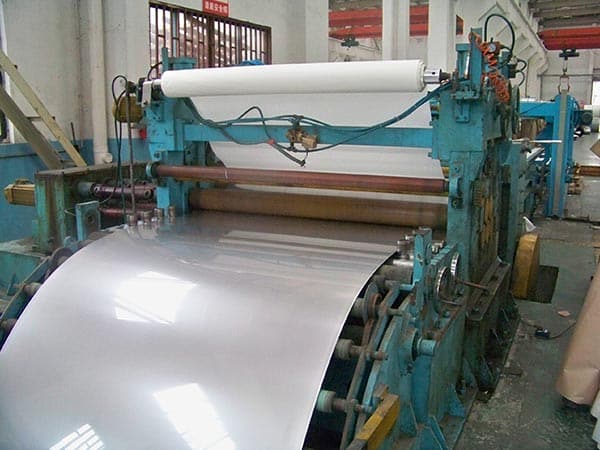
Integrating S355MC into a production line requires a holistic approach. From the initial decoiling and leveling to the final beveling and welding, every step must respect the material's micro-alloyed nature. By utilizing automated beveling solutions, manufacturers can achieve consistent joint fit-up, which is the foundation of high-quality robotic welding. This consistency leads to fewer repairs, lower production costs, and a safer end product for the consumer.
Strategic Material Selection for Future Mobility
As the automotive industry shifts toward electric vehicles (EVs), the demand for lightweight yet strong materials like S355MC is increasing. The weight of heavy battery packs necessitates a frame that can support significant loads without adding unnecessary bulk. Precision beveling of S355MC plates allows for the creation of optimized, hollow-section frames that provide maximum rigidity with minimum mass, directly contributing to increased vehicle range and efficiency.
Leave a message