
How to identify shoddy S460MC Steel for automotive inner panels
Expert guide on identifying substandard S460MC steel for automotive inner panels, covering chemical analysis, mechanical testing, and microstructure verification.
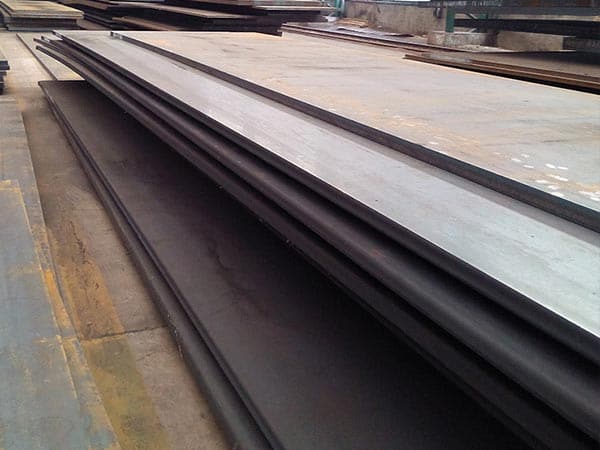
The Critical Role of S460MC in Modern Automotive Engineering
S460MC steel represents a pinnacle of high-strength low-alloy (HSLA) technology, specifically designed for the demanding requirements of the automotive industry. As vehicle manufacturers push for lightweighting to improve fuel efficiency and reduce emissions, materials like S460MC have become indispensable for inner panels, chassis components, and structural reinforcements. However, the market is often flooded with substandard or shoddy materials that mimic the appearance of genuine S460MC but fail to meet its rigorous mechanical and chemical standards. Identifying these inferior products is not merely a matter of cost-saving; it is a critical safety imperative. Shoddy steel can lead to catastrophic structural failures, poor welding integrity, and unpredictable behavior during stamping processes.
Chemical Composition: The First Line of Defense
The performance of S460MC is rooted in its precise chemical balance. According to EN 10149-2 standards, S460MC must maintain a low carbon content to ensure excellent weldability and formability. Shoddy steel often deviates from these specifications to reduce production costs. Manufacturers of inferior steel may use recycled scrap without proper refining, leading to elevated levels of impurities such as sulfur and phosphorus. These elements increase brittleness and susceptibility to cracking.
| Element | Standard S460MC (Max %) | Typical Shoddy Steel Indicators |
|---|---|---|
| Carbon (C) | 0.12 | Exceeds 0.15, leading to poor ductility. |
| Manganese (Mn) | 1.60 | Significantly lower to save costs, reducing strength. |
| Silicon (Si) | 0.50 | Excessive levels causing surface defects. |
| Phosphorus (P) | 0.025 | High levels causing cold shortness. |
| Sulfur (S) | 0.015 | High levels causing hot shortness and laminations. |
Micro-alloying elements such as Niobium (Nb), Vanadium (V), and Titanium (Ti) are essential for grain refinement in S460MC. Shoddy steel often lacks these expensive elements or contains them in insufficient quantities. A simple chemical analysis using optical emission spectrometry (OES) can quickly reveal if these critical strengthening agents are present in the required proportions.
Mechanical Properties and the Yield Strength Trap
The "460" in S460MC denotes a minimum yield strength of 460 MPa. Shoddy steel might achieve this strength through high carbon content or excessive cold working rather than through proper alloying and thermomechanical rolling. This results in a material that is strong but lacks the necessary elongation and impact toughness required for automotive inner panels. Automotive inner panels must absorb energy during a collision; if the steel is too brittle, it will fracture rather than deform.
- Yield Strength: Genuine S460MC maintains a consistent yield strength between 460 and 580 MPa.
- Tensile Strength: Should range from 520 to 670 MPa. Shoddy steel often shows a very narrow gap between yield and tensile strength, indicating low work-hardening capacity.
- Elongation: For thicknesses less than 3mm, a minimum elongation of 14% is mandatory. Shoddy steel frequently fails to reach 10%, leading to tearing during deep drawing.
When testing mechanical properties, it is vital to observe the stress-strain curve. Genuine S460MC exhibits a smooth transition and a significant plastic deformation zone. Shoddy steel often shows an erratic curve or a sudden, brittle failure shortly after reaching the yield point.
The Bending Test: A Practical Litmus Test
For automotive inner panels, formability is non-negotiable. S460MC is designed for cold forming, and its quality can be assessed through a 180-degree bend test. Shoddy steel often hides its flaws until it is subjected to intense deformation. During a bend test, the outer fibers of the steel are put under extreme tension. Substandard material will develop micro-cracks or "orange peel" surface textures, which are precursors to total structural failure.
If the steel cannot handle a mandrel diameter specified by the standard (usually related to the thickness of the plate), it is a clear sign of improper heat treatment or excessive inclusions. Automotive inner panels often have complex geometries with tight radii; using shoddy steel in these applications will result in a high scrap rate during production and potential field failures.
Microstructure and Grain Refinement
Under a microscope, genuine S460MC reveals a fine-grained ferritic-pearlitic structure, often achieved through Thermomechanically Controlled Processing (TMCP). The grain size is typically Grade 10 or finer according to ASTM E112. In contrast, shoddy steel often exhibits coarse grains and significant non-metallic inclusions.
- Inclusions: Large sulfide or oxide inclusions act as stress concentrators. In shoddy steel, these are often elongated (stringers), which cause anisotropic properties—meaning the steel is much weaker in one direction than the other.
- Banded Structure: Excessive pearlite banding in inferior steel can lead to delamination during stamping or welding.
- Decarburization: Shoddy steel produced in poorly controlled furnaces may have a significant decarburized layer on the surface, which drastically reduces fatigue life.
Welding Performance and Heat Affected Zone (HAZ)
Automotive assembly relies heavily on spot welding and laser welding. S460MC is prized for its low carbon equivalent (CEV), which ensures that the heat-affected zone (HAZ) does not become excessively hard or brittle. Shoddy steel, with its inconsistent chemistry and higher carbon content, often suffers from cold cracking in the weld zone. Furthermore, the lack of stable micro-alloying elements means that the grains in the HAZ of shoddy steel grow rapidly when heated, creating a localized zone of weakness that can fail under vibration or impact.
Surface Quality and Dimensional Tolerances
While mechanical and chemical properties are internal, the surface of the steel provides immediate clues to its quality. Shoddy S460MC often displays visible defects that are symptomatic of poor rolling practices. These include slivers, scales, pits, and longitudinal cracks. For automotive inner panels, surface integrity is crucial because defects can act as initiation points for corrosion or fatigue cracks.
Dimensional consistency is another hallmark of quality. Shoddy steel often varies in thickness across the width of the coil (crown) or along its length. In automated automotive stamping lines, even a minor deviation in thickness can cause variations in springback, leading to parts that do not fit the assembly jigs. Genuine S460MC producers adhere to strict tolerances (e.g., EN 10051), ensuring that every millimeter of the coil is usable.
Verifying Documentation and Traceability
The most sophisticated way to identify shoddy steel is through rigorous documentation audit. A Mill Test Certificate (MTC) should not just be accepted; it must be verified. Shoddy steel is often sold with forged MTCs or certificates that do not match the heat number stamped on the steel. High-quality S460MC will have full traceability from the iron ore to the finished coil. Procurement teams should look for QR codes, heat-stamped identification, and third-party certifications from reputable bodies. If the price of the S460MC is significantly below the market average, it is almost certainly a shoddy product that will cost more in the long run through production delays, tool wear, and liability risks.
Leave a message