
Is carbon steel stronger than S500MC hot rolled steel for car shelll?
A professional technical comparison between S500MC high-strength low-alloy steel and traditional carbon steel for automotive applications, focusing on mechanical properties, weight reduction, and formability.
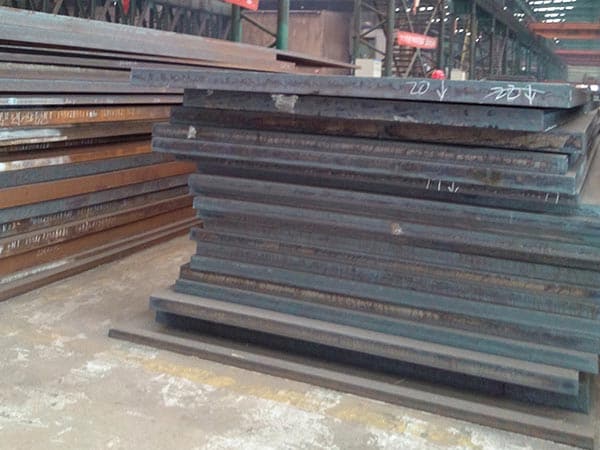
The Technical Reality of Strength: S500MC vs. Traditional Carbon Steel
In the automotive manufacturing sector, the term "strength" is often used loosely, but for engineers designing a vehicle's structural integrity, it refers to a precise set of mechanical metrics. When asking if carbon steel is stronger than S500MC hot rolled steel for a car shell or chassis, the answer lies in the distinction between generic commercial grade steels and High-Strength Low-Alloy (HSLA) materials. S500MC, governed by the EN 10149-2 standard, is specifically engineered to outperform standard carbon steels in every metric that matters for modern vehicle safety and efficiency.
Defining the Contenders: What Makes S500MC Unique?
Standard carbon steel, such as S235JR or ASTM A36, relies primarily on carbon content to achieve its hardness and strength. While cost-effective, increasing carbon content leads to a significant trade-off: the steel becomes brittle and difficult to weld or form. S500MC, however, belongs to the thermomechanically rolled HSLA category. The "500" denotes a minimum yield strength of 500 MPa, while the "MC" indicates it is intended for cold forming (M) and possesses high impact toughness (C).
Unlike simple carbon steel, S500MC utilizes micro-alloying elements such as Niobium (Nb), Vanadium (V), and Titanium (Ti). These elements, even in trace amounts, facilitate grain refinement during the thermomechanical rolling process. This results in a fine-grained microstructure that offers a superior combination of high yield strength and excellent ductility, a feat traditional carbon steel cannot replicate without becoming excessively thick and heavy.
Mechanical Performance Comparison
To understand why S500MC is the preferred choice for structural car components over standard carbon steel, we must look at the hard data. The following table illustrates the performance gap between S500MC and a typical structural carbon steel (S235).
| Property | S500MC (HSLA) | Standard Carbon Steel (S235) |
|---|---|---|
| Yield Strength (MPa) | ≥ 500 | ≥ 235 |
| Tensile Strength (MPa) | 550 - 700 | 360 - 510 |
| Elongation (%) | ≥ 12 (at 3mm thickness) | ≥ 24 |
| Formability | Excellent Cold Bending | Good |
| Weight-to-Strength Ratio | Very High | Low |
The data reveals that S500MC offers more than double the yield strength of basic carbon steel. This allows automotive designers to use thinner gauges of S500MC to achieve the same structural rigidity as thicker carbon steel plates, directly contributing to vehicle lightweighting.
Cold Forming and Processing Advantages
A car shell or chassis involves complex geometries created through stamping and bending. Standard high-carbon steels often crack when subjected to tight radius bends because their strength comes at the expense of ductility. S500MC is specifically processed to maintain a high degree of cold formability. This means it can be bent into intricate shapes required for cross members, longitudinal beams, and chassis frames without developing micro-cracks or surface defects.
Furthermore, the low carbon equivalent (CEV) of S500MC ensures exceptional weldability. In automotive assembly lines, where robotic spot welding and MIG/MAG welding are standard, S500MC provides consistent results without the need for pre-heating or post-weld heat treatments, which are often required for higher-carbon specialty steels.
Energy Absorption and Crashworthiness
Modern automotive safety standards demand that the car shell acts as a protective cage while also providing crumple zones to absorb kinetic energy during an impact. Standard carbon steel is often too soft to protect the passenger cabin or too brittle to absorb energy effectively. S500MC's fine-grained structure provides a high strain-hardening rate. During a collision, the material deforms predictably, absorbing a massive amount of energy before failure. This characteristic is vital for components like B-pillars and bumper reinforcements.
Environmental Adaptability and Fatigue Resistance
Vehicles are exposed to dynamic loads and harsh environments throughout their lifespan. S500MC exhibits superior fatigue resistance compared to standard carbon steel. The micro-alloyed structure prevents the rapid propagation of fatigue cracks caused by constant vibrations and road stress. Additionally, while both steels require coating (such as galvanizing or E-coating) for corrosion protection, the surface quality of hot-rolled S500MC is optimized for better coating adhesion, ensuring the car shell remains structurally sound for decades.
Application Scope: Where S500MC Dominates
While standard carbon steel might still be used for non-structural parts or simple brackets where weight is not a concern, S500MC has become the industry standard for:
- Truck Chassis Frames: Where high load-bearing capacity and weight reduction are critical for fuel efficiency.
- Automotive Cross Members: Requiring high strength to support the engine and drivetrain.
- Cold-Pressed Parts: Such as suspension arms and reinforced brackets.
- Electric Vehicle (EV) Battery Enclosures: Where protecting the battery pack from impact is a primary safety concern.
The Economic and Engineering Verdict
From a purely technical standpoint, S500MC is significantly "stronger" and more versatile than traditional carbon steel for automotive structural applications. The shift toward S500MC is driven by the global push for lower emissions and higher safety ratings. By utilizing S500MC, manufacturers can reduce the overall weight of the vehicle shell by up to 20-30% compared to using standard carbon steel, without sacrificing occupant safety. The initial material cost of HSLA steel is offset by the reduction in material volume required and the long-term performance benefits provided to the end-user.
Choosing S500MC over generic carbon steel is not just a matter of selecting a harder material; it is about leveraging advanced metallurgical engineering to create a vehicle that is lighter, safer, and more durable. For any application involving the structural "shell" or framework of a vehicle, S500MC stands as the superior engineering choice.
Leave a message